
For prospective and current rabbit owners, understanding the nuances of an ideal indoor rabbit habitat setup is crucial for their pet’s well-being. As pet ownership continues to grow, particularly among younger generations who see pets as full-fledged family members, the demand for high-quality, comprehensive information on species-specific care is paramount. Rabbits, increasingly recognized as intelligent indoor companions, thrive in thoughtfully designed environments that cater to their unique physical and psychological needs.
Why a Dedicated Indoor Space Matters for Your Rabbit
The humanization trend in pet care means we’re moving beyond basic cages. Your rabbit’s habitat is not just a place to sleep; it’s their safe haven, their playground, and their primary living space. A well-constructed indoor bunny enclosure provides security, promotes natural behaviors, and prevents boredom, which can lead to destructive habits or health issues. Unlike outdoor rabbits, indoor rabbits are protected from predators, extreme weather, and parasites, ensuring a longer, healthier life. With the average annual household spending on pets projected to reach $1,445 per pet by 2026, investing in a proper habitat is a key aspect of this commitment to premium pet care.
Essential Components of an Optimal Indoor Rabbit Habitat Setup
Creating the perfect rabbit living space involves several key considerations. Think about space, flooring, shelter, and essential supplies. Therefore, a thoughtful approach is essential for your bunny’s welfare.
1. Space: More is Always Better
Rabbits need ample room to hop, run, and stretch. A minimum enclosure size for one rabbit is generally considered to be 24 square feet (e.g., 4×6 feet), but larger is always preferred. This can be achieved with a large dog exercise pen, a dedicated room, or a combination of an enclosure connected to a rabbit-proofed area. Remember, rabbits are not meant to live in small cages 24/7; they need freedom to move. In fact, providing enough space is fundamental to their physical and mental health. A spacious bunny living area encourages natural behaviors like binkying and zooming.
2. Flooring and Substrate
Wire-bottom cages are detrimental to a rabbit’s delicate feet and should be avoided. Opt for solid flooring. If using an exercise pen on hard floors, provide soft, non-slip rugs or mats to prevent sore hocks and provide traction. Absorbent, pet-safe bedding like hay, paper-based litter, or specific rabbit-safe pellets should be used in designated litter areas. Consequently, this choice protects their sensitive paws and promotes cleanliness. Furthermore, proper flooring contributes significantly to a comfortable rabbit home environment.
3. Shelter and Hiding Spots
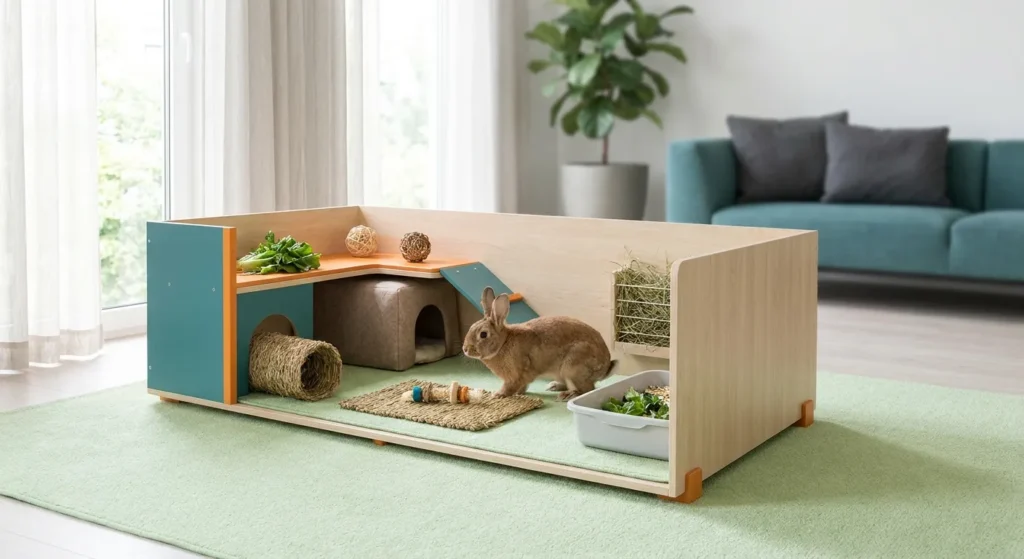
Rabbits are prey animals and need secure places to hide and feel safe. Provide at least one, but preferably several, hiding spots within their habitat. Cardboard boxes with cut-out doorways make excellent, inexpensive shelters that can be replaced often. Small pet tents or commercially available rabbit houses also work well. Similarly, tunnels and tubes offer extra security and enrichment. These elements are vital for a secure rabbit enclosure design.
4. Food and Water Stations
- Hay Rack: Hay should make up 80-90% of a rabbit’s diet, so a constant supply is crucial. A hay rack keeps it clean and accessible. Timothy hay is ideal for adult rabbits.
- Ceramic Bowls: Heavy ceramic bowls are best for pellets and fresh vegetables because they are difficult to tip over.
- Water Bottle or Bowl: Both sipper bottles and ceramic water bowls can be used. Many rabbits prefer bowls, which allow for a more natural drinking posture. Always ensure fresh water is available.
Proper nutrition is paramount for a rabbit’s health. For more detailed information, consider reading our guide on Understanding Pet Nutrition: A Guide to Feeding Diverse Animals.
Setting Up Your Indoor Rabbit Habitat for Success
Beyond the basic components, several other elements contribute to an enriching and safe indoor rabbit living space. Thoughtful planning ensures your bunny thrives. Therefore, consider these additional aspects carefully.
Litter Training Your Bunny
Rabbits are naturally clean animals and can be litter trained. Place a litter box in a corner where your rabbit naturally chooses to relieve themselves. Fill it with absorbent, rabbit-safe litter and a generous layer of hay. This encourages them to use the box while they eat, a common rabbit behavior. Consistency is key, and positive reinforcement helps. For example, offering a small treat after they use the litter box can reinforce the desired behavior. This makes maintaining a clean rabbit home environment much easier.
Chew Toys and Enrichment
Rabbits have continuously growing teeth, so providing safe chew toys is essential for dental health and to prevent destructive chewing on furniture. Offer a variety of toys made from untreated wood, cardboard, or natural fibers. Willow balls, cardboard tubes, and hay-based toys are excellent choices. Furthermore, enrichment goes beyond toys. Tunnels, platforms, and digging boxes stimulate their minds and encourage natural behaviors. You can find more ideas in our article on Enriching Your Pet’s Environment: Toys, Play, and Mental Stimulation.
Rabbit-Proofing Your Home
Even with a designated indoor rabbit habitat setup, your bunny will need supervised time outside their main enclosure. This means rabbit-proofing any areas they will access. Cover electrical cords, remove toxic plants, block off small spaces where they could get stuck, and protect furniture. Rabbits love to chew, so vigilance is necessary. For instance, cord protectors are a simple solution for wires. Our guide on Essential Pet Proofing: Making Your Home Safe for a New Companion offers further valuable tips.
Choosing the Right Location for Your Rabbit’s Home
The placement of your indoor rabbit habitat setup is just as important as its contents. Consider these factors:
- Temperature: Rabbits are sensitive to extreme temperatures. Keep their habitat in a room that stays between 60-75°F (15-24°C). Avoid direct sunlight or drafty areas.
- Quiet Zone: While rabbits enjoy being part of the family, they also need a quiet space to rest. Place their enclosure in a relatively calm area, away from loud noises or constant commotion.
- Family Interaction: Position the habitat where your rabbit can see and interact with family members, but also retreat to their hiding spots when they desire solitude. This balance promotes a well-adjusted pet.
A well-chosen location contributes significantly to your rabbit’s comfort and sense of security. It reduces stress and promotes overall well-being. Therefore, give careful thought to where you establish your bunny’s living quarters.
Maintaining a Clean and Healthy Rabbit Environment
Regular cleaning is paramount for your rabbit’s health. A dirty indoor rabbit habitat setup can lead to respiratory problems, skin issues, and other illnesses. Consequently, a consistent cleaning schedule is essential.
Daily Cleaning Tasks:
- Spot clean litter boxes, removing soiled litter and droppings.
- Replenish hay and fresh water.
- Wipe down soiled surfaces as needed.
Weekly Cleaning Tasks:
- Thoroughly clean and disinfect litter boxes.
- Wash all food and water bowls.
- Replace bedding and clean any soiled rugs or mats.
- Wipe down the entire enclosure structure.
Monthly Deep Clean:
- Empty the entire habitat.
- Clean and disinfect all surfaces, toys, and accessories using pet-safe cleaners.
- Allow everything to dry completely before reassembling.
Maintaining a clean rabbit enclosure helps prevent many common health problems. For more information on general pet hygiene, you might find our article on Grooming Your Pet: Essential Tips for Health and Hygiene helpful, as many principles apply to habitat cleanliness too.
Common Mistakes to Avoid When Setting Up a Rabbit Habitat
Even with the best intentions, new rabbit owners can sometimes make mistakes. Being aware of these common pitfalls can help you create a truly optimal indoor rabbit habitat setup.
Too Small an Enclosure
This is perhaps the most frequent error. Small cages restrict movement, leading to boredom, obesity, and behavioral issues. Always aim for the largest space possible. A rabbit needs room to run, jump, and explore, not just sit. Indeed, many commercial rabbit cages sold are simply too small for long-term housing.
Wire Bottom Cages
As mentioned, wire floors cause painful sores on a rabbit’s delicate hocks. Always provide a solid, comfortable surface. If you must use a cage with a wire bottom, ensure it is completely covered with a solid mat or cardboard. This prevents injury and discomfort. Moreover, such surfaces promote better foot health.
Lack of Enrichment
A bare enclosure offers no mental stimulation. Rabbits are intelligent and curious animals. Without toys, tunnels, and opportunities to explore, they can become destructive or withdrawn. Therefore, a stimulating environment is crucial for their mental well-being. Consider rotating toys to keep things interesting. For detailed guidance on preventing boredom, the House Rabbit Society provides excellent resources on rabbit care and enrichment (House Rabbit Society).
Inconsistent Cleaning
A dirty environment fosters bacteria and can lead to serious health issues. Consistent cleaning is non-negotiable for a healthy rabbit. Odors and soiled areas are not only unpleasant but also dangerous for your pet’s respiratory system. Consequently, establishing a routine is vital.
Feeding an Inappropriate Diet
While not directly part of the habitat, diet is intrinsically linked to a rabbit’s overall health and behavior within their home. An improper diet, low in hay and high in pellets or sugary treats, can lead to dental problems and digestive issues. Always prioritize fresh hay. For further reading on this crucial topic, you can refer to our article on Nutrition for Healthy Pets: A Guide to Optimal Diets.
The Benefits of an Enriched Indoor Rabbit Habitat Setup
Providing an excellent indoor rabbit habitat setup offers numerous rewards for both you and your pet. A happy rabbit is a healthy rabbit, and a well-designed environment fosters this happiness.
- Improved Health: Ample space and a clean environment reduce the risk of obesity, sore hocks, and respiratory infections.
- Better Behavior: Boredom often leads to destructive chewing or aggression. A stimulating habitat encourages positive behaviors and reduces stress.
- Stronger Bond: A rabbit that feels safe and happy in its environment is more likely to be affectionate and interactive with its owners.
- Longer Lifespan: Protection from outdoor elements, combined with proper care within their habitat, contributes to a longer, healthier life.
Investing time and effort into your bunny’s living space demonstrates your commitment to their well-being. It is a testament to the fact that pets are indeed cherished family members. For more expert insights on pet care, the American Veterinary Medical Association offers valuable resources (AVMA).
Conclusion: Creating the Perfect Rabbit Home
Crafting an optimal indoor rabbit habitat setup is a rewarding endeavor that significantly impacts your bunny’s quality of life. By focusing on ample space, appropriate flooring, secure hiding spots, proper nutrition, and engaging enrichment, you create more than just an enclosure – you build a true home. Remember to prioritize cleanliness and rabbit-proof any areas they explore. A well-designed rabbit living space ensures your intelligent companion remains healthy, happy, and a cherished member of your family for years to come. This commitment to their environment is a cornerstone of responsible pet ownership.
FAQ
What is the ideal size for a rabbit’s indoor living space?
For a single rabbit, a minimum of 24 square feet (e.g., 4×6 feet) of enclosure space is recommended. However, more space is always better to allow for hopping, running, and playing. This area can be a large exercise pen or a rabbit-proofed room.
What kind of bedding should I use in my bunny’s enclosure?
Avoid wire-bottom cages entirely. For solid flooring, use soft, non-slip rugs or mats. In litter areas, absorbent and pet-safe bedding like hay, paper-based litter, or specific rabbit-safe pellets are ideal. Always ensure the material is non-toxic if ingested.
How often should I clean my rabbit’s indoor home?
Daily spot cleaning of litter boxes and fresh food/water is essential. Weekly tasks include thorough cleaning of litter boxes, washing bowls, and replacing bedding. A monthly deep clean of the entire rabbit enclosure is also recommended to maintain hygiene.
What are some essential items for a rabbit’s indoor habitat?
Key items include a spacious enclosure, solid flooring with soft mats, secure hiding spots, a hay rack, heavy ceramic food and water bowls, and a variety of safe chew toys. These components are vital for a complete indoor bunny habitat setup.
How can I make my rabbit’s home more engaging?
Provide plenty of enrichment! This includes various chew toys, tunnels, platforms for climbing, and digging boxes. Rotating toys and offering opportunities for supervised free-roam time in a rabbit-proofed area will keep your bunny mentally stimulated and happy in their indoor rabbit habitat setup.