
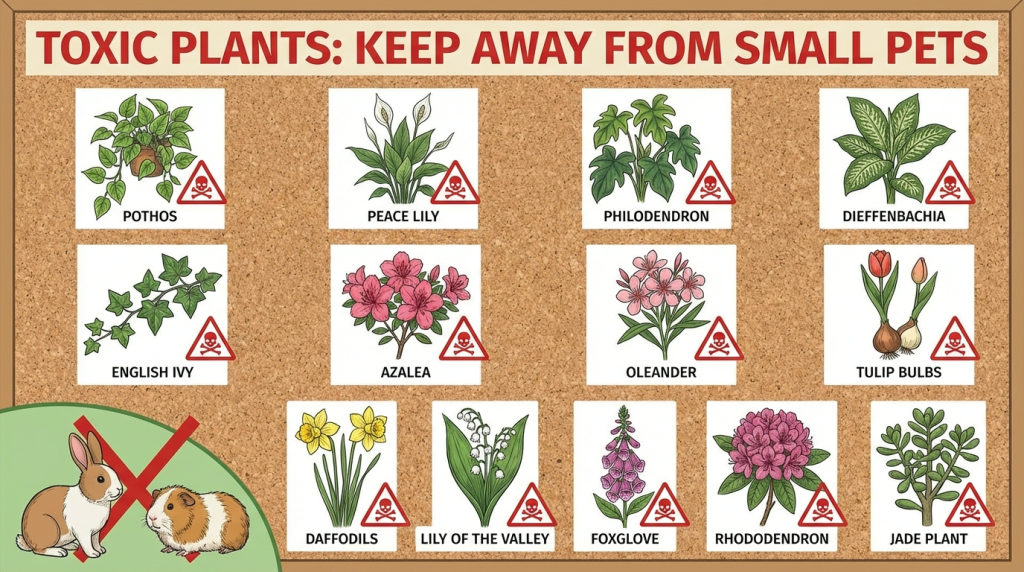

Small pets live close to the ground. They nibble, sniff, and explore everything within reach. While that curiosity feels charming, it also creates risk. Many common household and garden plants hide a dangerous secret. They are toxic plants for small pets, and they can cause serious harm in minutes.
You may love your greenery. A bright fern in the corner or a colorful flower on the patio adds life to your home. However, to a rabbit, guinea pig, hamster, or ferret, that plant may look like lunch.
The problem is simple. Small animals cannot tell safe plants from poisonous ones. Therefore, the responsibility falls on you. When you understand toxic plants for small pets, you protect not only their health but also your peace of mind.
Why Toxic Plants for Small Pets Are So Dangerous
Small mammals have delicate digestive systems. Their bodies process nutrients quickly, yet they also absorb toxins rapidly. Because of their size, even a small amount of a harmful plant can cause severe reactions.
For example, rabbits and guinea pigs rely on constant grazing. They chew throughout the day to maintain healthy teeth and digestion. If a toxic plant sits within reach, it may be sampled without hesitation.
Furthermore, many toxins attack vital organs. Some affect the liver. Others target the kidneys or heart. In certain cases, neurological symptoms develop rapidly.
Toxic plants for small pets pose a higher threat than for larger animals. A dog might eat a leaf and recover. A hamster may not survive the same exposure.
That size difference changes everything.
Common Toxic Plants for Small Pets in Homes
Many indoor plants are popular because they require little maintenance. Unfortunately, several of these are dangerous.
Lilies rank among the most hazardous plants. While they are especially toxic to cats, small mammals can also suffer severe reactions. Even small amounts may cause organ damage.
Pothos, a common trailing plant, contains calcium oxalates. These crystals irritate the mouth and digestive tract. Drooling and swelling often follow ingestion.
Philodendrons, peace lilies, and dieffenbachia share similar properties. They may look harmless. However, their sap can cause intense irritation.
Even decorative plants like aloe vera can upset sensitive digestive systems when consumed in large quantities.
Toxic plants for small pets often hide in plain sight. They decorate shelves, windowsills, and coffee tables. Because they appear natural, their danger is overlooked.
Outdoor Toxic Plants for Small Pets
Garden spaces present additional risk. When small pets enjoy supervised outdoor time, plants become accessible quickly.
Azaleas and rhododendrons contain toxins that affect the heart and nervous system. Even a few bites can cause weakness or tremors.
Foxglove, known for its beautiful flowers, contains compounds that interfere with heart rhythm.
Oleander remains highly toxic as well. All parts of the plant contain dangerous chemicals.
Additionally, certain bulbs, including daffodils and tulips, hold concentrated toxins. Curious pets may dig them up and chew on them.
Toxic plants for small pets in outdoor areas create hidden hazards. Unlike indoor plants, these often grow freely and spread quickly.
Therefore, careful yard inspection becomes essential.
How Toxic Plants Affect Small Animal Health
Symptoms vary depending on the plant and the amount consumed. However, several warning signs appear frequently.
Excessive drooling often signals oral irritation. Swelling of the mouth may follow.
Gastrointestinal upset appears as diarrhea, bloating, or loss of appetite. Because small pets depend on steady digestion, this can escalate quickly.
In severe cases, seizures or irregular heartbeats may occur. Immediate veterinary care becomes critical.
Toxic plants for small pets can also cause delayed reactions. Organ damage may develop hours or days after ingestion.
Therefore, if you suspect exposure, act quickly. Do not wait for symptoms to worsen.
Why Small Pets Are More Vulnerable
Size plays a major role. Smaller bodies absorb toxins more rapidly. What seems like a minor nibble can become life-threatening.
Additionally, prey animals hide illness instinctively. Rabbits and guinea pigs often mask discomfort until the condition becomes advanced.
By the time visible symptoms appear, internal damage may already exist.
Toxic plants for small pets present a silent threat. The absence of early signs does not mean safety.
Moreover, small animals chew continuously. Their need to grind teeth increases the likelihood of plant sampling.
Understanding this vulnerability encourages proactive prevention.
Creating a Safe Indoor Environment
Prevention begins with awareness. Walk through your home and identify every plant within reach. Research each one carefully.
If uncertainty exists, remove the plant temporarily. It is better to lose decor than risk emergency care.
Place safe plants out of reach on high shelves. However, remember that some pets climb surprisingly well. Therefore, physical barriers often work better than height alone.
Consider pet-safe alternatives such as spider plants or certain herbs. Even then, monitor chewing behavior.
Toxic plants for small pets lose their threat when access disappears.
Safe Alternatives to Toxic Plants for Small Pets
You do not need to give up greenery completely. Several plant options remain safer for curious animals.
Spider plants generally pose low risk. Most small mammals tolerate them without severe reaction.
Basil, parsley, and cilantro serve dual purposes. They decorate kitchens and offer occasional safe treats.
Certain grasses grown specifically for pets provide enrichment without danger.
However, always confirm safety with reliable veterinary sources. Even plants labeled “pet-friendly” may affect sensitive species differently.
Replacing toxic plants for small pets with safe alternatives allows you to maintain a green home responsibly.
Monitoring and Supervision Matter
Even in a plant-free room, caution remains necessary. Some pets find creative routes to restricted areas.
Supervise free-roam time carefully. If your rabbit frequently approaches a houseplant, redirect gently and offer safe chew toys.
Training alone does not eliminate instinct. Environmental control remains the strongest defense.
Regularly inspect plant leaves for bite marks. Early detection prevents larger problems.
Toxic plants for small pets lose their power when owners remain attentive and proactive.
Emergency Steps if Ingestion Occurs
If you believe your pet consumed a harmful plant, act immediately. Remove any plant material from the mouth carefully.
Contact a veterinarian without delay. Provide the plant name if known. Photographs help when identification remains uncertain.
Do not attempt home remedies unless directed by a professional. Certain interventions may worsen the situation.
Quick action improves survival rates significantly.
Long-Term Benefits of Removing Toxic Plants for Small Pets
When hazardous plants disappear from your environment, stress decreases for everyone.
You no longer worry during free-roam sessions. Your pet explores safely without hidden danger.
Additionally, reducing exposure prevents costly emergency visits. Veterinary treatment for poisoning can be expensive and emotionally exhausting.
Toxic plants for small pets represent preventable threats. By eliminating them, you create a stable, secure habitat.
A safe environment allows curiosity without consequence.
Conclusion
Toxic plants for small pets often blend seamlessly into home decor and garden landscapes. Yet behind their beauty lies potential harm. Small animals chew instinctively, and their delicate systems cannot tolerate many plant toxins.
However, knowledge changes everything. Identify hazardous species. Remove or replace them. Supervise carefully and act quickly if exposure occurs.
Your small pet depends on your awareness. When you eliminate toxic plants from their world, you give them freedom to explore safely and thrive confidently.
FAQ
1. What are the most common toxic plants for small pets?
Lilies, pothos, philodendrons, azaleas, and foxglove are among the most common harmful plants.
2. Are all houseplants dangerous for rabbits and guinea pigs?
No. Some plants are safe, but many common decorative plants contain toxins.
3. What symptoms suggest plant poisoning?
Drooling, diarrhea, swelling, lethargy, and seizures may indicate toxic exposure.
4. Can small pets recover from plant poisoning?
Recovery depends on the plant and the amount consumed. Immediate veterinary care improves outcomes.
5. How can I make my home plant-safe?
Remove toxic plants, replace them with safe alternatives, and supervise pets during free-roam time.