
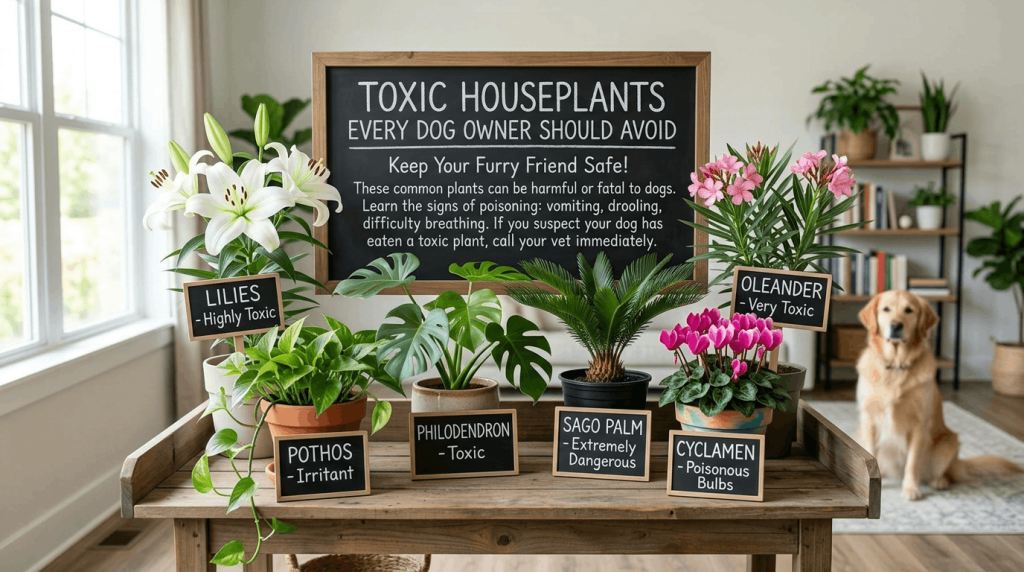

Many dog owners love decorating their homes with beautiful indoor plants. Houseplants add color, freshness, texture, and a calming atmosphere to living spaces. However, not every plant is safe for pets. In fact, many common indoor plants contain substances that may seriously harm dogs when chewed, swallowed, or even touched. Unfortunately, curious dogs often investigate plants through sniffing, licking, or chewing, especially puppies and energetic breeds. Understanding which toxic houseplants dogs should avoid therefore becomes extremely important for every responsible pet owner.
Dogs naturally explore their surroundings using their mouths and noses.
Because of this behavior, even small amounts of certain plants may trigger dangerous reactions.
Some plants cause mild stomach upset, while others affect the nervous system, heart, kidneys, or breathing.
Importantly, many toxic plants remain popular because people simply do not realize the risks involved.
Creating a safer indoor environment starts with awareness and prevention rather than reacting after an emergency occurs.
Thankfully, owners can still enjoy indoor greenery while protecting their pets through smarter plant choices and safer placement strategies.
Why Dogs Chew Houseplants
Understanding canine behavior helps explain why plant-related accidents happen so often.
Toxic houseplants dogs encounter may attract attention because of texture, smell, movement, or simple curiosity.
Puppies especially explore objects through chewing during development stages.
Additionally, bored or under-stimulated dogs may chew plants for entertainment or stress relief.
Some dogs also investigate plants while seeking moisture or new sensory experiences indoors.
Importantly, chewing does not always mean the dog intends to eat the plant completely.
Even brief contact may expose dogs to harmful toxins depending on the plant species involved.
Owners therefore benefit from identifying dangerous plants before problems develop.
Common Symptoms of Plant Poisoning in Dogs
Plant toxicity affects dogs differently depending on the type of plant, amount consumed, and the dog’s size or health condition.
Toxic houseplants dogs ingest may cause mild or severe symptoms within minutes or several hours.
Common warning signs include drooling, vomiting, diarrhea, pawing at the mouth, and stomach discomfort.
Some plants may also trigger swelling, lethargy, tremors, weakness, or difficulty breathing.
More dangerous reactions involve seizures, irregular heartbeat, kidney failure, or nervous system problems.
Importantly, symptoms should never be ignored because early treatment greatly improves recovery chances.
Contacting a veterinarian immediately remains the safest response whenever poisoning is suspected.
Lilies Can Be Extremely Dangerous
Lilies remain among the most concerning indoor plants for pet owners.
Although toxicity levels vary between species, toxic houseplants dogs should avoid absolutely include many lily varieties.
Certain lilies may trigger serious digestive problems and dangerous organ damage.
Dogs exposed to lilies sometimes experience vomiting, drooling, weakness, and loss of appetite quickly afterward.
Because lilies appear beautiful and harmless, many owners underestimate their risks initially.
Importantly, prevention remains far safer than relying on emergency treatment later.
Avoiding lilies entirely inside homes with pets often provides the safest solution overall.
Sago Palm Is Highly Toxic
Sago palms appear decorative and tropical, yet they pose severe risks to pets.
Toxic houseplants dogs encounter inside homes sometimes include sago palms because they remain popular decorative plants.
Unfortunately, every part of the plant contains dangerous toxins.
Even small amounts may lead to vomiting, diarrhea, seizures, liver damage, or life-threatening complications.
Puppies and curious dogs face especially high risks because they explore unfamiliar objects constantly.
Immediate veterinary care becomes essential whenever exposure occurs.
Because of the seriousness involved, many veterinarians strongly recommend avoiding sago palms completely in pet-friendly homes.
Aloe Vera May Cause Digestive Problems
Many people keep aloe vera indoors because of its soothing properties for human skin.
However, toxic houseplants dogs should avoid also include aloe vera plants.
The gel inside aloe remains helpful for humans, yet compounds within the plant may upset canine digestive systems.
Dogs chewing aloe sometimes experience vomiting, diarrhea, lethargy, or stomach discomfort afterward.
Although aloe toxicity usually remains mild compared to more dangerous plants, it still creates unnecessary health risks for pets.
Safer plant alternatives therefore make better choices for dog-friendly homes.
Dieffenbachia Can Irritate the Mouth
Dieffenbachia, often called dumb cane, appears in many homes because of its large attractive leaves.
Unfortunately, toxic houseplants dogs encounter frequently include this common decorative plant.
The plant contains irritating crystals that affect the mouth and throat immediately after chewing.
Dogs may drool heavily, paw at the mouth, struggle swallowing, or show signs of pain afterward.
Swelling sometimes makes breathing difficult in severe cases.
Importantly, owners should keep all irritating plants completely inaccessible to curious pets.
Philodendrons May Trigger Oral Irritation
Philodendrons remain popular because they require little maintenance indoors.
However, toxic houseplants dogs should avoid also include philodendron varieties.
Like dieffenbachia, philodendrons contain calcium oxalate crystals that irritate oral tissues.
Chewing the leaves may cause drooling, vomiting, swelling, or difficulty swallowing.
Fortunately, severe poisoning remains less common with philodendrons compared to highly toxic plants like sago palms.
Still, prevention remains the safest strategy for maintaining a pet-friendly home environment.
Snake Plants Can Upset the Stomach
Snake plants appear in many homes because they tolerate low light and require minimal care.
Despite their popularity, toxic houseplants dogs sometimes ingest include snake plants as well.
Dogs chewing these plants may experience nausea, vomiting, drooling, or digestive discomfort afterward.
Although reactions often remain mild, repeated exposure still creates unnecessary risks.
Importantly, owners should not assume low toxicity means complete safety.
Removing tempting chew targets helps reduce accidents significantly.
Peace Lilies May Cause Painful Reactions
Peace lilies create another common risk inside homes with dogs.
Toxic houseplants dogs should avoid often include peace lilies because they irritate the mouth and digestive tract.
Chewing the leaves may cause immediate discomfort, drooling, swelling, and vomiting.
Dogs often react quickly because the irritation feels painful almost immediately.
Importantly, quick reactions do not necessarily mean the situation lacks seriousness.
Any swelling affecting breathing or swallowing requires immediate veterinary attention.
How Puppies Face Greater Risks
Young dogs often experience plant poisoning more frequently than adults.
Toxic houseplants dogs encounter become especially dangerous for puppies because of natural curiosity and teething behavior.
Puppies explore unfamiliar objects constantly through chewing and licking.
Additionally, smaller body size increases toxicity risks because even tiny amounts may affect them more severely.
Puppies also lack experience avoiding dangerous objects inside the home.
Creating a puppy-safe environment therefore requires extra attention and prevention strategies from owners.
Safe Plant Placement Matters
Completely removing dangerous plants provides the safest option for many households.
However, toxic houseplants dogs sometimes remain accessible because owners underestimate climbing, jumping, or reaching abilities.
Placing plants on low tables or shelves rarely guarantees safety fully.
Some dogs knock over pots or access hanging plants unexpectedly.
Importantly, physical barriers, closed rooms, or pet-free spaces provide better protection when keeping risky plants indoors.
Thoughtful placement significantly reduces accidental exposure risks.
Training Helps Prevent Plant Chewing
Training supports safer indoor behavior while reducing plant-related accidents.
Toxic houseplants dogs might investigate become less tempting when owners teach clear boundaries consistently.
Commands such as “leave it” and “drop it” help redirect unsafe behavior effectively.
Reward-based training works especially well because dogs learn safer choices through positive experiences.
Mental stimulation, exercise, and enrichment also reduce boredom-related chewing significantly.
Importantly, training should support prevention rather than replace environmental safety completely.
Creating a Dog-Friendly Indoor Space
Dogs feel more comfortable when homes support both safety and emotional wellness.
Toxic houseplants dogs should avoid become easier to manage when owners design pet-friendly environments thoughtfully.
Providing chew toys, enrichment activities, safe resting areas, and regular exercise reduces destructive curiosity naturally.
Dogs with balanced physical and mental stimulation usually explore dangerous objects less frequently.
Additionally, choosing pet-safe plants helps owners enjoy greenery without constant worry.
Pet-Safe Plant Alternatives
Fortunately, many beautiful indoor plants remain safe for dogs.
Spider plants, Boston ferns, prayer plants, bamboo palms, and areca palms generally create safer options for pet owners.
Replacing toxic houseplants dogs may encounter with safer alternatives protects pets while maintaining attractive indoor spaces.
Importantly, owners should still monitor all plant interactions because excessive chewing may upset digestion regardless of toxicity levels.
Researching plant safety before bringing new greenery home remains one of the smartest habits for responsible dog owners.
What to Do During a Plant Emergency
Quick action matters whenever poisoning is suspected.
If toxic houseplants dogs accessed recently caused symptoms, owners should remove plant material immediately and contact a veterinarian.
Taking photos or samples of the plant may help veterinarians identify toxins faster.
Importantly, owners should avoid inducing vomiting unless specifically instructed by veterinary professionals.
Prompt medical care significantly improves recovery outcomes for many poisoning cases.
Keeping emergency clinic numbers available also helps owners respond faster during stressful situations.
Protecting Your Dog Starts With Awareness
Indoor plants may seem harmless initially, yet many pose hidden risks for curious pets.
Understanding which toxic houseplants dogs should avoid allows owners to create safer, healthier living environments proactively.
Prevention remains far easier and safer than responding to emergencies after exposure occurs.
Dogs depend entirely on owners to identify dangers and provide secure surroundings that support emotional and physical wellness.
Fortunately, creating a pet-friendly home does not require sacrificing beautiful indoor spaces completely.
Instead, smarter plant choices, safer placement, proper supervision, and consistent training all help reduce risks significantly.
As owners become more aware of household hazards, dogs often enjoy greater safety and freedom inside the home naturally.
Ultimately, responsible ownership involves balancing comfort, beauty, and safety together.
When owners prioritize prevention and informed choices, both dogs and humans benefit from a calmer and healthier shared environment.
FAQ
1. What indoor plants are most dangerous for dogs?
Sago palms, lilies, dieffenbachia, philodendrons, and peace lilies commonly pose serious risks to dogs.
2. What should I do if my dog eats a toxic plant?
Contact your veterinarian immediately and provide information about the plant involved if possible.
3. Are all houseplants harmful to pets?
No. Many indoor plants remain safe for dogs when researched carefully before purchase.
4. Why do dogs chew indoor plants?
Curiosity, boredom, teething, stress, and natural exploration often encourage plant chewing behavior.
5. Can small amounts of toxic plants still harm dogs?
Yes. Even tiny amounts may cause serious reactions depending on the plant and the dog’s size.