
Teaching your parrot to talk is one of the most exciting parts of bird ownership. Hearing your bird mimic your voice, repeat words, or develop full phrases feels magical, especially when those sounds reflect your bond. Yet not every parrot begins speaking quickly. Some become nervous, distracted, or overstimulated before they can focus. When you learn how to teach your parrot to talk while keeping them calm, you create an ideal learning environment that supports clear speech, trust, and long-term emotional balance.
Many parrots can learn to talk, but progress varies by personality, age, and environment. Even highly intelligent parrots struggle when the training routine feels stressful or unpredictable. Because parrots mirror your energy, creating a calm space becomes just as important as the training exercises themselves. When the atmosphere feels positive and safe, your parrot listens more closely, imitates more confidently, and forms stronger associations between sounds and rewards.
In this guide, you’ll discover exactly how to teach your parrot to talk using gentle, engaging methods that encourage both learning and relaxation. With consistency, patience, and empathy, your bird will surprise you with new words, improved clarity, and a calm temperament that supports better communication.
Understand How Parrots Learn to Talk
Before you can effectively teach your parrot to talk, you need to understand how they learn. Parrots mimic sounds through repetition and association. They copy what they hear most often, especially when those sounds bring attention or rewards. Because parrots are social by nature, they use speech as a way to communicate with their flock—whether in the wild or in your home.
Parrots learn words through:
- Repetition
- Emotional connection
- Tone and rhythm
- Positive reinforcement
- Calm, engaged interaction
When you speak clearly and enthusiastically, your parrot picks up on the patterns. Additionally, when you remain calm, your bird feels safe enough to experiment with new sounds.
Create a Calm Environment Before Training
Your training environment plays a huge role in your success. A parrot cannot learn well when they feel overstimulated, anxious, or distracted. Before you teach your parrot to talk, focus on building a quiet and relaxed space.
A calm environment includes:
- Soft lighting
- Minimal background noise
- No television or loud music
- A predictable routine
- Comfortable perches
Because parrots are sensitive to energy, they learn faster when your training area encourages focus and comfort. A relaxed bird processes words more clearly and mirrors your calm demeanor.
Why Calm Matters for Speech Training
Stress limits learning. When parrots feel nervous, their attention shifts toward self-protection. They may fluff their feathers, pace, scream, or freeze. But when they remain calm, their brain remains open to new information.
Teaching becomes smoother when you:
- Speak gently
- Move slowly
- Maintain a predictable schedule
- Keep training sessions short
These habits help your parrot stay centered and receptive.
Use Repetition When Teaching Your Parrot to Talk
Repetition is the foundation of speech training. Parrots learn best when they hear specific words consistently throughout the day. Because they memorize rhythm and sound patterns, repeating the same word in the same tone strengthens recognition.
Choose simple, meaningful words such as:
- “Hello”
- “Hi”
- “Good morning”
- Your parrot’s name
- “Step up”
- “Pretty bird”
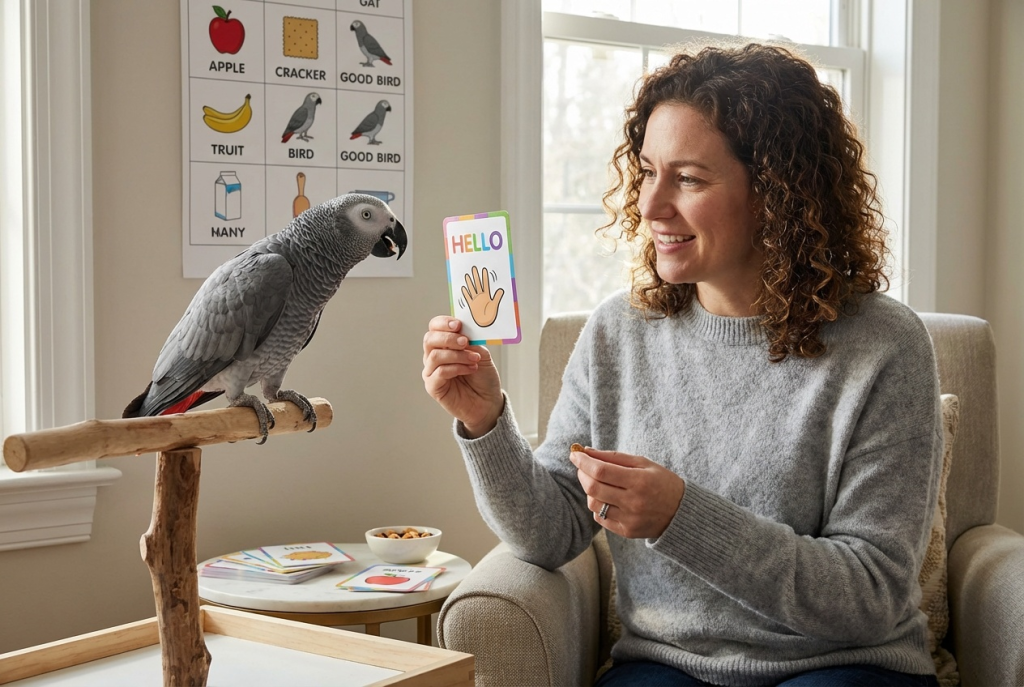
Repeat these words regularly, ideally when your parrot is alert and relaxed. For instance, say “Good morning” each day when you uncover the cage. Because the phrase becomes part of a routine, your parrot eventually imitates it.
Timing Matters for Repetition
Parrots learn new words more quickly during moments of calm attention. Good times to repeat words include:
- Early morning
- Before meals
- During gentle interactions
- While offering a treat
- After your parrot says a sound successfully
Avoid repeating words when your bird feels stressed or overstimulated, since the emotional state becomes linked to the sound.
Combine Talking Practice with Positive Reinforcement
Positive reinforcement transforms speech training into an enjoyable experience. When your parrot receives praise, treats, or affection after attempting a sound, they form a strong association between speaking and rewards. This method encourages confidence and patience.
Effective rewards include:
- A small nut
- A piece of fruit
- Happy vocal praise
- A brief head scratch
- A favorite toy
Use enthusiasm when your parrot attempts a sound, even if it’s imperfect. Every step forward deserves recognition.
Why Rewards Reduce Stress
Positive reinforcement helps your bird feel safe. Instead of worrying about failure, your parrot looks forward to training sessions. This emotional foundation improves learning speed, clarity, and willingness to experiment with new sounds.
Start with Easy Words to Teach Your Parrot to Talk
Certain words come naturally to parrots because of their sound structure. Clear, high-toned words with rhythmic patterns are easier to copy. Hard consonants and short syllables often produce the best results.
Easy starter words include:
- “Up!”
- “Hey!”
- “Okay!”
- “Bye-bye!”
- “Yummy!”
Once your parrot masters simple words, introduce short phrases. Because parrots learn in sound chunks, short phrases become easier than long sentences.
Repeat Words During Daily Routines
Daily routines offer unlimited opportunities to teach your parrot to talk. When you connect words with actions, your parrot begins to understand context. Birds enjoy predictability, and routine-based phrases anchor meaning to familiar moments.
Examples include:
- “Want breakfast?” before feeding
- “Step up” before lifting your parrot
- “Night-night” before covering the cage
- “Come here” during bonding time
- “All done” after giving a treat
These repeated cues encourage your parrot to mimic words more confidently.
Model Calm Behavior While Speaking
Your parrot copies your tone, mood, and volume. If your energy feels frantic, your bird may mimic stress instead of speech. Because learning happens through emotional connection, your calm tone encourages stability.
Speak with:
- Slow pace
- Warm tone
- Gentle excitement
- Predictable rhythm
Calm modeling teaches your parrot that communication happens best when both of you feel grounded.
Use Recording Devices Strategically
Parrots benefit from repeated exposure to the same sounds. Recordings help maintain consistency, especially when you’re not home. However, recordings should supplement—not replace—live interaction.
When using recordings:
- Keep sessions short
- Use natural pacing
- Play them at low volume
- Only repeat one or two words at a time
Your parrot may begin to imitate the recording, especially when paired with live practice.
Avoid Overtraining to Prevent Stress
Overtraining leads to frustration. Even enthusiastic parrots need breaks to process new sounds. Pushing too long or too fast can make your bird anxious, which slows progress significantly.
Ideal training sessions last:
- 5 to 10 minutes
- Once or twice daily
- In calm, quiet settings
Quit while the session still feels fun. Ending on a positive note keeps your parrot excited to return next time.
Teach Your Parrot to Talk by Encouraging Social Interaction
Parrots talk more when they feel included. Because they are flock animals, they mimic the sounds they hear most often. Social engagement strengthens trust and improves communication.
Encourage calm interaction by:
- Spending time near the cage
- Reading aloud
- Singing softly
- Narrating your activities
- Maintaining gentle eye contact
Your parrot learns your voice patterns and becomes more comfortable experimenting.
Use Species-Specific Techniques
Different parrots have different learning speeds. African greys, Indian ringnecks, cockatoos, and Amazon parrots often excel at speech. Budgies learn quickly as well, even though their voices sound softer.
Tailor your approach based on species personality traits:
- African greys need mental stimulation
- Amazons respond well to enthusiasm
- Cockatoos learn best through bonding
- Budgies benefit from quiet repetition
- Ringnecks thrive with emotional connection
Understanding your bird’s natural tendencies improves results and reduces stress.
Be Patient While Teaching Your Parrot to Talk
Patience is essential. Some parrots learn a word in a week. Others take months. Slow progress isn’t failure—it simply reflects your parrot’s unique learning style and emotional state.
Stay patient by:
- Celebrating small improvements
- Avoiding comparisons
- Maintaining a steady routine
- Using consistent praise
- Staying calm during setbacks
A patient approach builds trust, and trust builds language.
Conclusion
Learning how to teach your parrot to talk becomes easier when you combine repetition, positive reinforcement, calm routines, and patient communication. When your parrot feels relaxed, they explore new sounds with confidence and curiosity. With consistent practice and a peaceful environment, your bird will develop clearer speech, stronger bonding habits, and a calm demeanor that supports lifelong learning. Talking becomes more than mimicry—it becomes a shared language built on trust and connection.
FAQ
1. How long does it take for a parrot to learn its first word?
It varies widely. Some birds learn within weeks, while others take several months.
2. What is the easiest word to teach a parrot?
“Hello” and the bird’s name are usually the easiest because they’re used frequently.
3. Can older parrots still learn to talk?
Yes. Older parrots can learn new words, although progress may be slower.
4. Should I avoid certain words during training?
Avoid negative words or anything you don’t want repeated. Parrots remember phrases easily.
5. Do all parrots learn to talk?
No. Some parrots prefer whistles or sounds instead of words, even with good training.