
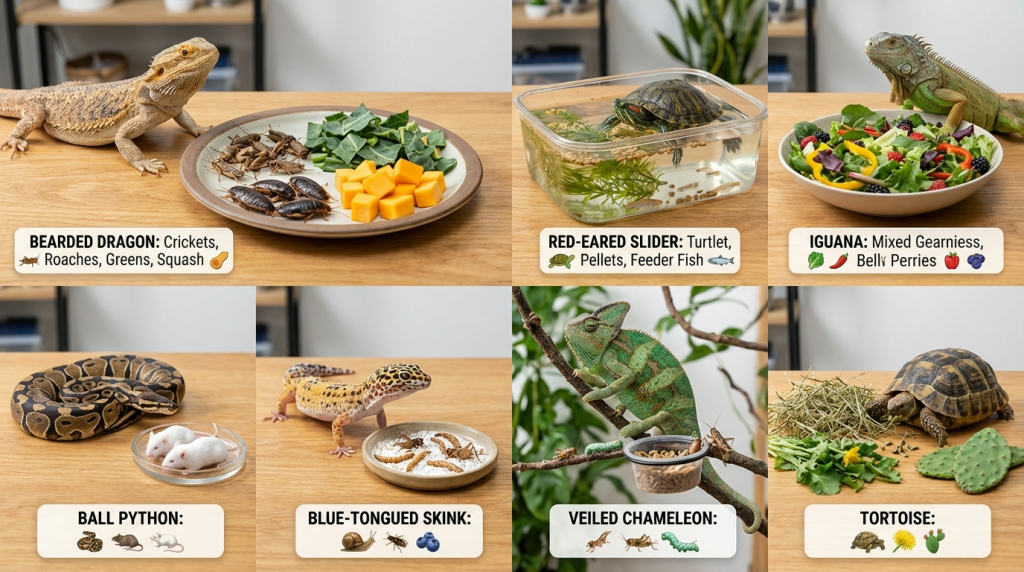

Reptiles are not generic animals. They are highly specialized survivors shaped by millions of years of evolution. Yet many captive reptiles are still fed a one-size-fits-all menu. That approach may seem convenient. However, it rarely supports optimal health.
Species-specific reptile diets recognize a simple truth: every reptile species evolved to eat certain foods in certain ways. When you ignore that reality, problems appear. When you respect it, everything changes.
If you have ever wondered why one reptile thrives while another struggles on the same food, the answer usually lies in tailored nutrition. Feeding based on species is not a luxury. It is a necessity.
Why Species-Specific Reptile Diets Support Natural Biology
In the wild, reptiles eat what their environment provides. A desert-dwelling bearded dragon consumes insects and sparse vegetation. A green iguana grazes on leafy plants. A ball python hunts small mammals.
Each digestive system adapts to that natural pattern. Herbivores develop longer digestive tracts to process fiber. Carnivores develop shorter, protein-focused systems. Omnivores balance both.
When species-specific reptile diets are ignored, digestion suffers. For example, feeding high-protein food to strict herbivores often leads to kidney strain. Likewise, feeding excessive plant matter to carnivores causes nutrient deficiencies.
Therefore, matching diet to biology protects internal organs. It supports efficient digestion. It reduces stress on the body.
Nature designed reptiles precisely. Your feeding plan should reflect that precision.
Digestive Systems and Species-Specific Reptile Diets
To understand why tailored feeding matters, consider anatomy. Reptile digestion operates differently depending on species.
Herbivorous reptiles, such as iguanas and uromastyx, rely on gut bacteria to break down plant fiber. Without adequate leafy greens, those bacteria decline. As a result, digestion weakens.
Carnivorous reptiles, such as many snakes, rely on concentrated protein and fat. Their stomach acid breaks down prey efficiently. However, they lack the enzymes required to process high-fiber plant matter.
Omnivores sit between these extremes. Bearded dragons, for instance, need insects when young but more vegetation as adults.
Species-specific reptile diets respect these biological distinctions. Instead of guessing, you feed according to structure.
When structure and diet align, energy improves. Growth becomes consistent. Disease risk decreases.
Health Problems Caused by Improper Feeding
Poor nutrition creates visible warning signs. However, those signs often appear late.
Metabolic bone disease remains one of the most common issues in captive reptiles. It develops when calcium and vitamin D3 levels remain unbalanced. While lighting plays a role, diet often contributes significantly.
Obesity also develops quickly in reptiles fed excessive fatty prey. Over time, fat accumulates in the liver. Liver disease follows.
In herbivores, protein-heavy diets frequently cause kidney damage. Meanwhile, carnivores fed low-protein diets may show muscle loss and weakness.
Species-specific reptile diets prevent these outcomes by aligning nutrients with natural needs. Prevention is far easier than treatment.
Species-Specific Reptile Diets for Herbivores
Herbivorous reptiles require more than lettuce. In fact, iceberg lettuce offers little nutritional value. Instead, leafy greens such as collard greens, mustard greens, and dandelion greens provide essential calcium and fiber.
Variety matters. Mixing greens prevents nutrient imbalance. Occasional vegetables add enrichment, but fruits should remain limited due to sugar content.
Hydration also plays a key role. Many herbivores obtain moisture from fresh plants. Therefore, fresh food should be offered daily.
When species-specific reptile diets for herbivores focus on fiber, calcium, and plant diversity, digestion improves naturally. Activity levels rise. Shell and bone strength increase.
A grazing reptile should eat like a grazer, not like a predator.
Species-Specific Reptile Diets for Carnivores
Carnivorous reptiles demand protein-rich prey. Snakes typically consume whole prey items such as mice or rats. Whole prey provides bone, muscle, and organ nutrients in correct ratios.
Feeding only muscle meat creates imbalance. Without bones, calcium intake drops significantly. Over time, skeletal issues develop.
For insect-eating reptiles, gut-loaded insects improve nutritional value. Crickets and roaches should be fed nutritious diets before being offered as prey.
Supplementation also plays a role. Calcium powder and multivitamins may be dusted lightly when appropriate. However, over-supplementation can harm just as easily as deficiency.
Species-specific reptile diets for carnivores emphasize complete prey and balanced supplementation. That approach mimics natural hunting patterns.
Omnivores and Balanced Species-Specific Reptile Diets
Omnivorous reptiles present unique challenges. They require both plant matter and protein in varying ratios depending on age.
Bearded dragons provide a perfect example. Juveniles consume mostly insects. Adults shift toward more vegetation. If this transition fails, obesity or deficiency may follow.
Box turtles also require mixed diets. Leafy greens, vegetables, fruits, and insects all contribute to health.
Therefore, species-specific reptile diets for omnivores demand flexibility. You must adjust portions as the reptile matures.
Observation becomes essential. Monitor weight, energy, and growth. Adjust food ratios gradually.
Balanced feeding produces vibrant color and consistent appetite.
The Role of Supplements in Species-Specific Reptile Diets
Even with proper food selection, supplements sometimes remain necessary. However, supplements should enhance diet, not replace proper feeding.
Calcium supplementation proves vital for many captive reptiles. Yet it must be paired with proper UVB lighting for absorption.
Vitamin supplementation supports immune health. However, excessive dosing can cause toxicity. Therefore, moderation remains critical.
Species-specific reptile diets reduce heavy reliance on supplements. When natural foods provide balanced nutrients, only minimal adjustments are required.
Think of supplements as safety nets, not foundations.
Feeding Frequency and Portion Control
Nutrition is not only about what you feed but also how often.
Snakes may eat once every one to two weeks. In contrast, herbivorous lizards eat daily. Young reptiles require more frequent feeding than adults.
Overfeeding leads to obesity and organ stress. Underfeeding causes stunted growth and lethargy.
Species-specific reptile diets include appropriate scheduling. Align feeding frequency with metabolic rate and natural behavior.
Observe body condition closely. A healthy reptile appears alert, active, and proportionate.
Consistency creates stability.
Environmental Influence on Diet
Habitat conditions influence digestion significantly. Temperature affects metabolic speed. If a reptile remains too cool, digestion slows dramatically.
Even perfect food cannot compensate for improper heating. Therefore, enclosure setup and diet must work together.
Humidity also affects hydration and appetite. Tropical species often require higher moisture levels to process food efficiently.
Species-specific reptile diets succeed when environment and nutrition align. One cannot function fully without the other.
Behavioral Benefits of Proper Nutrition
Nutrition shapes behavior as much as it shapes health.
A reptile fed appropriately displays steady energy and curiosity. It basks confidently and explores calmly.
In contrast, nutritional imbalance often triggers aggression or lethargy. Hungry reptiles may become defensive. Overfed reptiles may appear sluggish.
Species-specific reptile diets stabilize mood and activity patterns. When internal systems operate efficiently, behavior follows naturally.
Feeding becomes enrichment rather than routine maintenance.
Long-Term Impact of Species-Specific Reptile Diets
Over time, tailored nutrition produces dramatic results. Lifespan increases. Disease frequency declines. Reproductive success improves.
Owners often notice improved coloration as well. Vibrant scales reflect internal health.
Veterinary visits decrease when diet aligns with natural requirements. Although medical care remains important, prevention becomes the primary tool.
Species-specific reptile diets transform captive care from reactive to proactive.
Instead of correcting damage later, you build strength from the beginning.
Conclusion
Species-specific reptile diets are not optional refinements. They form the foundation of responsible reptile care. Each species carries unique biological instructions written by evolution. When you respect those instructions, your reptile thrives.
Improper feeding creates invisible stress that eventually becomes visible disease. However, tailored nutrition supports digestion, immunity, behavior, and longevity.
If you want your reptile to live a long and healthy life, start with food. Match diet to species. Adjust with age. Monitor closely. When nutrition reflects nature, captivity becomes far safer and far more sustainable.
FAQ
1. Why are species-specific reptile diets important?
They align nutrition with natural biology, preventing disease and supporting long-term health.
2. Can I feed all reptiles the same commercial food?
No. Different species require different nutrient ratios and food types.
3. Do reptiles always need supplements?
Not always. Proper whole foods reduce reliance on supplements, though calcium may still be necessary.
4. How often should reptiles be fed?
Feeding frequency depends on species, age, and metabolism.
5. What happens if I feed the wrong diet long term?
Chronic health problems such as metabolic bone disease, obesity, and organ damage may develop.