
Small pets bring joy, companionship, and personality into many homes. However, their nutritional needs often differ greatly depending on the species. Rabbits, guinea pigs, hamsters, and other small animals each require unique diets to remain healthy.
Providing a species appropriate diet ensures that small pets receive the nutrients they need to grow, stay active, and maintain strong immune systems. Without proper nutrition, these animals may experience digestive problems, vitamin deficiencies, or long-term health issues.
Unfortunately, many new pet owners rely heavily on generic commercial foods. While convenient, these foods may not fully meet the specific needs of every species.
Instead, understanding natural feeding habits allows owners to create balanced meals that mirror what these animals would eat in the wild.
By focusing on species-specific nutrition, you can help your small pets live longer, healthier, and happier lives.
Why Proper Nutrition Matters for Small Pets
Nutrition affects nearly every aspect of a small animal’s health. Balanced diets support digestion, immune strength, growth, and energy levels.
Because of this, offering a species appropriate diet is one of the most important responsibilities of small pet care.
Many small mammals have sensitive digestive systems. Improper food choices can easily cause digestive upset or nutrient deficiencies.
For example, rabbits and guinea pigs rely heavily on fiber for proper digestion. Hamsters and mice require balanced mixes of grains, seeds, and protein sources.
When animals receive food that matches their natural dietary needs, their bodies function more efficiently.
Proper nutrition also helps maintain healthy teeth, strong bones, and smooth fur.
Additionally, well-fed pets tend to display more natural behaviors and higher activity levels.
Understanding nutritional needs ensures that each species receives appropriate care.
Understanding Natural Feeding Behavior
Different small pets evolved to eat different types of foods in the wild. Therefore, feeding habits vary significantly across species.
Creating a species appropriate diet begins with understanding what these animals naturally consume.
Herbivores such as rabbits and guinea pigs primarily eat grasses and leafy plants. Their digestive systems rely on high fiber levels to function correctly.
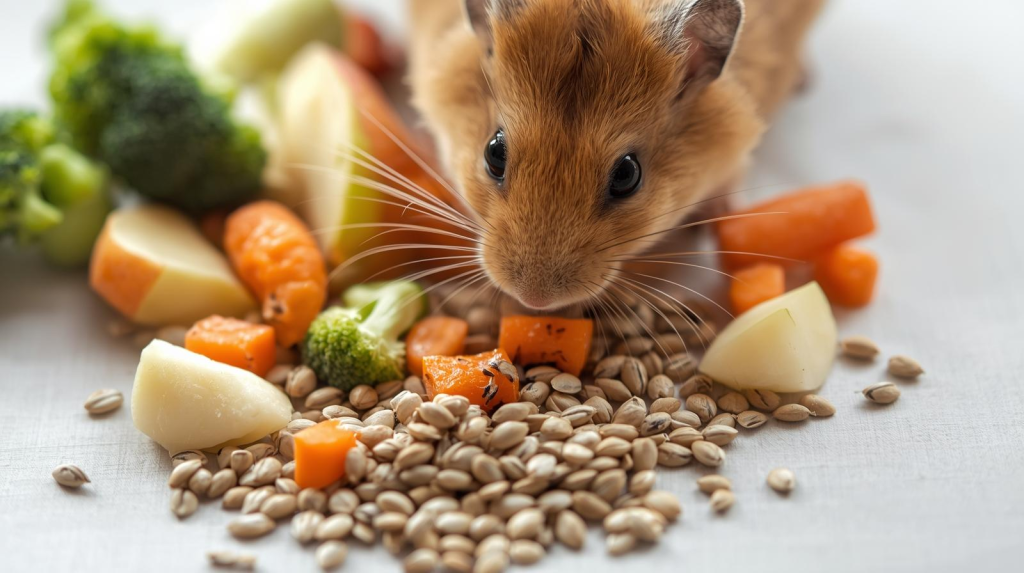
Omnivorous small mammals like hamsters eat a mixture of seeds, grains, insects, and vegetables.
Meanwhile, some rodents require occasional animal protein to maintain proper health.
Replicating natural diets helps support digestion and nutrient absorption.
When pets receive foods that reflect their evolutionary feeding habits, they experience fewer health problems.
Hay as the Foundation for Many Small Pets
For herbivorous small animals, hay forms the most important part of daily nutrition.
Therefore, hay plays a central role in maintaining a species appropriate diet for animals such as rabbits and guinea pigs.
High-quality hay provides essential fiber that supports digestion and prevents gastrointestinal problems.
Common hay options include:
• Timothy hay
• Orchard grass hay
• Meadow hay
• Oat hay
These types of hay help wear down continuously growing teeth while also promoting gut health.
Hay should be available at all times for animals that depend on it.
Unlimited access ensures that these pets can graze naturally throughout the day.
Providing fresh hay daily helps maintain appetite and proper digestive function.
Fresh Vegetables and Greens
In addition to hay, many small pets benefit from fresh vegetables and leafy greens.
Adding these foods helps maintain a species appropriate diet by providing vitamins, minerals, and hydration.
Leafy greens suitable for many small pets include:
• Romaine lettuce
• Kale in moderation
• Cilantro
• Parsley
• Dandelion greens
These vegetables support immune health and provide variety in daily meals.
However, introducing new vegetables should happen gradually. Sudden changes may upset sensitive digestive systems.
Rotating vegetable choices throughout the week ensures a broader range of nutrients.
Fresh produce should always be washed thoroughly before feeding.
Providing balanced vegetables alongside hay helps create a complete diet for herbivorous small animals.
Commercial Pellets and Their Role
Pelleted diets can help supplement nutrition for many small pets. However, pellets should support—not replace—natural food sources.
When included carefully, pellets contribute to a species appropriate diet by providing additional vitamins and minerals.
High-quality pellets typically contain balanced nutrients formulated for specific species.
However, pellets should be offered in limited portions.
Overfeeding pellets may reduce hay consumption, which can cause digestive issues for herbivorous animals.
Choosing pellets designed specifically for your pet species improves nutritional balance.
Avoid mixes that contain colorful treats, seeds, or sugary ingredients.
Simple, uniform pellets provide more consistent nutrition.
Protein Sources for Omnivorous Small Pets
Not all small pets rely solely on plant foods. Some species require small amounts of protein from animal sources.
Providing these nutrients supports a species appropriate diet for omnivorous animals such as hamsters and mice.
Protein sources may include:
• Mealworms
• Cooked eggs in small portions
• Insect protein treats
• Commercial protein-rich pellets
These foods help support muscle development and energy levels.
However, protein intake should remain balanced.
Excessive protein may lead to health issues in some small animals.
Moderation ensures that protein contributes positively to overall nutrition.
Limiting Sugary Treats and Fruits
Although many small pets enjoy sweet foods, sugary treats should remain limited.
Maintaining a species appropriate diet requires controlling foods that contain high sugar levels.
Fruits may be offered occasionally as small treats.
Examples include:
• Apple slices without seeds
• Small pieces of banana
• Blueberries
• Strawberries
While these foods provide vitamins, excessive sugar may lead to obesity or digestive problems.
Treats should never replace staple foods like hay or vegetables.
Moderation keeps diets balanced and supports long-term health.
Ensuring Proper Hydration
Water plays a vital role in small animal nutrition.
Providing fresh water supports digestion and overall well-being while complementing a species appropriate diet.
Clean drinking water should always be available.
Many small pets drink from water bottles or shallow dishes depending on species.
Water containers should be cleaned regularly to prevent bacteria buildup.
Hydration also supports kidney function and temperature regulation.
Even animals that eat moisture-rich vegetables still require access to drinking water.
Monitoring Pet Health Through Diet
Nutrition often reveals itself through visible signs in small pets.
Animals receiving a species appropriate diet typically display healthy behaviors and physical traits.
Signs of good nutrition include:
• Bright, clear eyes
• Smooth fur or coat
• Active behavior
• Healthy body weight
• Regular digestion
In contrast, poor diets may cause lethargy, rough fur, or digestive problems.
Regular observation helps pet owners identify nutritional issues early.
Adjusting diet choices can often resolve minor health concerns quickly.
Avoiding Common Feeding Mistakes
Many well-meaning pet owners accidentally provide unsuitable foods.
Avoiding these mistakes helps maintain a species appropriate diet.
Common feeding errors include:
• Feeding seed-heavy mixes as main meals
• Offering too many sugary treats
• Providing insufficient hay for herbivores
• Feeding toxic foods
Certain foods can be dangerous for small pets.
Examples include chocolate, onions, garlic, and processed human foods.
Learning which foods are safe helps prevent accidental health problems.
Responsible feeding habits ensure that pets receive proper nutrition daily.
Adapting Diet as Small Pets Age
Just like larger animals, small pets experience changing nutritional needs over time.
Adjusting feeding routines helps maintain a species appropriate diet throughout life stages.
Young animals often require more calories and nutrients for growth.
Adult pets typically need balanced maintenance diets.
Senior animals may benefit from softer foods or slightly reduced portions.
Monitoring body condition helps determine when dietary changes become necessary.
Adapting nutrition as pets age helps maintain comfort and long-term health.
Conclusion
Providing a species appropriate diet is essential for the health and happiness of small pets. Each species requires unique foods that support digestion, energy levels, and overall well-being.
By understanding natural feeding habits, pet owners can offer balanced meals that mirror what animals eat in the wild.
Hay, fresh vegetables, controlled portions of pellets, and occasional treats create a balanced diet for many small mammals.
Additionally, maintaining hydration and avoiding unhealthy foods protects long-term health.
Thoughtful feeding practices help small pets remain active, comfortable, and vibrant throughout their lives.
With the right nutrition, these beloved companions can enjoy many healthy years by your side.
FAQ
1. What foods should small pets eat daily?
Most small herbivores require unlimited hay, fresh vegetables, and small portions of species-specific pellets.
2. Can small pets eat fruit every day?
Fruit should be offered only occasionally because many varieties contain high natural sugar levels.
3. Why is hay important for rabbits and guinea pigs?
Hay provides essential fiber that supports digestion and helps wear down continuously growing teeth.
4. Are seed mixes healthy for small animals?
Many seed mixes contain excessive fats and sugars, so they should not serve as the main diet.
5. How can I tell if my pet’s diet is balanced?
Healthy pets usually show strong appetite, active behavior, and smooth fur or coat.