
Learning how to socialize parrots safely is one of the most important skills a parrot owner can develop. Parrots are social by nature, yet they are also cautious, emotional, and highly sensitive to change. When new birds or unfamiliar people enter their world, their reactions can range from curiosity to fear in seconds. That is why safe parrot socialization must always begin with understanding, patience, and intention.
Imagine being dropped into a room where everyone speaks a language you don’t know. You might feel overwhelmed, defensive, or withdrawn. Parrots experience social change in a similar way. However, when introductions are handled correctly, parrots learn that new birds and people are not threats. Over time, trust replaces tension.
This guide will show you how to socialize parrots safely while protecting their emotional well-being and building long-term confidence.
Why It’s Important to Socialize Parrots Safely
Parrots that are not socialized properly often develop behavioral problems. Screaming, biting, feather plucking, and territorial aggression are common signs of social stress. These behaviors are rarely random. Instead, they are communication signals.
When you socialize parrots safely, you reduce fear-based responses. Calm introductions teach parrots how to adapt without panic. As a result, they become more confident, resilient, and emotionally balanced.
Additionally, socialized parrots handle routine life changes better. Vet visits, boarding, guests, and new environments become manageable rather than traumatic. In short, safe parrot socialization improves both quality of life and long-term health.
Understanding Natural Parrot Social Instincts
Before attempting to socialize parrots safely, it helps to understand how parrots naturally interact. In the wild, parrots live in flocks built on trust, hierarchy, and constant communication. Every movement and sound has meaning.
In captivity, however, that instinct becomes complicated. A parrot may see its cage as territory. A bonded human may be viewed as a mate. A new bird might feel like an intruder.
Because of this, social behavior varies widely. Some parrots crave interaction. Others prefer distance. Socialization should never force a personality change. Instead, it should support emotional security.
Watching body language is essential. Relaxed feathers, soft eyes, and gentle vocalizations suggest comfort. Lunging, pinning eyes, and rigid posture indicate stress. These signals guide every step when you socialize parrots safely.
Preparing Your Parrot to Socialize Safely
Preparation determines success more than the introduction itself. Socializing parrots safely begins long before a new bird or person enters the room.
Start by establishing a predictable routine. Regular sleep cycles, feeding times, and enrichment activities lower baseline anxiety. A calm parrot processes change more easily.
Basic training also helps. Simple behaviors such as step-up, stationing, or target training give parrots a sense of control. These cues act like emotional anchors during unfamiliar situations.
Environment matters too. Remove nesting triggers like mirrors or dark corners. Neutral spaces reduce territorial behavior. When parrots feel secure, they are more open to social learning.
How to Socialize Parrots Safely With New Birds
Introducing parrots to new birds is one of the most delicate forms of socialization. Birds communicate primarily through posture, movement, and sound. Misunderstandings can escalate quickly.
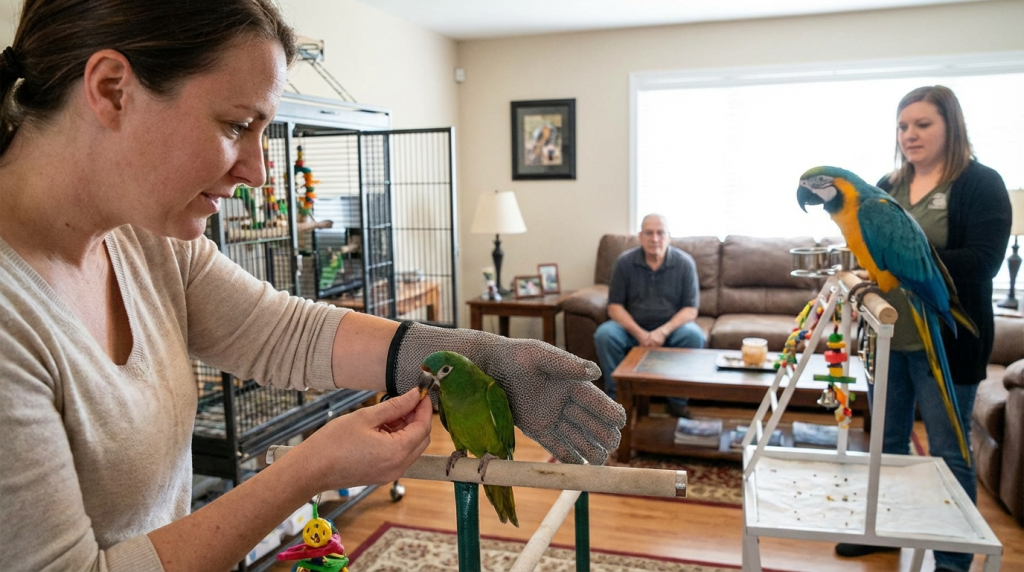
Begin with visual exposure only. Place the birds in separate cages within the same room. This allows observation without risk. During this phase, you are teaching parrots that another bird can exist without causing harm.
Watch reactions carefully. Calm curiosity is ideal. If aggression appears, increase distance. This stage may take days or weeks. Progress should always follow comfort.
Once calm behavior becomes consistent, allow supervised out-of-cage time on separate perches. Keep sessions short. Reward relaxed behavior generously. If tension rises, calmly separate the birds.
Never force interaction. Socializing parrots safely means respecting boundaries. Some birds may never bond, and that is acceptable.
Managing Territory When Socializing Parrots Safely
Territorial behavior is a common obstacle when you socialize parrots safely. Cages, food bowls, favorite toys, and even people can trigger possessiveness.
To reduce conflict, duplicate resources. Provide multiple food stations, water bowls, and enrichment options. Neutral play areas work better than established cages.
Balance attention carefully. Favoritism creates jealousy. Calm, equal interaction prevents rivalry.
If aggression occurs, respond without emotion. Separate calmly and reset. Punishment increases fear and delays progress. Instead, return to a stage where calm behavior was successful.
How to Socialize Parrots Safely With New People
Many parrots fear unfamiliar people. New voices, movements, and scents can feel unpredictable. Therefore, people introductions require just as much care as bird introductions.
Start with distance. Allow your parrot to observe new people without interaction. Ask visitors to speak softly and avoid direct eye contact at first. Calm presence builds trust.
Next, associate people with positive outcomes. Treats placed nearby help. Eventually, visitors can offer treats if the parrot shows interest.
Movement should remain slow and deliberate. Fast gestures resemble predator behavior. Calm body language communicates safety.
Remember, socializing parrots safely does not require physical contact. A parrot that feels relaxed around people is already succeeding.
Helping Parrots Adjust to Groups and Gatherings
Group settings introduce noise, movement, and unpredictability. Even social parrots can feel overwhelmed.
Begin with one person at a time. Gradual exposure prevents sensory overload. Background sounds, such as soft music, can help mask sudden voices.
Provide an exit option. A perch or cage allows the parrot to retreat when needed. Choice reduces stress.
If your parrot disengages, respect that signal. Confidence grows when parrots feel in control. Over time, many will rejoin voluntarily.
Recognizing Stress Signals During Socialization
Stress rarely appears without warning. Learning to read subtle signs helps you socialize parrots safely and prevent escalation.
Common stress signals include slicked feathers, pacing, panting, refusal of treats, or sudden silence. Vocal tone may also change.
When stress appears, pause immediately. Increase distance and reduce stimulation. Speak calmly. Allow recovery time.
Ignoring stress signals damages trust. Responding appropriately reinforces safety and strengthens the bond.
Using Positive Reinforcement to Socialize Parrots Safely
Positive reinforcement is the foundation of safe socialization. Parrots repeat behaviors that lead to good outcomes.
Use high-value treats reserved for social sessions. This creates strong positive associations. Timing matters. Reward calm behavior immediately.
Verbal praise also helps. A calm, encouraging tone reassures your parrot.
Avoid punishment entirely. Fear-based responses slow progress and create long-term anxiety. Parrots learn best when they feel safe and respected.
Common Mistakes That Prevent You From Socializing Parrots Safely
Even experienced owners make mistakes. Recognizing them helps you adjust quickly.
Moving too fast is the most common error. Progress should follow behavior, not schedules.
Inconsistency also causes confusion. Mixed signals increase anxiety. Clear routines provide security.
Overexposure can overwhelm parrots. Short, positive sessions work better than long ones.
Finally, comparing parrots creates unrealistic expectations. Every parrot has a unique comfort level. Socializing parrots safely means honoring individuality.
When to Pause and Seek Professional Help
Sometimes progress stalls despite careful effort. Persistent aggression, extreme fear, or self-harm behaviors indicate the need for expert guidance.
Certified avian behaviorists provide personalized strategies. Early intervention prevents long-term issues.
Seeking help shows responsibility, not failure. Every parrot deserves a social experience that protects their emotional health.
Maintaining Social Confidence Over Time
Socialization is not a one-time event. Ongoing exposure maintains confidence.
Continue introducing new people and environments gradually. Reinforce calm behavior consistently.
Confidence grows through repetition. Over time, parrots learn that change does not equal danger.
When you socialize parrots safely on an ongoing basis, you build resilience that lasts a lifetime.
Conclusion
To socialize parrots safely is to build trust layer by layer. Like teaching a child to swim, you start in shallow water before moving deeper. With patience, observation, and positive reinforcement, parrots learn that new birds and people are not threats. The reward is a calmer, more adaptable companion who feels secure in a changing world.
FAQ
1. How often should I socialize parrots safely?
Short daily sessions work best. Consistency matters more than duration.
2. Can aggressive parrots still be socialized safely?
Yes, but progress should be slower. Professional guidance may help in severe cases.
3. Is it okay if my parrot dislikes other birds?
Yes. Socializing parrots safely focuses on tolerance, not forced friendship.
4. Should parrots meet face-to-face immediately?
No. Visual exposure first prevents fear and injury.
5. Do all parrots enjoy meeting new people?
No. Some prefer distance. Comfort and calm behavior define success, not physical interaction.