
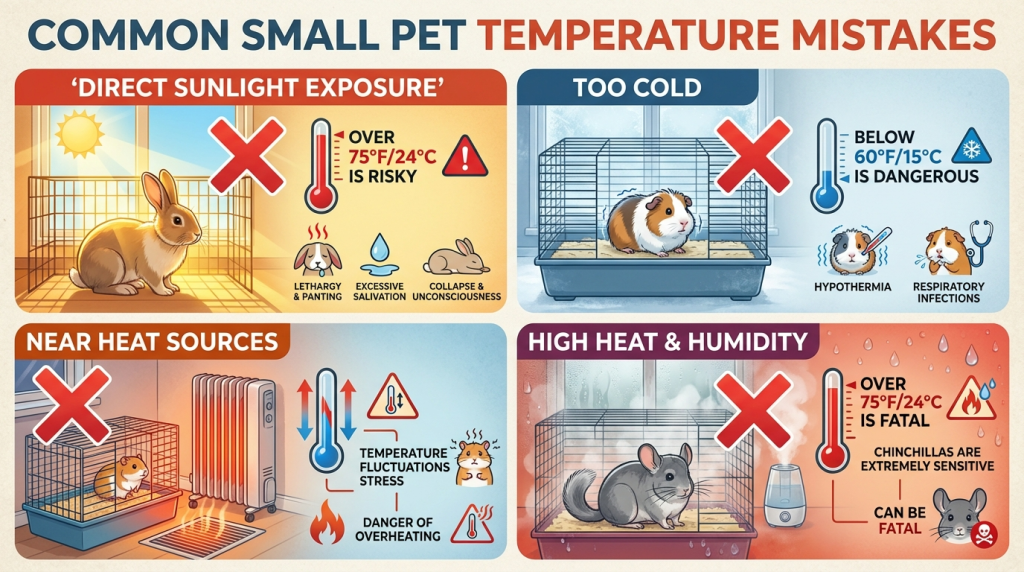

Small pet temperature mistakes are more common than most owners realize. You may carefully choose food, bedding, and toys. However, if the room temperature is wrong, stress begins immediately.
Unlike dogs or cats, many small pets cannot regulate their body temperature efficiently. Rabbits, hamsters, guinea pigs, birds, reptiles, and even small rodents depend heavily on their environment. Therefore, even minor temperature fluctuations can cause major health problems.
Temperature affects breathing, digestion, heart rate, and immune function. When small pet temperature mistakes occur, stress hormones rise. Over time, that stress weakens the entire body.
The good news is simple. Most temperature errors are preventable. Once you understand what causes stress, you can create a safe and stable environment for your companion.
Why Small Pet Temperature Mistakes Matter More Than You Think
Small animals have fast metabolisms. Their bodies respond quickly to environmental changes. While humans can adjust by adding a sweater or turning on a fan, small pets rely entirely on you.
When small pet temperature mistakes happen, the impact can be immediate. Rabbits may overheat in warm rooms. Hamsters may enter dangerous torpor in cold conditions. Birds may fluff up continuously to conserve heat.
Because stress is often hidden, symptoms may appear subtle at first. Reduced appetite, low activity, or unusual behavior may be the only clues.
Temperature is not just comfort. It is survival.
Overheating: A Dangerous Small Pet Temperature Mistake
One of the most serious small pet temperature mistakes is allowing overheating.
Small pets struggle to cool themselves. Rabbits do not sweat effectively. Guinea pigs overheat easily. Birds can become distressed quickly in warm air.
Temperatures above 80°F can become risky for many small mammals. Without proper ventilation, heat builds rapidly.
Signs of overheating include rapid breathing, lethargy, drooling in rabbits, or wings held away from the body in birds.
Heatstroke can develop faster than expected. Therefore, prevention is critical.
Keep enclosures away from direct sunlight. Avoid placing cages near windows where sunlight intensifies. Use fans to circulate air, but never point them directly at your pet.
Cold Stress and Hypothermia Risks
Cold environments can be equally dangerous.
Small pet temperature mistakes often involve placing cages near drafts, air conditioners, or poorly insulated walls.
When temperatures drop too low, small animals burn energy to stay warm. Appetite may increase initially. However, prolonged cold stress weakens immunity.
Hamsters may enter torpor if temperatures fall below 60°F. Torpor resembles hibernation but can become fatal if misunderstood.
Rabbits and guinea pigs tolerate cooler air better than heat. Still, sudden drops below 50°F can cause respiratory issues.
Stable, moderate room temperatures between 65°F and 75°F are ideal for most small mammals.
Placing Cages in the Wrong Location
Location matters more than many realize.
Small pet temperature mistakes often happen because cages are placed near heat vents, fireplaces, or exterior doors.
Heat vents create uneven warmth. One side of the cage may become too warm while the other remains cool. This imbalance increases stress.
Similarly, air conditioning vents can create direct drafts. Constant airflow lowers body temperature gradually.
Choose a location away from extreme heat or cold sources. Rooms with consistent indoor climate are best.
Additionally, avoid kitchens. Sudden temperature spikes from cooking can cause distress.
Ignoring Seasonal Changes
Seasons shift gradually. However, indoor conditions may change abruptly.
During summer, indoor spaces may become humid and warm. In winter, heating systems can dry the air and create hot spots.
Small pet temperature mistakes occur when owners fail to adjust care routines seasonally.
In summer, provide cooling tiles or frozen water bottles wrapped in cloth for rabbits and guinea pigs. In winter, ensure bedding remains dry and draft-free.
Because small pets are sensitive to extremes, proactive adjustments are essential.
Poor Ventilation and Airflow Problems
Temperature is closely linked to airflow.
Stagnant air traps heat and moisture. Meanwhile, excessive airflow causes chilling.
Small pet temperature mistakes sometimes involve covering cages entirely in cold weather. While this may seem protective, poor ventilation increases humidity and ammonia buildup.
Balance is key. Provide airflow without direct drafts.
Well-ventilated rooms maintain fresh air while supporting stable temperatures.
Humidity and Temperature Imbalance
Humidity influences how temperature feels.
High humidity combined with heat increases overheating risk. Conversely, dry air in winter may irritate respiratory systems.
Small pet temperature mistakes often ignore humidity levels. Birds are particularly sensitive to dry indoor air.
Using a hygrometer can help monitor levels. Ideally, humidity should remain moderate, around 40 to 60 percent for many species.
Balanced air reduces stress significantly.
Transport and Travel Temperature Errors
Travel introduces new temperature risks.
Cars heat quickly in summer and cool rapidly in winter. Even short trips can become dangerous.
Small pet temperature mistakes during travel include leaving animals unattended in vehicles.
Always pre-cool or pre-warm your car before transport. Use insulated carriers when necessary.
Monitor your pet closely during travel. Stress signs may appear quickly in confined spaces.
Misunderstanding Species-Specific Needs
Not all small pets require the same environment.
Reptiles need heat gradients. Birds prefer moderate warmth. Rabbits handle cooler air better than heat.
Small pet temperature mistakes often occur when general advice is applied universally.
Research your species carefully. A bearded dragon requires controlled basking zones. A hamster prefers stable, room-level warmth.
Understanding differences prevents serious health issues.
Recognizing Stress Signs Early
Temperature stress shows subtle signals.
Look for changes in posture. Watch breathing patterns. Monitor appetite and activity.
If your rabbit lies stretched out excessively in summer, it may be trying to cool down. If your hamster curls tightly and becomes inactive in winter, it may be cold.
Small pet temperature mistakes can be corrected quickly when detected early.
Observation is one of your strongest tools.
Using Technology to Prevent Temperature Mistakes
Modern tools simplify monitoring.
Digital thermometers provide accurate readings. Place them near the cage, not across the room.
In larger enclosures, measure multiple points. This ensures even temperature distribution.
Automatic climate control systems can maintain stable environments. However, manual checks remain important.
Because equipment can fail, regular monitoring protects your pet.
Creating a Stable Temperature Routine
Consistency reduces stress.
Keep room temperature steady. Avoid sudden adjustments in thermostat settings.
Open windows cautiously. Sudden drafts shock small bodies.
Small pet temperature mistakes often involve unpredictability rather than extreme values.
Stability supports calm behavior and stronger immunity.
The Long-Term Impact of Temperature Stress
Chronic stress shortens lifespan.
When small pet temperature mistakes persist, immune systems weaken. Digestive problems may develop. Reproductive cycles may be affected.
Over time, repeated stress can lead to heart strain and metabolic imbalance.
Prevention is far easier than treatment.
By maintaining safe temperatures daily, you protect long-term health.
Conclusion: Stability Creates Security
Small pet temperature mistakes may seem minor. However, for tiny animals, temperature defines comfort and survival.
Heat and cold both carry risks. Poor cage placement, drafts, and seasonal neglect increase stress quietly.
Fortunately, simple adjustments create major improvements. Monitor temperature regularly. Avoid extremes. Understand species needs.
When temperature remains stable, your small pet feels safe. And when your pet feels safe, health and happiness naturally follow.
FAQs
- What is the ideal temperature range for most small pets?
Most small mammals thrive between 65°F and 75°F, though species needs may vary. - Can small pet temperature mistakes cause illness?
Yes, prolonged heat or cold stress can weaken immunity and lead to respiratory or digestive problems. - Are fans safe for cooling small pets?
Fans can circulate air, but they should never blow directly onto the pet. - How can I tell if my pet is too hot?
Signs include rapid breathing, lethargy, drooling in rabbits, and unusual posture. - Do seasonal changes affect small pets?
Yes, temperature and humidity shifts require adjustments to maintain a stable, stress-free environment.


