
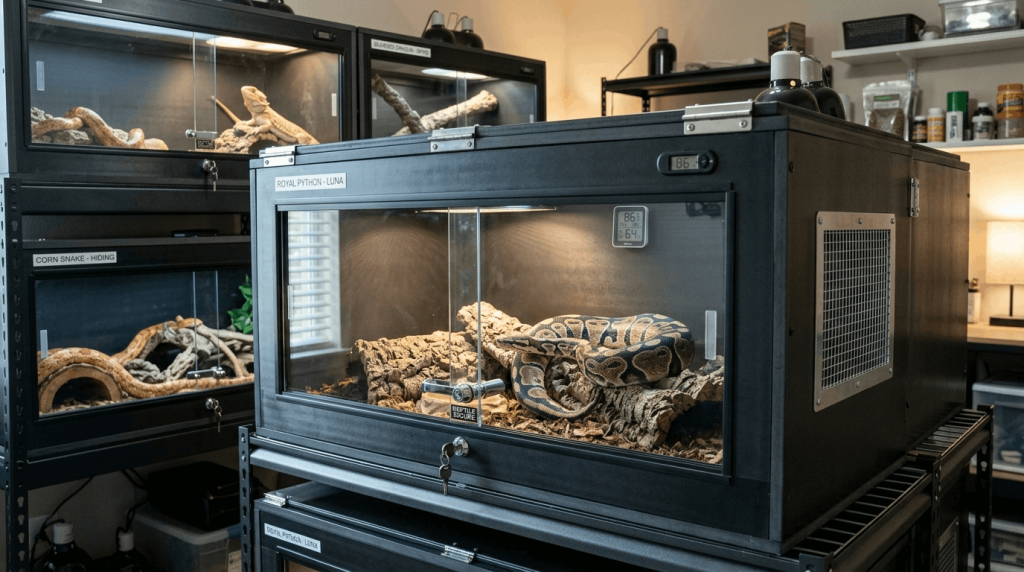

Reptiles thrive when their environments feel stable, safe, and comfortable. Unfortunately, many owners underestimate how important enclosure security truly is. Poor habitat design can lead to escapes, injuries, overheating, stress, or even life-threatening accidents. Secure reptile enclosures protect reptiles from environmental dangers while also helping owners maintain better temperature control, humidity balance, and overall safety.
Every reptile species has unique enclosure needs. A leopard gecko requires a very different setup from a bearded dragon or ball python. However, all reptiles need habitats that prevent escapes and reduce unnecessary stress. When enclosures feel predictable and protected, reptiles behave more naturally and remain healthier long term.
Many beginners focus mainly on decorations and lighting. While those elements matter, enclosure security should always come first. Reptiles are often stronger, faster, and more determined than owners expect. Small gaps, unstable lids, or weak locks can quickly become serious problems. Therefore, understanding how to create secure reptile enclosures helps prevent expensive mistakes and dangerous situations.
Why Reptile Enclosure Security Matters
Reptiles rely heavily on their surroundings for physical and emotional stability. Unlike cats or dogs, reptiles cannot regulate body temperature internally. Their habitat controls nearly every aspect of their health, including digestion, hydration, stress levels, and activity patterns.
When reptiles escape, they face major risks inside homes. They may become trapped behind furniture, injured by pets, exposed to toxic chemicals, or unable to regulate body temperature. Small reptiles especially can disappear into tiny spaces within seconds. Therefore, secure reptile enclosures protect both the animal and the household.
Stress reduction is another important reason enclosure security matters. Reptiles feel vulnerable when habitats lack hiding spots, proper barriers, or stable environmental conditions. Chronic stress can weaken immunity and increase illness risk over time. Secure habitats help reptiles feel safer, which encourages normal eating, basking, and exploration behavior.
Owners also benefit from improved enclosure safety. Locked lids, stable heating equipment, and organized wiring reduce accident risks around children and other pets. Additionally, secure setups make routine maintenance much easier and more predictable.
Choosing the Right Enclosure Type
Selecting the proper enclosure forms the foundation of reptile safety. Different species require different materials, ventilation styles, and space layouts. Glass terrariums remain popular because they provide visibility and help maintain humidity. However, some reptiles become stressed by excessive exposure through transparent walls.
PVC enclosures are growing more popular because they hold heat efficiently and provide stronger insulation. These habitats often work especially well for snakes and tropical reptiles that require stable humidity levels. Additionally, PVC designs typically include stronger locking systems.
Screen enclosures suit species needing excellent airflow, such as certain chameleons. However, they may not work well for reptiles requiring high humidity or warmer nighttime temperatures. Therefore, owners should always research species-specific environmental needs carefully.
The size of the enclosure matters as much as the material. Cramped habitats increase stress and reduce natural movement. Meanwhile, oversized setups without proper hiding areas may overwhelm shy reptiles. Secure reptile enclosures balance space, security, and environmental control effectively.
Preventing Escapes From Reptile Habitats
Escape prevention should remain a top priority for every reptile owner. Many reptiles are surprisingly skilled climbers, diggers, or pushers. Even small gaps around lids or doors may allow escapes.
Locks are extremely important, especially for snakes and larger lizards. Sliding glass doors should include reliable locking mechanisms that prevent accidental openings. Lightweight lids may require clamps to stop reptiles from lifting them during climbing attempts.
Cable holes and ventilation openings deserve close attention as well. Young snakes and geckos can squeeze through surprisingly narrow spaces. Therefore, all openings should remain tightly secured without compromising airflow.
Routine inspections help identify weak points before problems occur. Over time, hinges, mesh panels, and latches may loosen from regular use. Checking enclosure stability weekly helps maintain long-term safety.
Some reptiles also attempt escapes when environmental conditions feel uncomfortable. Incorrect temperatures, poor humidity, or insufficient hiding spots may encourage restless behavior. Therefore, maintaining proper habitat conditions reduces escape attempts naturally.
Proper Heating Safety for Reptile Enclosures
Heating equipment creates one of the biggest safety risks inside reptile habitats. Without proper protection, heat lamps and heating pads can cause burns, overheating, or fire hazards. Secure reptile enclosures should always include safely installed heating systems.
Heat lamps should remain firmly mounted outside the enclosure whenever possible. Internal bulbs may burn climbing reptiles that accidentally touch hot surfaces. Protective lamp guards provide additional safety around basking areas.
Heating pads also require careful placement. Pads placed inside habitats may overheat reptiles directly. Instead, they should remain beneath designated sections of the enclosure while connected to reliable thermostats.
Thermostats are essential safety tools. They regulate temperatures automatically and help prevent dangerous overheating. Without temperature control, even high-quality heating equipment may become unsafe.
Owners should also monitor temperatures using accurate thermometers placed in multiple enclosure zones. Warm and cool areas allow reptiles to regulate body temperature naturally. Consistent monitoring helps prevent health complications related to improper heating.
Humidity Control and Ventilation Balance
Humidity management directly affects reptile health and enclosure safety. Excessive moisture encourages mold growth and bacterial buildup. Meanwhile, overly dry conditions can cause shedding problems and dehydration.
Secure reptile enclosures maintain balanced humidity through proper ventilation and substrate selection. Tropical reptiles usually require higher humidity levels, while desert species thrive in drier conditions. Therefore, owners must understand their reptile’s natural environment carefully.
Ventilation helps prevent stagnant air and excessive moisture accumulation. However, too much airflow may dry the habitat too quickly. Adjustable ventilation systems often provide the best flexibility for maintaining stable conditions.
Substrate choice also influences humidity control. Coconut fiber, cypress mulch, and moss hold moisture well for tropical species. Conversely, sand-based or dry substrates suit arid reptiles more effectively.
Regular cleaning prevents bacterial growth caused by trapped moisture. Spot-cleaning waste daily and performing deep cleanings regularly keeps habitats safer and healthier long term.
Safe Decorations and Habitat Furniture
Decorations improve enrichment, yet unsafe items can create serious hazards. Sharp edges, unstable climbing branches, or poorly secured rocks may injure reptiles unexpectedly. Therefore, all habitat furniture should remain stable and reptile-safe.
Heavy decorations should sit directly on the enclosure floor rather than loose substrate. Burrowing reptiles may shift substrate beneath heavy objects, increasing collapse risks. Stable placement prevents crushing injuries.
Natural branches and driftwood provide excellent climbing opportunities for many reptiles. However, these items should be cleaned properly before use to remove pests and contaminants. Additionally, climbing structures should support the reptile’s weight safely.
Hiding spots are equally important. Reptiles feel safer when they can retreat into enclosed spaces during stress. Secure reptile enclosures usually include multiple hides positioned throughout warm and cool zones.
Artificial plants may improve visual security, especially for shy reptiles. Nevertheless, owners should avoid sharp plastic decorations that could scratch delicate skin or eyes.
Lighting Safety for Reptiles
Proper lighting supports reptile health, but unsafe setups may create unnecessary danger. UVB lighting is especially important for many reptiles because it helps regulate calcium metabolism and bone health.
Light fixtures should remain securely mounted to prevent falls or electrical hazards. Loose fixtures may damage enclosures or injure reptiles unexpectedly. Owners should also replace UVB bulbs regularly because their effectiveness decreases over time.
Electrical cords should remain organized and protected from moisture exposure. Water spills near exposed electrical equipment increase fire risks significantly. Cable management systems help keep habitats cleaner and safer overall.
Timers improve lighting consistency while reducing stress for reptiles. Stable day and night cycles support natural behavior patterns and healthy sleep routines. Therefore, automated lighting schedules often benefit both owners and reptiles.
Cleaning and Maintenance Without Stress
Regular maintenance keeps reptile habitats safer and healthier. However, cleaning routines should minimize stress whenever possible. Sudden environmental changes may make reptiles anxious or defensive.
Spot-cleaning daily helps reduce bacterial buildup without disturbing the enclosure excessively. Removing waste quickly also helps control odors and humidity levels more effectively.
Deep cleaning schedules depend on species, enclosure size, and substrate type. During deep cleanings, reptiles should remain temporarily housed in secure containers with stable temperatures.
Disinfectants used inside reptile habitats must remain reptile-safe. Strong chemicals or scented cleaners may irritate sensitive respiratory systems. Warm water and reptile-safe cleaning products usually work best.
Monitoring enclosure wear is equally important. Cracked glass, weakened mesh, or damaged locks should be repaired immediately. Small structural problems can become major safety risks if ignored.
Common Mistakes Owners Should Avoid
Many reptile enclosure problems begin with simple mistakes. One common issue involves choosing habitats that are too small. Limited space increases stress and prevents natural movement behaviors.
Another frequent mistake involves poor temperature management. Without thermostats or proper monitoring, reptiles may suffer burns or chronic stress from unstable conditions.
Owners also sometimes overcrowd enclosures with excessive decorations. While enrichment matters, cluttered habitats may reduce movement space and make maintenance difficult.
Using incorrect substrates creates additional problems. Certain loose substrates may cause impaction risks when swallowed accidentally. Therefore, substrate choices should match species-specific needs carefully.
Weak locks and unsecured lids remain another major issue. Even calm reptiles may attempt escapes unexpectedly. Therefore, reliable enclosure security should never be overlooked.
Creating Long-Term Stability for Reptiles
Consistency plays a major role in reptile health and behavior. Reptiles thrive when environmental conditions remain stable over time. Frequent habitat changes or inconsistent routines may create chronic stress.
Secure reptile enclosures provide predictable conditions that encourage natural activity patterns. Reptiles often become more confident and relaxed when they trust their environment fully.
Observation helps owners identify potential problems early. Appetite changes, unusual hiding behavior, or restlessness may signal environmental concerns inside the habitat. Paying attention to behavioral changes allows faster corrections before health declines.
As reptiles grow, enclosure needs may change as well. Larger species especially may require upgraded habitats over time. Planning ahead helps avoid rushed or unsafe transitions later.
Long-term success comes from balancing safety, enrichment, cleanliness, and environmental control. When all these elements work together, reptiles usually display healthier behavior and improved overall condition.
Conclusion
Creating secure reptile enclosures is one of the most important responsibilities reptile owners face. Safe habitats protect reptiles from escapes, burns, stress, injuries, and dangerous environmental conditions. Although decorative setups may look impressive, true reptile health depends on stability, security, and proper environmental management.
Strong locks, reliable heating systems, balanced humidity, and safe decorations all contribute to healthier reptile care. Additionally, regular maintenance and careful observation help owners identify problems before they become serious.
Every reptile species has unique needs, yet all reptiles benefit from safe and predictable habitats. Investing time into proper enclosure design improves both reptile welfare and owner confidence. Ultimately, secure environments allow reptiles to behave naturally, remain healthier, and live more comfortable lives for years to come.
FAQ
1. What is the safest enclosure type for reptiles?
PVC and glass enclosures with secure locks are often safest because they provide stability, temperature control, and escape prevention.
2. How do reptiles usually escape from tanks?
Most escapes happen through loose lids, weak locks, ventilation gaps, or damaged enclosure panels.
3. Should heat lamps stay inside reptile enclosures?
External mounting is usually safer because direct contact with hot bulbs can burn reptiles.
4. How often should reptile habitats be cleaned?
Spot-cleaning should happen daily, while deep cleaning schedules depend on species and enclosure conditions.
5. Why is ventilation important in reptile tanks?
Proper airflow prevents excess moisture buildup, reduces mold risks, and supports healthier respiratory conditions.


