
Bringing two different species together can feel exciting, especially when both seem gentle, social, and curious. Yet many owners don’t realize how complex these introductions can be. If you want to safely introduce rabbits to guinea pigs, you need a plan that prioritizes their physical and emotional wellbeing. Although both species enjoy companionship, they communicate differently, move differently, and have distinct social structures. These differences can lead to misunderstandings that cause stress or even injury.
Rabbits tend to be confident, fast, and territorial. Guinea pigs are more timid, smaller, and easily overwhelmed. Even soft thumps of a rabbit’s back foot can frighten a guinea pig. Because of this, thoughtful introductions protect both pets. While it may be tempting to place them together quickly, slow, structured steps create a safer foundation. When you approach the process intentionally, you reduce anxiety and help each animal adjust gradually.
In this guide, we’ll explore how to safely introduce rabbits to guinea pigs, whether they make good long-term companions, and the essential steps every owner should follow. These insights help you avoid common mistakes and support a calm, comfortable transition for both animals.
Why Learning to Safely Introduce Rabbits Matters
Before you attempt any introduction, it’s crucial to understand why caution matters. Rabbits are much stronger than guinea pigs. Even a playful hop or kick can injure a guinea pig instantly. Because rabbits move rapidly and assert dominance with body language, guinea pigs may misinterpret those signals. Stress rises quickly when communication styles clash.
Additionally, learning how to safely introduce rabbits protects both pets from disease. Rabbits can carry Bordetella, a bacteria that often causes respiratory infections in guinea pigs. When pets share spaces too soon, illness spreads easily. Slow introductions allow you to monitor symptoms, maintain separation when needed, and assess comfort levels at a manageable pace. Careful steps not only prevent fear but also preserve long-term health.
Although rabbits and guinea pigs appear compatible at first glance, their natural behaviors prove otherwise. Understanding these differences equips you to create a safe and structured introduction process that reduces problems before they start.
Understanding Temperament Differences Before You Introduce Them
If you want to safely introduce rabbits, you need to study the behaviors that set rabbits and guinea pigs apart. Rabbits are highly expressive. They thump, lunge, circle, or hop to communicate needs. Guinea pigs use soft vocalizations and subtle body movements. These different styles often clash.
Rabbits may:
- Assert dominance
- Nip gently to communicate
- Chase when curious
- Kick if startled
Guinea pigs, on the other hand, tend to:
- Freeze when afraid
- Hide rather than confront
- Squeak or whistle softly
- Avoid larger animals instinctively
When you understand these mismatches, you’re better prepared to introduce them safely. Even when both seem friendly, misunderstandings occur quickly. These mismatches make slow, thoughtful introductions essential for both pets’ wellbeing.
Preparing a Safe Environment Before the First Meeting
Preparation plays a huge role when you’re trying to safely introduce rabbits to guinea pigs. Neither animal should feel trapped or overwhelmed. Because of this, choosing a neutral space prevents territorial reactions. Neutral zones reduce defensive behavior and help both pets begin calmly.
A proper introduction space should include:
- Open floor area
- Plenty of hiding spots
- Low barriers they can see through
- Non-slip flooring
- Enough space for retreat
Before the meeting, ensure both animals are healthy. Stress weakens the immune system, and illness spreads more easily during introductions. It’s also wise to trim the rabbit’s nails, since guinea pigs injure easily.
Additionally, remove food and treats from the area during early sessions. Food can trigger guarding behavior. By eliminating potential triggers, you give both pets a better chance to adjust without conflict.
The First Step: Scent-Based Introduction
When learning how to safely introduce rabbits, scent swapping is a foundational step. Animals rely heavily on scent to identify new individuals. Allowing them to smell each other before meeting face-to-face reduces fear and confusion.
Effective scent introduction methods include:
- Swapping blankets between enclosures
- Moving a toy from one habitat to the other
- Bringing bedding from one cage to the opposite cage
- Allowing each pet to explore the other’s playpen while the original pet is absent
These early scent cues help both pets relax. They also allow you to gauge reactions before physical proximity occurs. If either pet exhibits signs of stress—teeth chattering, freezing, thumping, or running—slow the process and give them more time.
Gradual Visual Introductions Without Physical Contact
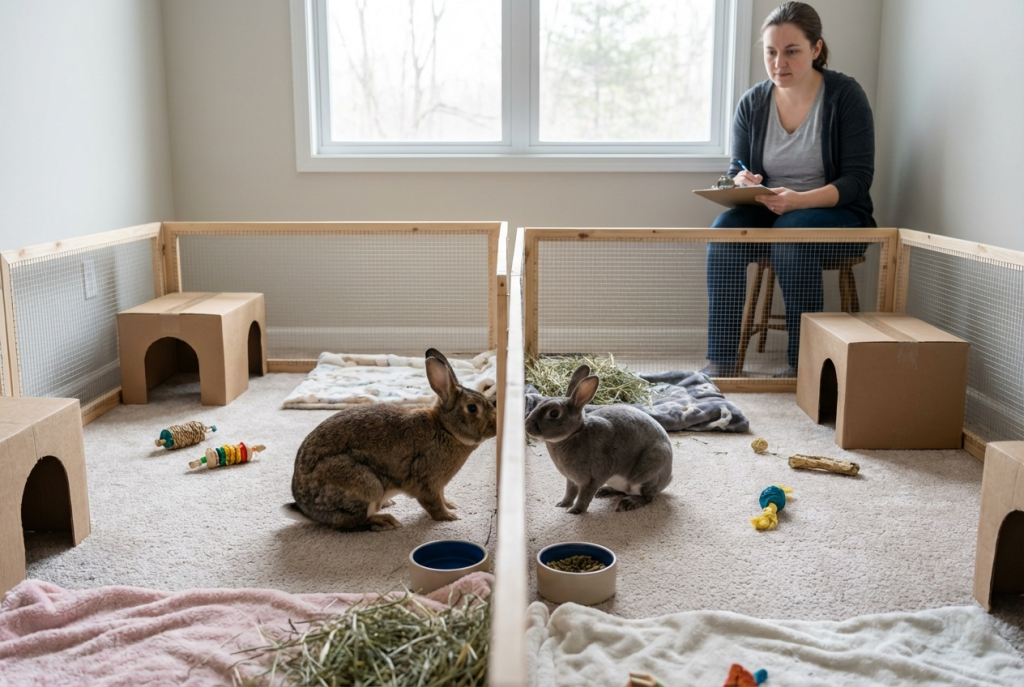
Once scent awareness becomes familiar, the next stage is visual introduction. This step helps you safely introduce rabbits by letting both animals observe each other at a distance. Use a barrier, such as a clear pen wall or baby gate, so they can see and hear each other without touching.
During this phase, monitor:
- Movement patterns
- Body tension
- Vocalizations
- Attempts to flee or hide
If both animals remain calm, you can gradually reduce the distance. However, if the rabbit appears overly excited or the guinea pig becomes stiff or silent, increase space and slow the pace. Because each animal adjusts differently, it’s important not to rush. Visual introductions should continue for several sessions until both show consistent comfort.
Controlled, Neutral-Space Face-to-Face Introductions
After several successful visual sessions, you can move to the next stage of safely introducing rabbits: short, closely supervised meetings. These interactions must occur in a neutral area—not in either pet’s usual territory.
During these sessions:
- Keep duration short (5–10 minutes)
- Stay close and alert
- Allow gentle sniffing
- Interrupt chasing or lunging immediately
- Offer escape routes for the guinea pig
Positive signs include relaxed posture, slow movements, and quiet curiosity. Negative signs—such as thumping, raised fur, hiding, or squeaking—signal the need to stop. Ending sessions early prevents fear from building and helps both animals stay confident.
Gradually increase session length as both pets relax. However, supervision should remain constant, as rabbits can react suddenly.
Why Housing Rabbits and Guinea Pigs Together Is Not Recommended
Even if you safely introduce rabbits during early stages, long-term cohabitation is rarely recommended. Many experts advise against shared housing because the risks outweigh the potential benefits.
Key concerns include:
- Size imbalance leading to injuries
- Different nutritional requirements
- Opposing communication styles
- Disease transmission
- Chronic stress for the guinea pig
Guinea pigs require constant access to vitamin C, while rabbits do not. Additionally, rabbits groom differently, move differently, and establish dominance physically. These contrasts lead to tension in shared habitats.
Therefore, introductions should be treated as controlled interactions, not preparation for cohabitation.
Creating Safe Supervised Play Sessions
If you choose to let rabbits and guinea pigs interact occasionally, follow strict safety guidelines. Structured play sessions allow them to engage without sharing living spaces.
Safe play requires:
- A neutral, open area
- Hiding houses with multiple exits
- Soft bedding or mats
- Constant supervision
- No elevated surfaces
Many owners enjoy allowing both pets to explore together while keeping each species’ habitat separate. This creates enrichment without unnecessary risk.
Recognizing Stress Signals During Introductions
To safely introduce rabbits, you must learn to read body language. Stress affects each species differently, and recognizing these signs prevents escalation.
Rabbit stress signals include:
- Thumping
- Lunging
- Grunting
- Pinning ears back
- Circling behavior
Guinea pig stress signals include:
- Freezing
- Rapid breathing
- Squeaking softly
- Hiding continuously
- Shaking
If you observe any of these signs, end the session immediately. When both pets feel overwhelmed, it becomes harder to rebuild trust in future interactions. By pausing early, you help them maintain positive associations.
Protecting Each Pet’s Core Needs During Introductions
Successful introductions respect each animal’s natural instincts. Even during short sessions, rabbits and guinea pigs must feel safe.
Support your pets by ensuring:
- Adequate space
- Reliable escape routes
- Minimal noise
- Calm handling
- Predictable timing
- Gentle supervision
Meeting these needs boosts their confidence. Confidence reduces fear-based behavior, making introductions smoother and safer.
Health Checks Before You Safely Introduce Rabbits
Before any interaction, schedule a veterinary exam for both animals. Guinea pigs are especially vulnerable to respiratory infections. Because rabbits commonly carry Bordetella without symptoms, health checks are crucial.
Your vet may recommend:
- Screening for bacteria
- Evaluating overall stress tolerance
- Checking for parasites
- Reviewing diet and immune health
A clean bill of health ensures you’re not accidentally placing your guinea pig at risk.
Why Time and Patience Matter in Every Introduction
Patience is the foundation of safely introducing rabbits. Some pairs adjust within weeks. Others require months. Progress isn’t always linear. There may be setbacks, slow days, or moments when one pet wants more distance.
Rushing introductions increases conflict. Moving slowly strengthens trust, reduces fear, and improves long-term outcomes. As you observe their reactions, your instincts sharpen. Over time, you’ll learn exactly when to pause and when to proceed.
Conclusion
Learning how to safely introduce rabbits to guinea pigs empowers you to protect both pets. While these species can enjoy supervised interactions, they should not share living spaces due to differences in communication, strength, and medical risks. By using scent introduction, visual exposure, neutral territory meetings, and patient supervision, you create positive, low-stress experiences for both animals. When you prioritize safety and take your time, your pets remain healthy, confident, and comfortable throughout every stage of the introduction process.
FAQ
1. Can rabbits and guinea pigs live together full-time?
No. Their behavioral and health differences make cohabitation unsafe.
2. How long does the introduction process take?
It varies. Some pets adjust within weeks, while others need months.
3. What if my rabbit tries to chase the guinea pig?
Stop the session immediately and resume introductions later at a slower pace.
4. Do rabbits and guinea pigs understand each other’s behavior?
Not fully. Their communication styles differ, which often leads to confusion.
5. What is the safest way for them to interact?
Supervised play sessions in neutral territory provide enrichment without long-term risk.