
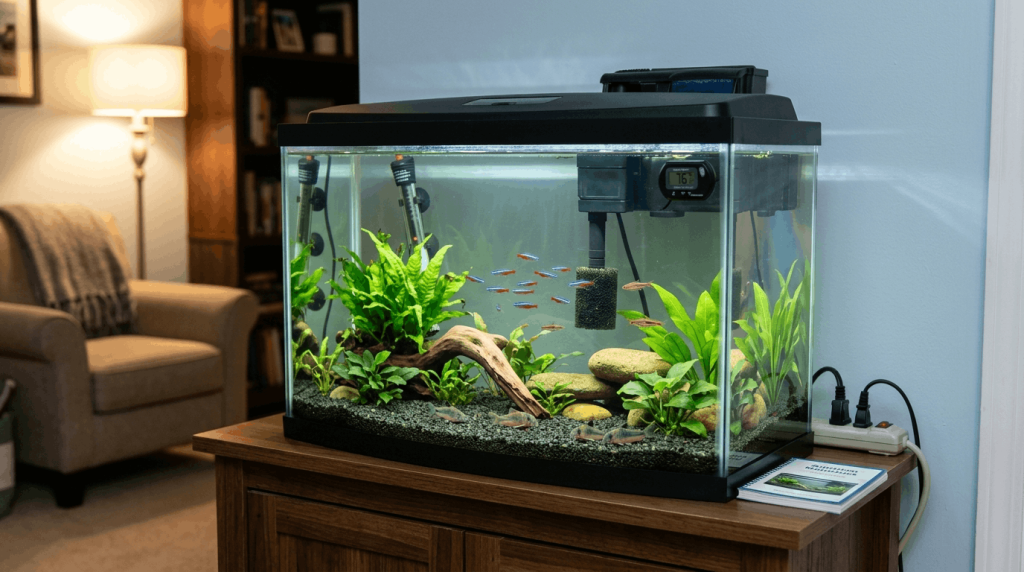

Creating a safe aquarium at home is more than just placing fish in a tank and adding water. It involves careful planning, proper equipment, and consistent care to ensure your aquatic environment remains stable and healthy. Many beginners overlook key safety factors, which can lead to stress, illness, or even loss of fish. However, when you understand the essentials, building a safe aquarium at home becomes both manageable and rewarding.
At first, the idea may feel overwhelming. There are filters, heaters, lighting systems, and water treatments to consider. Still, once you break it down into simple steps, everything becomes easier to handle. More importantly, taking the time to do it right from the start helps you avoid common mistakes and keeps your aquarium thriving for years.
Why Safety Matters in Aquarium Setup
A safe aquarium at home protects not only your fish but also your living space. Poor setups can lead to water leaks, electrical hazards, or unstable water conditions. Therefore, focusing on safety ensures that both your pets and your home environment remain secure.
Fish are sensitive creatures. Even small changes in water quality or temperature can affect their health. Because of this, maintaining stable conditions is essential. A safe aquarium at home minimizes sudden changes and creates a predictable environment where fish can thrive.
Additionally, safety extends beyond the tank. Proper placement, secure equipment, and clean maintenance routines prevent accidents and reduce stress for both you and your fish. When everything works together smoothly, your aquarium becomes a calming and enjoyable part of your home.
Choosing the Right Tank and Location
The foundation of a safe aquarium at home starts with selecting the right tank and placing it correctly. Size matters more than most people think. Larger tanks are actually easier to maintain because they provide more stable water conditions.
When choosing a location, avoid direct sunlight. Too much light encourages algae growth and can overheat the water. Instead, place the tank in a cool, stable area away from windows and drafts. This simple step helps maintain a safe aquarium at home without constant adjustments.
Surface stability is also important. Always place the tank on a sturdy stand designed to support its weight. Water is heavy, and an unstable surface can lead to cracks or leaks. Therefore, ensuring proper support is a critical safety measure.
Electrical outlets should be nearby but not directly under the tank. This reduces the risk of water dripping onto plugs. Using drip loops with cords adds another layer of protection, making your setup safer and more reliable.
Essential Equipment for a Safe Setup
To maintain a safe aquarium at home, you need the right equipment working together. Each component plays a role in keeping the environment balanced and secure.
A high-quality filter is essential. It removes waste, maintains water clarity, and supports beneficial bacteria. Without proper filtration, toxins can build up quickly. As a result, your fish may become stressed or ill.
Heaters are necessary for tropical fish. However, they must be reliable and properly installed. Sudden temperature changes can harm fish, so using a heater with a thermostat helps maintain consistency. Regular checks ensure everything functions correctly.
Lighting also plays a role. While it enhances the appearance of your tank, it must be controlled. Too much light can cause algae problems, while too little may affect plant growth. Balanced lighting supports a safe aquarium at home and keeps your tank visually appealing.
Finally, a secure lid is often overlooked. It prevents fish from jumping out and keeps debris from entering the tank. This simple addition adds another layer of safety.
Water Quality and Conditioning Basics
Water quality is one of the most important factors in creating a safe aquarium at home. Even if everything else is perfect, poor water conditions can quickly harm your fish.
Tap water contains chlorine and other chemicals that are unsafe for fish. Therefore, using a water conditioner is essential before adding water to the tank. This step removes harmful substances and makes the water safe.
Cycling the tank is another critical process. It allows beneficial bacteria to grow and break down waste products. Although it takes time, cycling ensures a stable environment. Skipping this step often leads to dangerous ammonia spikes.
Regular testing helps maintain balance. Test kits allow you to monitor pH, ammonia, nitrite, and nitrate levels. By checking these regularly, you can make adjustments before problems occur. This proactive approach keeps your safe aquarium at home running smoothly.
Fish Selection and Compatibility
Choosing the right fish is just as important as setting up the tank. A safe aquarium at home depends on compatibility between species. Some fish are peaceful, while others may be aggressive or territorial.
Research each species before adding it to your tank. Understanding their behavior, size, and care needs helps prevent conflicts. Overcrowding should also be avoided, as it increases stress and reduces water quality.
Introducing fish gradually is a smart approach. Adding too many at once can disrupt the balance of the tank. Instead, allow time for the environment to adjust after each addition. This method supports a safe aquarium at home and keeps your fish comfortable.
Quarantining new fish is another helpful step. It prevents the spread of disease and gives you time to observe their health. Although it requires extra effort, it greatly improves overall safety.
Maintenance Habits That Prevent Problems
Consistent maintenance is key to keeping a safe aquarium at home. Even a well-designed setup needs regular care to stay healthy and stable.
Partial water changes should be done weekly or biweekly. This removes waste and replenishes essential minerals. At the same time, cleaning the substrate helps prevent buildup that can affect water quality.
Filter maintenance is also important. While filters should not be cleaned too often, they need occasional rinsing to stay effective. Always use tank water instead of tap water to preserve beneficial bacteria.
Observing your fish daily can reveal early signs of trouble. Changes in behavior, appetite, or appearance often indicate underlying issues. By catching these signs early, you can take action before problems worsen.
Maintaining a routine ensures your safe aquarium at home remains stable and enjoyable over time.
Common Safety Mistakes to Avoid
Even experienced aquarium owners can make mistakes that compromise a safe aquarium at home. One common error is overfeeding. Excess food leads to waste buildup, which harms water quality.
Another mistake is neglecting equipment checks. Heaters, filters, and lights can fail over time. Therefore, inspecting them regularly helps prevent sudden issues.
Using incompatible decorations is also risky. Sharp or poorly made items can injure fish. Always choose aquarium-safe materials to avoid harm.
Skipping quarantine procedures is another frequent problem. Introducing new fish without proper checks can spread disease quickly. Taking preventive steps reduces this risk and keeps your tank healthy.
By avoiding these mistakes, you strengthen the foundation of your safe aquarium at home.
Long-Term Benefits of a Safe Aquarium
Maintaining a safe aquarium at home offers long-term benefits for both you and your fish. A stable environment reduces stress, promotes healthy growth, and enhances the natural beauty of your tank.
Healthy fish are more active and display vibrant colors. This makes your aquarium more enjoyable to watch and interact with. In addition, a well-maintained setup requires fewer emergency interventions, saving time and effort.
Over time, you will gain confidence in your ability to manage your aquarium. This knowledge allows you to expand your setup or try new species with greater success. Ultimately, a safe aquarium at home becomes a rewarding and relaxing part of your daily life.
Conclusion
Building a safe aquarium at home requires attention to detail, but the process becomes easier with practice. By focusing on proper setup, consistent maintenance, and thoughtful fish selection, you create an environment where your fish can thrive.
Although challenges may arise, staying proactive makes a big difference. Regular monitoring, careful feeding, and equipment checks help prevent most problems before they start. As a result, your aquarium remains stable and enjoyable.
In the end, a safe aquarium at home is not just about avoiding risks. It is about creating a peaceful, balanced ecosystem that brings life and beauty into your space. With the right approach, your aquarium can become a source of relaxation and pride for years to come.
FAQ
1. How often should I clean my aquarium to keep it safe?
You should perform partial water changes weekly or every two weeks to maintain clean and stable conditions.
2. What is the safest way to introduce new fish?
Introduce new fish slowly and consider quarantining them first to prevent disease and stress in your tank.
3. Can I place my aquarium near a window?
It is best to avoid direct sunlight because it can cause algae growth and temperature fluctuations.
4. What equipment is most important for beginners?
A reliable filter, heater, lighting system, and secure lid are essential for maintaining a stable setup.
5. How do I know if my fish are stressed or unhealthy?
Watch for changes in behavior, appetite, or appearance, as these signs often indicate potential problems.