
Feeding the right diet for parrots is one of the most meaningful ways to support their long-term health and wellbeing. Parrots rely heavily on nutrition not just for physical growth but also for cognitive development, feather quality, immune strength, and emotional balance. Because parrots live long lives and progress through several distinct life stages, their dietary needs evolve dramatically over time. Understanding how to feed a parrot well at every age allows you to provide the foundation they need to thrive.
A baby parrot doesn’t eat like a teenager. A teenager doesn’t eat like an adult. And an adult doesn’t eat like a senior. Yet many parrot owners feed the same foods throughout their bird’s entire life. Although well-intentioned, this approach overlooks the dramatic shifts that occur in a parrot’s metabolism, hormonal patterns, and physical development.
The right diet for parrots changes as their bodies grow, mature, and age. When you learn how to tailor nutrition to each stage, your parrot benefits from proper bone development, healthy hormones, stable energy, and longer life expectancy. Even emotional health improves when your parrot receives balanced nutrition designed specifically for their age.
All parrots — from the smallest budgies to the largest cockatoos — benefit from a nutritional approach that respects their natural dietary instincts. With thoughtful feeding, you give your bird a happier, healthier, and more vibrant life.
Why the Right Diet for Parrots Changes with Age
Just like humans, parrots go through distinct periods of growth that require different nutrients. A young parrot needs high-density calories for rapid development. A hormonal adolescent needs nutrient balance to stabilize energy and prevent aggression. An adult parrot needs maintenance-focused nutrition that prevents obesity. And a senior parrot needs foods that support joint health, digestion, and immune strength.
Because each stage places different demands on the body, the right diet for parrots must shift accordingly. Providing the wrong nutrients at the wrong time can lead to:
• Weak bones
• Feather problems
• Hormonal imbalance
• Obesity
• Nutrient deficiencies
• Premature aging
• Behavioral issues
Parrots thrive when their diet changes with them. By recognizing these shifts, you ensure your feathered companion stays healthy at every step.
Feeding Baby Parrots: The Start of a Healthy Life
Baby parrots, or chicks, require the most specialized nutrition because their bodies grow rapidly. During this stage, parrots develop bones, feathers, organs, and immune systems at an accelerated pace. Because their growth is so intense, their diet needs to be extremely supportive.
Hand-Feeding Formula
Most baby parrots rely on hand-feeding formula designed specifically for neonatal birds. These formulas include:
• Highly digestible proteins
• Easily absorbed fats
• Essential vitamins
• Supportive minerals
• Probiotics for gut development
Consistency, temperature, and feeding schedule all matter. Feeding too cold or too hot formula can cause crop issues. Overfeeding or underfeeding affects growth.
Transition Foods
As chicks grow, their bodies prepare for solid foods. Soft vegetables, soaked pellets, and mashed fruits work well during this early weaning stage. This slow transition teaches baby parrots to explore textures and tastes while receiving essential nutrients.
Providing the right diet for parrots during the baby stage sets the foundation for strong bones, healthy feathers, and robust immunity.
The Right Diet for Juvenile Parrots
Juvenile parrots — young birds who have fully weaned but are not yet adults — face a new set of nutritional challenges. They grow rapidly, build muscle, and develop cognitive abilities. Their diet must support playful energy, learning, and physical development.
Balanced Pellets as the Base
High-quality pellets should become the main portion of their diet. These pellets offer:
• Complete vitamins
• Balanced minerals
• Controlled fats
• Consistent nutrition
Juvenile parrots need stability while their bodies grow.
Fresh Foods for Exploration
Young parrots learn through play. Fresh foods encourage exploration and broaden their diet. Offer:
• Leafy greens
• Mixed vegetables
• Sprouts
• Fruits (in moderation)
• Cooked grains
These foods supply antioxidants, hydration, and enrichment while reinforcing natural eating behaviors.
Protein for Muscle Development
Juvenile parrots need more protein than adults. Provide healthy sources such as:
• Legumes
• Whole grains
• Small portions of cooked eggs
• Seeds in moderation
Protein fuels growing muscles and supports active, busy birds.
The Right Diet for Adult Parrots
Adult parrots need a balanced diet that supports daily energy without encouraging weight gain. Many captive parrots become overweight because they receive too many seeds or high-fat foods. Adult parrots require maintenance-focused nutrition.
Pellets as the Foundation
Pellets should make up 60–70% of the diet. They offer predictable nutrition and help prevent deficiencies. Choose pellets without artificial colors or unnecessary fillers.
Fresh Produce Daily
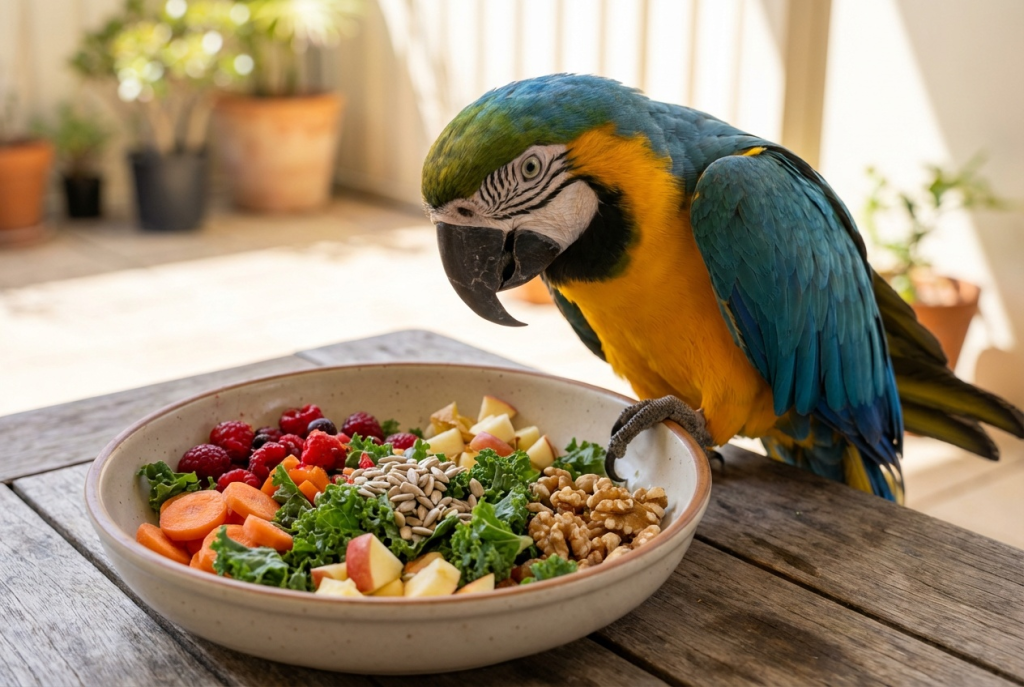
Fresh vegetables should be offered every day. Variety supports broad nutrition. Excellent options include:
• Kale
• Carrot
• Zucchini
• Broccoli
• Bell peppers
• Herbs
Fruits should remain limited because of natural sugars. Offer small amounts several times a week.
Seeds as Treats, Not Staples
Seeds are high in fat. While they can be part of the right diet for parrots, adult birds should receive them sparingly. Use seeds for training rewards or special enrichment rather than as a daily staple.
Healthy Omega Fats
Adult parrots benefit from small amounts of healthy fats. Add:
• Flax
• Chia
• Marine omega supplements
These support skin, feathers, and brain function.
Feeding Senior Parrots: Supporting Aging Gracefully
Senior parrots often require dietary adjustments because their bodies digest food differently. Metabolism slows. Feather growth may decline. Bones may weaken. Immune systems may need extra support.
Soft, Digestible Foods
Older parrots benefit from foods that are easier to chew and digest. Offer:
• Cooked vegetables
• Softened pellets
• Warm grain mixes
• Soaked legumes
These support comfort and nutrient absorption.
Joint-Supportive Nutrients
Add foods or supplements that support joint health:
• Omega-3 oils
• Natural anti-inflammatory herbs
• Minerals that support bone strength
These help aging parrots stay active and mobile.
Controlled Calories
Senior parrots often burn fewer calories. Adjust portion sizes to prevent weight gain.
Boosting Immunity
Antioxidant-rich foods support long-term health:
• Berries
• Dark greens
• Herbs
• Sprouts
The right diet for parrots in their senior years greatly influences longevity.
Understanding the Role of Fresh Foods in Every Life Stage
While pellets provide stability, fresh foods provide vitality. Regardless of age, parrots benefit from produce that offers hydration, natural nutrients, and sensory enrichment.
Fresh foods provide:
• Vitamins
• Minerals
• Fiber
• Antioxidants
• Natural textures
• Foraging opportunities
Healthy produce choices include:
• Leafy greens
• Carrots
• Snap peas
• Pumpkin
• Squash
• Berries
• Mango
• Papaya
Avoid toxic foods such as avocado, chocolate, caffeine, onion, and garlic.
Fresh foods not only support the right diet for parrots — they enrich your parrot’s emotional and sensory world.
Seeds, Nuts, and Treats at Every Life Stage
Seeds and nuts can be valuable when given properly. However, overfeeding can cause obesity or imbalanced nutrition.
Baby Parrots
Avoid seeds and nuts until fully weaned.
Juvenile Parrots
Offer tiny amounts as training rewards.
Adult Parrots
Provide nuts occasionally for enrichment.
Senior Parrots
Use smaller portions to prevent weight gain.
Healthy nuts include:
• Almonds
• Walnuts
• Pistachios
Offer unsalted, raw versions only.
Seeds such as sunflower or safflower should be treats, not staples.
Hydration: A Critical Part of Parrot Nutrition
Water plays a major role in digestion, organ health, and body temperature regulation.
Ensure your parrot always has:
• Fresh, clean water
• No exposure to metal contamination
• Access to water during exercise
Misting and bathing can support hydration indirectly, especially in low-humidity homes.
Proper hydration completes the right diet for parrots at every life stage.
How Foraging Supports Nutrition at All Ages
Foraging is deeply connected to food. When parrots forage, they engage natural instincts that improve their mental health. Foraging supports better digestion, reduces stress, and encourages natural movement.
You can add foraging to any diet by:
• Hiding fresh foods in toys
• Wrapping pellets in paper
• Using puzzle feeders
• Hanging leafy greens
• Creating food-based challenges
This enrichment enhances both nutrition and emotional wellbeing.
Transitioning Your Parrot to a New Diet
Diet transitions should be gradual. Sudden changes can cause digestive upset or food refusal.
Transition over 2–3 weeks by:
• Mixing old and new foods
• Increasing the new food slowly
• Offering fresh produce consistently
• Monitoring droppings and appetite
A slow transition supports acceptance and comfort.
Conclusion
Feeding the right diet for parrots at every life stage ensures a lifetime of vibrant health, emotional balance, and strong physical development. From the delicate growth of baby parrots to the maintenance needs of adults and the specialized care of seniors, nutrition shapes every feather, every movement, and every moment of your bird’s life. When you understand how a parrot’s needs evolve, you can support their wellbeing with confidence and love. Your commitment to proper feeding gives your parrot the foundation they need to thrive at every stage of life.
FAQ
1. How often should I change my parrot’s diet as they age?
You should adjust their diet at major life transitions, including weaning, maturity, and senior years.
2. What percentage of my parrot’s diet should be pellets?
Most parrots do well with 60–70% pellets, depending on species and health.
3. Can baby parrots eat solid food?
Yes, but only during the weaning stage and with soft, easy-to-chew options.
4. Are seeds healthy for parrots?
Seeds can be part of a balanced diet but should not be a staple.
5. What fresh foods are best for parrots?
Leafy greens, vegetables, herbs, and limited fruits offer excellent nutrients at every age.