
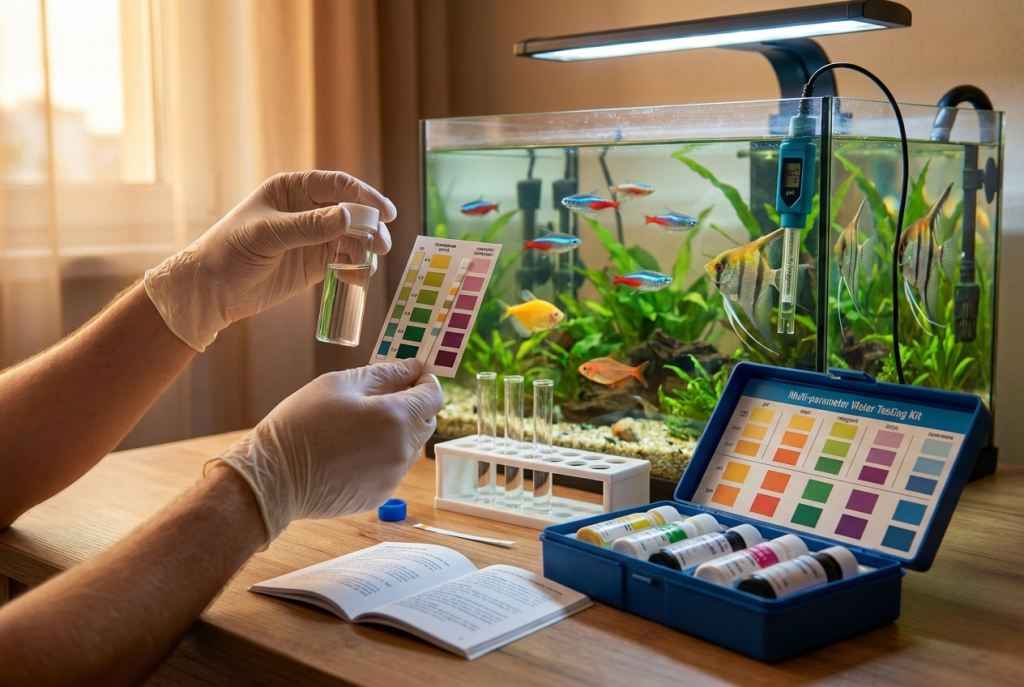

If you’ve ever wondered why some aquariums look crystal clear while others struggle with cloudy water or sick fish, the answer often comes down to one habit: regular water testing. Clear water doesn’t always mean healthy water, and stable parameters rarely happen by accident. Fish rely on their environment for everything—oxygen, temperature, pH, and safety. When the water changes even slightly, their bodies feel the impact immediately.
Because aquariums are closed ecosystems, waste builds, chemicals shift, and beneficial bacteria rise and fall. These changes happen quietly. You won’t notice them by simply glancing at the tank. However, regular water testing reveals what’s really happening beneath the surface. It helps you prevent problems instead of reacting to emergencies. Even better, it reduces stress, avoids disease outbreaks, and supports long-term fish health.
In this guide, you’ll learn why regular water testing matters, which parameters you must monitor, how often to test, and how these small actions create a stable, thriving aquarium.
Why Regular Water Testing Is Essential for Fish Health
Fish cannot escape poor water quality. While they may adapt for a short time, their immune system weakens in unstable conditions. Because most aquarium illnesses start with water issues, regular water testing becomes your greatest tool for prevention.
Testing helps you:
- Detect ammonia spikes before they harm fish
- Monitor nitrite and nitrate levels
- Maintain proper pH and hardness
- Keep temperature and oxygen stable
- Prevent stress-related disease
- Understand long-term trends in water chemistry
Because fish live in the water full-time, even small changes can affect breathing, digestion, coloration, and behavior. Regular water testing allows you to catch these changes early, long before symptoms appear.
Poor Water Quality Causes Most Fish Diseases
Many fish keepers believe disease comes from new fish or contaminated equipment. Yet poor water quality remains the number-one trigger for infection. When ammonia rises or pH shifts, the immune system becomes vulnerable. With regular water testing, you create a healthier environment that naturally prevents disease.
Test Ammonia Frequently to Prevent Toxic Spikes
Ammonia is one of the most dangerous substances in an aquarium. Even at low levels, it burns gills and stresses fish. Because fish waste, leftover food, and decaying plants release ammonia, the level can rise quickly.
With regular water testing, you can catch ammonia spikes immediately. Early detection helps you act before your fish suffer.
Signs of ammonia stress include:
- Gasping at the surface
- Red or inflamed gills
- Lethargy
- Avoiding food
- Staying near water movement
Testing weekly—or more often in new tanks—keeps ammonia under control.
Why Ammonia Levels Change Unexpectedly
Tank maintenance, overfeeding, or filter problems may cause sudden spikes. Since ammonia is invisible, only regular water testing confirms whether the tank is safe.
Monitor Nitrite Levels to Protect Your Fish’s Gills
As beneficial bacteria convert ammonia, they create nitrite. While less toxic, nitrite still harms fish by interfering with oxygen absorption. Even low nitrite levels cause stress, which leads to infections.
Testing nitrite regularly ensures the nitrogen cycle remains stable. When nitrite rises, fish show early warning signs such as:
- Rapid breathing
- Hanging near the filter
- Brown gills
- Sluggish behavior
Because nitrite toxicity appears quickly, frequent testing is crucial in new or heavily stocked tanks.
Why Nitrite Levels Rise During Tank Changes
Any disruption to the biological filter can cause nitrite spikes. Water changes, filter cleaning, and new fish all affect the cycle. With regular water testing, you can track these shifts and respond calmly.
Track Nitrate Levels to Avoid Long-Term Stress
Nitrate is the final stage of the nitrogen cycle. Although less harmful than ammonia and nitrite, nitrate becomes dangerous when it accumulates. High levels cause stress, poor coloration, fin rot, and algae blooms.
The only way to control nitrate is through regular water testing and consistent water changes. Many fish keepers mistakenly believe nitrate is harmless. However, long-term exposure weakens fish and shortens lifespan.
Signs of high nitrate include:
- Faded color
- Slow movement
- Frequent hiding
- Increased algae
Monitoring nitrate keeps your tank stable and your fish thriving.
Why Nitrate Builds Slowly
Nitrate rises gradually, so many owners don’t notice the problem until fish become sick. Regular water testing helps you react early rather than waiting for symptoms.
Check pH Levels to Keep Fish Comfortable
Every species has a preferred pH range. Sudden shifts cause stress and trigger disease. Because pH changes silently, regular water testing becomes essential.
Test your pH:
- Weekly in established tanks
- Every few days in new setups
- After large water changes
- When using natural decor like driftwood
A stable pH supports strong immunity and reduces stress. Even hardy fish suffer when pH fluctuates.
What Causes pH Changes
pH may change due to:
- Tap water variations
- Organic waste buildup
- New decorations
- Substrate changes
- Inadequate water changes
Because pH shifts slowly, only consistent testing reveals long-term trends.
Monitor GH and KH for Stable Water Chemistry
General hardness (GH) and carbonate hardness (KH) affect mineral content and pH stability. While many beginners overlook these values, they play a major role in fish health.
GH affects:
- Bone strength
- Osmoregulation
- Plant growth
KH affects:
- pH stability
- Buffering capacity
With regular water testing, you ensure these levels support your fish species. Stable GH and KH prevent sudden shifts that stress fish and disrupt bacteria.
Why GH and KH Matter More Than People Realize
Without proper KH, pH may crash unexpectedly. Without proper GH, fish struggle to regulate essential minerals. Frequent testing gives you insight into long-term stability.
Test Temperature to Prevent Stress and Shock
Temperature may seem simple, but even small fluctuations cause stress. Fish depend on stable temperatures for metabolism and immunity. Because heaters sometimes fail, testing temperature daily is wise.
Fish show temperature-related stress through:
- Fast breathing
- Erratic swimming
- Lethargy
- Loss of appetite
While not a chemical parameter, temperature is still part of regular water testing. Stable tanks reduce stress, prevent shock, and support healthy bacteria.
Why Temperature Swings Happen
Heaters malfunction, drafts cool the tank, and room temperatures fluctuate. Testing helps you catch problems fast.
Use Regular Water Testing to Prevent Algae Blooms
Algae often signals underlying water issues. When nitrate or phosphate rises, algae spread quickly. With regular water testing, you can find these imbalances early and correct them.
High nutrients may come from:
- Overfeeding
- Poor filtration
- Infrequent water changes
Testing helps you keep nutrient levels balanced, which reduces algae and creates a healthier tank.
Why Algae Indicates Deeper Issues
Algae is not the problem—it’s a symptom. Regular testing prevents the conditions that allow algae to thrive.
Test Before and After Adding New Fish
Introducing new fish changes the bioload. Testing before adding them ensures your tank is ready. Testing after helps you catch ammonia spikes early.
This step dramatically reduces stress for both old and new fish.
Why Bioload Matters
More fish means more waste. When bioload rises suddenly, ammonia may increase. Regular water testing prevents dangerous imbalances.
Keep a Water Testing Log for Better Long-Term Care
Tracking your results helps you understand your tank’s rhythms. Regular notes reveal patterns and warn you of future problems.
Record:
- Ammonia
- Nitrite
- Nitrate
- pH
- GH and KH
- Temperature
Logs improve your long-term care and help you troubleshoot issues calmly.
Why Logs Improve Fish Health
Patterns show you when something is changing before it becomes serious. Logs turn guesswork into reliable care.
Choosing the Right Water Test Kits
Strips are simple but less precise. Liquid tests offer accuracy and clearer readings. For the best results in regular water testing, keep both on hand.
Use strips for daily checks and liquids for weekly accuracy.
Why Accuracy Matters
Small differences in ammonia or nitrite matter a lot. Accurate readings help you make the right decisions quickly.
How Regular Water Testing Builds a Healthier Aquarium
When you test consistently, everything becomes easier:
- Fewer emergencies
- Fewer sick fish
- Clearer water
- A more stable cycle
- Happier, calmer fish
Regular water testing transforms your tank into a predictable, healthy environment.
Why Prevention Works Better Than Treatment
Catching problems early prevents disease from taking hold. Prevention always costs less—both financially and emotionally—than treating sick fish.
Conclusion
Regular water testing is one of the most powerful habits you can develop as an aquarist. It keeps your fish healthy, prevents disease, stabilizes your tank, and eliminates guesswork. With consistent monitoring and calm responses, you create a balanced environment where your fish can thrive. Every small test protects your aquarium and builds a healthier future for your aquatic pets.
FAQ
1. How often should I do regular water testing?
Weekly testing works for most tanks, while new aquariums need testing every few days.
2. Do clear tanks still need water testing?
Yes. Clear water may still contain harmful chemicals you cannot see.
3. What parameters are most important for beginners?
Ammonia, nitrite, nitrate, pH, and temperature are the essentials.
4. Does testing really prevent fish disease?
Regular testing catches problems early, reducing stress and preventing illness.
5. Should I test after adding new fish?
Absolutely. Adding fish increases bioload, which may trigger ammonia or nitrite spikes.