
Small pets may look quiet and low maintenance, but many are highly intelligent and naturally curious animals. Rabbits explore constantly, guinea pigs enjoy interaction, and ferrets often solve problems surprisingly fast. Without proper enrichment, these pets may become bored, stressed, or destructive. That is why puzzle toys small pets enjoy are becoming more important for responsible owners who want healthier and happier companions.
Mental stimulation affects small pets just as much as physical exercise. In the wild, many of these animals spend hours searching for food, exploring tunnels, and solving environmental challenges. Indoor life removes much of that natural stimulation. Therefore, puzzle toys help recreate some of those important mental activities safely at home.
The right enrichment toys can encourage natural instincts, reduce stress, and improve overall behavior. Additionally, mentally engaged pets often display healthier routines and stronger confidence. Choosing suitable toys for each species makes a major difference because rabbits, ferrets, chinchillas, guinea pigs, and hamsters all interact with their environments differently.
Owners sometimes assume small pets only need food, water, and cages. However, stimulation plays a major role in long-term health. Puzzle toys small pets use regularly can improve quality of life while preventing boredom-related behavior problems.
Why Mental Enrichment Matters for Small Pets
Mental stimulation helps small pets stay emotionally balanced and physically active. Bored animals may chew cage bars, overgroom, hide excessively, or develop destructive habits. Therefore, enrichment becomes essential rather than optional.
Rabbits naturally forage and explore complex environments. Guinea pigs enjoy social interaction and sensory stimulation. Hamsters spend large portions of the night digging and searching for food. Ferrets investigate nearly everything around them with incredible curiosity. Without engaging activities, these instincts have nowhere healthy to go.
Puzzle toys encourage problem-solving behaviors that keep pets mentally sharp. Instead of sitting passively in cages, animals interact with their environment more naturally. This increased engagement often improves confidence and reduces stress-related behaviors.
Mentally active pets also tend to exercise more. Many enrichment toys encourage movement, climbing, digging, or searching behaviors. As a result, puzzle activities may support healthier weight management and better joint function over time.
Enrichment also strengthens the bond between owners and pets. Watching a rabbit solve a treat puzzle or a ferret investigate hidden toys creates rewarding interactions that improve trust and familiarity.
Best Puzzle Toys for Rabbits
Rabbits are highly intelligent animals that need regular mental engagement. Puzzle toys small pets like rabbits use successfully often involve foraging and chewing activities. Since rabbits naturally spend hours searching for food in the wild, food-based puzzles usually work especially well.
Treat balls are one excellent option. These toys release pellets or dried herbs gradually as the rabbit nudges and rolls them around. This simple activity encourages movement and mental focus at the same time.
Cardboard forage boxes also provide excellent enrichment. Owners can fill boxes with hay, herbs, shredded paper, and safe chew toys. Rabbits enjoy digging through layers while searching for hidden rewards.
Stacking cups designed for pets can challenge curious rabbits as well. Hiding treats beneath lightweight cups encourages problem-solving and exploration. Additionally, wooden chew puzzles help satisfy natural chewing instincts while providing mental stimulation.
Rotating enrichment regularly helps maintain interest. Rabbits may lose curiosity if toys remain unchanged for long periods. Therefore, switching activities weekly often produces better engagement.
Interactive Toys for Guinea Pigs
Guinea pigs may appear calm, but they are naturally curious and social animals. Puzzle toys small pets like guinea pigs prefer often involve food searching and tunnel exploration.
Treat mazes work especially well for guinea pigs because they encourage movement and curiosity. Owners can place vegetables or pellets throughout safe cardboard tunnels or puzzle feeders. This setup encourages natural foraging behavior without causing stress.
Soft tunnels and hideouts also support enrichment. Guinea pigs feel safer when they can explore enclosed spaces while remaining protected. Combining tunnels with hidden treats creates engaging environments that stimulate exploration.
Simple hanging vegetable toys can increase activity levels too. Instead of placing vegetables directly in bowls, owners can encourage gentle stretching and movement by hanging leafy greens safely within reach.
Because guinea pigs are social animals, some enrichment activities work best in pairs or groups. Watching companions interact with puzzle toys often encourages shy guinea pigs to participate more confidently.
Hamster Puzzle Toys That Encourage Activity
Hamsters are naturally active and intelligent animals that need nighttime enrichment. In the wild, they travel long distances searching for food and building underground burrows. Therefore, mentally stimulating environments remain very important.
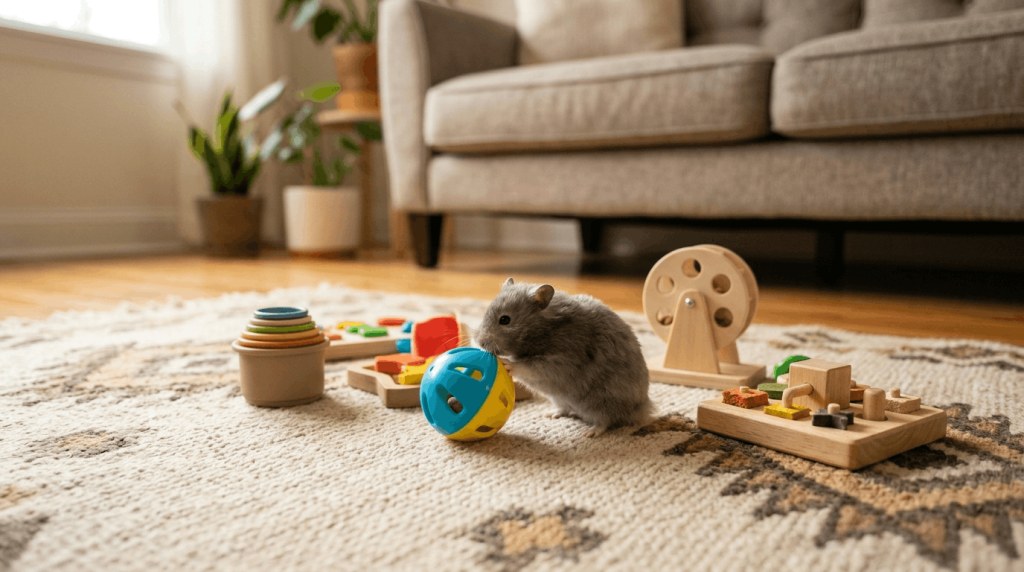
Puzzle toys small pets like hamsters use effectively often focus on digging, hiding, and food searching. Foraging mats filled with treats encourage natural scent-tracking behavior while reducing boredom inside cages.
Dig boxes provide another excellent option. Owners can safely hide treats beneath shredded paper, hay, or hamster-safe substrate materials. Hamsters enjoy tunneling and uncovering hidden rewards gradually.
Interactive wooden mazes can also stimulate curiosity and movement. These puzzles encourage exploration while creating more complex cage environments. Additionally, rotating layouts occasionally keeps the environment feeling fresh and interesting.
Chew toys remain essential because hamster teeth grow continuously. Safe wooden puzzles provide both enrichment and dental support at the same time.
Overstimulating environments should still be avoided. Hamsters prefer enrichment that feels natural and manageable rather than loud or overwhelming.
Enrichment Ideas for Ferrets
Ferrets are among the most playful and curious small pets owners can keep. Their intelligence often surprises first-time owners quickly. Without enough stimulation, ferrets may become destructive or restless around the home.
Puzzle toys small pets like ferrets enjoy usually involve movement, hiding, and interactive exploration. Tunnel systems remain one of the best enrichment options because ferrets naturally love squeezing through narrow spaces.
Treat-dispensing toys encourage problem-solving while rewarding curiosity. Ferrets often spend significant time trying to unlock hidden snacks or move puzzle components. This activity helps burn mental energy in productive ways.
Dig boxes filled with safe materials such as shredded paper or fabric strips provide additional enrichment. Ferrets love burrowing and searching through textured materials while investigating hidden objects.
Interactive play with owners matters greatly as well. Ferrets thrive on social stimulation and usually enjoy games involving chasing, hiding, or retrieving soft toys. Combining owner interaction with puzzle activities creates especially rewarding enrichment experiences.
Safe Puzzle Toys for Chinchillas
Chinchillas require carefully selected enrichment because they chew constantly and have sensitive digestive systems. Puzzle toys small pets like chinchillas use safely should always contain non-toxic materials designed for chewing animals.
Wooden chew puzzles are especially effective because they support dental health while reducing boredom. Chinchillas enjoy climbing, gnawing, and exploring elevated spaces throughout their cages.
Hanging forage toys encourage natural feeding behavior while increasing movement. Owners can safely hide dried herbs or hay inside chew-safe puzzle structures to encourage investigation.
Multi-level cage setups also improve enrichment significantly. Chinchillas naturally enjoy jumping and climbing, so adding platforms, bridges, and hideouts creates more stimulating environments overall.
Dust bath time itself may also become part of enrichment routines. Many chinchillas display playful behavior during supervised dust bathing sessions, especially when combined with interactive toys afterward.
Choosing Safe Materials for Small Pet Toys
Safety should always remain the top priority when selecting enrichment products. Small pets chew frequently, so unsafe materials may create choking hazards or digestive issues.
Natural wood remains one of the safest choices for many species. However, treated wood or painted surfaces should always be avoided. Safe cardboard products also work well for rabbits, guinea pigs, and hamsters when free from toxic inks or adhesives.
Plastic toys require closer supervision because some animals may chew off dangerous fragments. Therefore, owners should inspect all toys regularly for damage or wear.
Fabric enrichment products should remain durable and easy to clean. Loose threads or stuffing materials may become dangerous if swallowed accidentally. Additionally, strong chemical odors from poorly made toys may irritate sensitive pets.
Owners should also match toys to species-specific behavior. A toy designed for ferrets may not suit rabbits safely. Understanding natural instincts helps prevent accidents while improving enrichment success.
How Often Should You Rotate Puzzle Toys?
Rotating enrichment regularly helps prevent boredom. Even the best puzzle toys small pets enjoy can lose effectiveness when left unchanged for weeks at a time.
Many owners rotate toys every few days or weekly depending on the pet’s activity level. Simple changes in toy arrangement, treat placement, or cage setup may refresh curiosity without requiring constant purchases.
Observation helps determine which toys remain most engaging. Some pets strongly prefer digging activities, while others enjoy climbing or chewing. Paying attention to these preferences improves future toy selection.
Overloading cages with too many toys may create stress rather than enrichment. Instead, smaller rotating collections often produce better engagement and cleaner living spaces.
Seasonal enrichment can also help maintain interest. New textures, scents, or puzzle layouts encourage continued exploration and curiosity over time.
Signs Your Small Pet Needs More Mental Stimulation
Behavior often reveals whether enrichment levels are adequate. Pets lacking stimulation may chew cages excessively, pace repeatedly, or sleep unusually often outside normal routines.
Destructive chewing sometimes signals boredom rather than bad behavior. Rabbits especially may target furniture or cage bars when they lack suitable mental outlets.
Some pets become withdrawn or less interactive when under-stimulated. Others may appear restless and hyperactive. Therefore, observing personality changes carefully helps identify enrichment needs early.
Healthy enrichment usually produces positive behavioral improvements. Pets often appear more confident, active, and curious after receiving regular puzzle activities. Additionally, mentally stimulated pets may interact more positively with owners overall.
Weight management may improve as well because many puzzle toys encourage movement naturally throughout the day.
Creating an Enrichment Routine That Lasts
Consistency matters when building healthy enrichment habits. Short daily interactions often provide better results than occasional intense stimulation sessions.
Owners should introduce new toys gradually rather than overwhelming pets suddenly. Some animals need time to investigate unfamiliar objects before interacting confidently.
Combining multiple enrichment types usually works best. Foraging toys, tunnels, climbing structures, chew items, and interactive games each provide different mental benefits.
Puzzle toys small pets use regularly should support natural instincts rather than force unnatural behavior. Rabbits enjoy digging and chewing, while ferrets prefer investigating and tunneling. Matching enrichment to species-specific behavior creates healthier and safer routines overall.
Cleanliness also remains important. Toys exposed to food or moisture should be cleaned regularly to prevent bacterial buildup. Damaged items should be replaced immediately to maintain safety.
Conclusion
Mental stimulation plays a major role in the health and happiness of small pets. Animals like rabbits, guinea pigs, hamsters, ferrets, and chinchillas need more than food and shelter to thrive. They require opportunities to explore, solve problems, chew safely, and engage with their environment naturally.
Puzzle toys small pets enjoy can reduce boredom, encourage healthy movement, and improve emotional balance significantly. Whether through forage boxes, tunnels, treat puzzles, or climbing structures, enrichment activities help recreate the natural behaviors these animals depend on instinctively.
Choosing safe toys, rotating enrichment regularly, and observing behavior carefully all contribute to better long-term care. Small changes in daily routines often create major improvements in confidence, activity levels, and overall well-being.
Ultimately, mentally stimulated pets tend to live happier, healthier, and more rewarding lives alongside their owners.
FAQ
1. What are the best enrichment toys for rabbits?
Forage boxes, treat balls, cardboard puzzles, and chew-safe wooden toys work especially well for rabbits.
2. Are puzzle toys safe for hamsters?
Yes, as long as the toys use safe materials without toxic paint, sharp edges, or small detachable parts.
3. How often should small pets use enrichment toys?
Daily enrichment usually provides the best results because consistent mental stimulation supports healthier behavior.
4. Can puzzle toys reduce destructive behavior?
Yes, mentally stimulated pets are often less likely to chew cages, overgroom, or develop boredom-related habits.
5. What materials should be avoided in small pet toys?
Avoid toxic plastics, treated wood, loose threads, sharp metal parts, and heavily scented materials.