
Small pets may look calm and quiet for most of the day, but many of them are naturally curious, energetic, and highly intelligent. Puzzle toys for pets provide mental stimulation that helps prevent boredom while encouraging healthier behavior and daily activity. Whether you care for rabbits, guinea pigs, hamsters, rats, mice, ferrets, or other small animals, enrichment plays an important role in overall wellness.
Many owners focus heavily on food, cages, and bedding while overlooking mental stimulation. However, small pets require opportunities to explore, forage, chew, climb, and solve simple challenges. Without enrichment, animals may become stressed, destructive, withdrawn, or inactive. Interactive toys help recreate natural behaviors that many pets would normally experience in the wild.
Mental exercise matters just as much as physical activity. Curious animals often enjoy searching for treats, moving objects, and exploring textures. In addition, interactive play can reduce anxiety while strengthening trust between pets and owners. Since many small animals spend most of their lives inside enclosures, enrichment becomes essential for maintaining healthy routines and emotional balance.
Why Mental Stimulation Matters for Small Pets
Many people underestimate the intelligence of small pets. Rodents, rabbits, and ferrets often learn routines quickly and respond strongly to environmental changes. Because of this, repetitive environments may lead to boredom surprisingly fast.
Puzzle toys for pets encourage exploration and problem-solving behavior that supports mental engagement. Instead of sitting passively inside a cage, pets interact with their environment in more meaningful ways. This activity helps reduce stress while encouraging curiosity and confidence.
Mental stimulation also improves emotional well-being. Animals that receive regular enrichment often appear more active, social, and responsive. On the other hand, bored pets may chew cages excessively, overeat, hide constantly, or display repetitive behaviors.
Foraging activities are especially important because many small animals naturally spend hours searching for food in the wild. Interactive toys mimic these instincts safely within indoor environments. As a result, pets remain occupied longer while exercising their minds and bodies simultaneously.
Enrichment may also help reduce aggression or territorial behavior. Stimulated animals usually experience less frustration and greater emotional balance. Therefore, interactive toys can improve both individual health and multi-pet relationships inside shared habitats.
How Interactive Toys Improve Daily Activity
Physical movement often increases naturally when pets engage with stimulating toys. Small animals may climb, push, dig, chew, or chase objects while solving simple challenges.
Puzzle toys for pets create opportunities for exercise that feel rewarding rather than forced. Treat-dispensing toys, tunnels, obstacle setups, and chew puzzles all encourage movement throughout the enclosure.
Hamsters and mice often enjoy digging activities that involve hidden treats or nesting materials. Rabbits may prefer shredding toys and food puzzles that encourage gentle chewing and exploration. Meanwhile, ferrets frequently enjoy tunnels and movable objects that stimulate hunting instincts.
Daily activity supports more than entertainment alone. Exercise helps maintain healthy weight, improve circulation, and support stronger muscles. Additionally, active pets often experience fewer stress-related behaviors and digestive issues.
Interactive play may also improve sleep routines. Pets that receive adequate stimulation during active periods often rest more comfortably afterward. This balance creates healthier daily rhythms that support overall wellness.
Environmental enrichment becomes especially important for indoor pets with limited space. Even small changes in layout, textures, or toy rotation can make habitats feel more stimulating and engaging.
Best Types of Toys for Curious Pets
Different animals prefer different forms of enrichment. Understanding species-specific behavior helps owners choose safer and more effective toys.
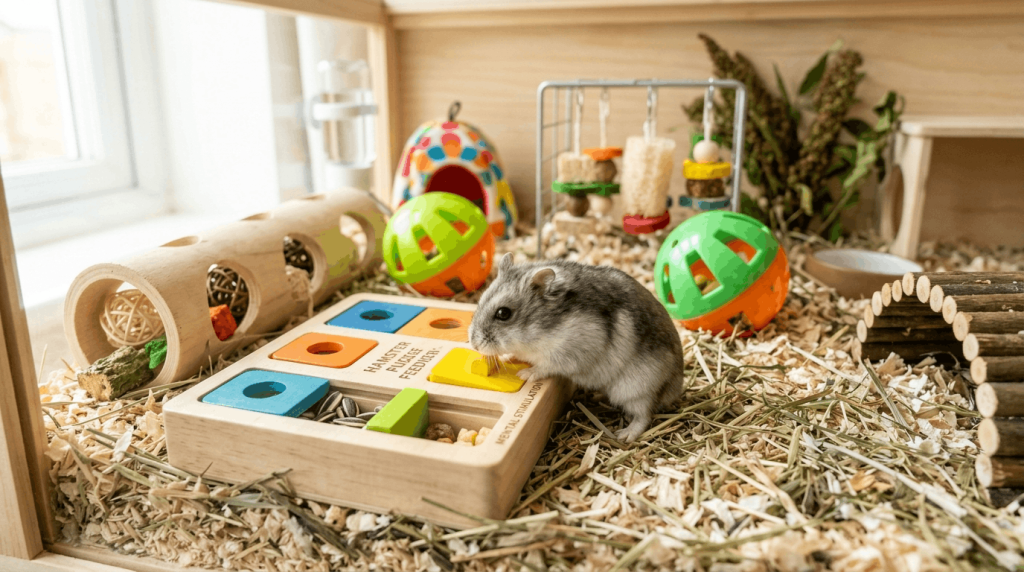
Puzzle toys for pets often include treat dispensers, tunnels, chew blocks, stacking cups, hideouts, and foraging mats. These options encourage exploration while supporting natural instincts.
Rabbits usually enjoy chewable toys made from untreated wood, hay, cardboard, or woven grass. Since rabbit teeth grow continuously, chewing activities help maintain dental health while preventing boredom.
Guinea pigs often appreciate tunnels and hideaways that create safe exploration spaces. They also enjoy food puzzles containing leafy greens or small vegetable treats hidden inside paper or cardboard structures.
Rats rank among the most intelligent small pets and often learn complex tasks quickly. Rope toys, climbing structures, puzzle feeders, and interactive mazes can provide excellent stimulation for these highly social animals.
Hamsters naturally enjoy burrowing and foraging activities. Dig boxes filled with safe substrate and hidden treats can recreate natural searching behavior effectively.
Ferrets typically prefer active exploration and movement. Tunnels, soft climbing toys, and treat puzzles often keep them engaged longer while encouraging physical exercise.
Owners should always select non-toxic materials designed specifically for pets. Unsafe paints, sharp edges, loose strings, or treated wood may create serious health risks.
The Benefits of Foraging Activities
Foraging represents one of the most natural forms of enrichment for small animals. In the wild, many species spend large portions of the day searching for food, nesting materials, and safe shelter.
Puzzle toys for pets that involve hidden treats help recreate this instinct safely. Instead of receiving food immediately in a bowl, animals must interact with objects and solve simple challenges to access rewards.
This process slows eating speed while encouraging problem-solving behavior. In addition, foraging reduces boredom because animals remain occupied longer during feeding time.
Food puzzles may involve cardboard tubes stuffed with hay, paper cups hiding treats, or rolling toys that release pellets gradually. Simple homemade enrichment activities often work just as effectively as store-bought products.
Foraging also encourages movement naturally. Pets may climb, dig, chew, or push objects while searching for hidden rewards. Consequently, both mental and physical stimulation improve simultaneously.
Owners should rotate puzzle difficulty gradually. Challenges that feel too easy may become boring quickly, while overly difficult puzzles may frustrate pets unnecessarily. Balanced enrichment usually creates the best results.
How Enrichment Supports Emotional Health
Mental stimulation affects emotional wellness more than many owners realize. Animals living in unstimulating environments may develop chronic stress over time, even when food and housing appear adequate.
Puzzle toys for pets provide opportunities for curiosity, exploration, and independent activity. These experiences often increase confidence while reducing anxiety and frustration.
Pets experiencing healthy stimulation usually interact more comfortably with their environment. They may become more willing to explore, approach owners, and engage in social behaviors.
Stress reduction also supports physical health. Chronic stress can weaken immunity, disrupt appetite, and contribute to destructive habits. Therefore, enrichment plays a direct role in long-term wellness.
Interactive toys may also strengthen trust between owners and pets. Hand-fed puzzle activities and supervised play sessions encourage positive interaction without forcing physical contact.
For shy or nervous animals, enrichment can create a sense of control and safety. Hideouts, tunnels, and exploratory toys allow cautious pets to investigate new experiences gradually at their own pace.
Common Mistakes Owners Make With Enrichment
While enrichment provides many benefits, improper toy selection or usage may create problems. Understanding common mistakes helps owners build safer and more effective environments.
One common issue involves offering the same toys continuously without rotation. Even engaging objects may become boring when pets encounter them every day without change.
Puzzle toys for pets work best when owners rotate items regularly. Small changes in toy placement, treat location, or enclosure layout can make familiar environments feel exciting again.
Overcrowding cages with excessive toys creates another problem. Pets still need open space for movement, rest, and natural behavior. Balanced setups usually work better than cluttered habitats.
Unsafe materials also present serious risks. Toys with toxic paint, small detachable parts, or sharp edges may cause injuries or digestive blockage if chewed.
Some owners choose puzzles that are too difficult initially. Frustration may discourage interaction completely. Simpler activities usually help pets build confidence before introducing more complex challenges.
Ignoring species-specific needs may also reduce effectiveness. A toy suitable for rabbits may not work safely for hamsters or ferrets. Therefore, enrichment should match the pet’s natural instincts and size.
Homemade Puzzle Ideas for Small Pets
Interactive toys do not always require expensive purchases. Many simple household materials can become excellent enrichment tools when used safely.
Puzzle toys for pets can include cardboard tubes filled with hay, crumpled paper hiding treats, or paper bags stuffed with shredded material. These activities encourage chewing, digging, and exploration naturally.
Egg cartons may work well for treat puzzles when cleaned thoroughly and used under supervision. Owners can hide pellets or vegetables inside compartments to encourage searching behavior.
Cardboard mazes also create engaging exploration opportunities for hamsters, rats, and mice. Rearranging tunnels and hideouts occasionally helps maintain curiosity.
For rabbits and guinea pigs, hanging leafy greens slightly above ground encourages stretching and movement while feeding. This activity mimics natural foraging behavior effectively.
Dig boxes filled with shredded paper or safe substrate often provide excellent stimulation for burrowing species. Hidden treats increase engagement further while encouraging natural instincts.
Homemade toys should always remain clean and free from adhesives, staples, toxic ink, or harmful coatings. Supervised introduction also helps owners monitor safety and interest levels.
How to Introduce New Toys Safely
Some small pets approach unfamiliar objects cautiously. Therefore, introducing enrichment gradually often produces better results than sudden cage changes.
Puzzle toys for pets should enter the enclosure one at a time whenever possible. This slower approach helps animals investigate new items without feeling overwhelmed.
Placing familiar treats near or inside toys encourages exploration naturally. Positive associations often increase confidence and curiosity during the adjustment period.
Observation remains important during early use. Owners should watch for chewing hazards, trapped limbs, or signs of stress. Unsafe toys should be removed immediately if problems develop.
Cleaning routines also matter. Dirty toys may collect bacteria, waste, or moisture that affects hygiene inside the enclosure. Rotating and sanitizing toys regularly helps maintain healthier environments.
Some pets interact with enrichment immediately, while others require patience. Gentle encouragement works better than forcing interaction. Most animals gradually become more curious once they feel safe exploring new objects.
Building a More Stimulating Environment
Enrichment should extend beyond toys alone. A stimulating habitat includes opportunities for climbing, hiding, chewing, digging, and exploring safely.
Puzzle toys for pets become even more effective when combined with thoughtful enclosure design. Multiple levels, tunnels, textures, and safe hiding spaces create a more dynamic environment overall.
Natural materials often improve stimulation because they provide varied textures and scents. Untreated wood, hay, grass mats, and paper bedding encourage more natural interaction than plastic surfaces alone.
Daily interaction also contributes to enrichment. Supervised playtime, training sessions, and gentle handling help strengthen trust while preventing boredom.
Routine changes may help maintain interest as well. Rearranging hideouts or changing feeding locations occasionally can make familiar environments feel new again.
Most importantly, enrichment should remain consistent rather than occasional. Small pets benefit most when stimulation becomes part of their regular daily routine instead of a rare activity.
Conclusion
Mental stimulation plays a major role in keeping small pets healthy, active, and emotionally balanced. Puzzle toys for pets encourage curiosity, support natural instincts, and reduce boredom that may otherwise lead to stress and unhealthy behavior. Although many small animals live inside limited environments, enrichment helps make those spaces more engaging and rewarding.
Interactive toys support both physical and mental wellness through exploration, movement, chewing, digging, and foraging activities. In addition, consistent enrichment often improves confidence, emotional health, and social behavior over time.
Every pet deserves opportunities to stay curious and mentally engaged. By choosing safe toys, rotating enrichment activities, and understanding species-specific behavior, owners can create healthier and more stimulating lives for their small companions.
FAQ
1. Which small pets benefit most from interactive toys?
Rabbits, guinea pigs, hamsters, rats, mice, and ferrets all benefit from mental stimulation and enrichment activities.
2. How often should enrichment toys be rotated?
Rotating toys every few days or weekly often helps maintain curiosity and prevent boredom.
3. Are homemade enrichment activities safe for small animals?
Yes, homemade toys can work well when owners use non-toxic materials and supervise introduction carefully.
4. Why do small pets need mental stimulation?
Mental enrichment reduces stress, encourages natural behavior, and supports healthier emotional and physical wellness.
5. What signs suggest a pet may feel bored or unstimulated?
Excessive chewing, inactivity, repetitive behavior, aggression, and hiding frequently may indicate boredom or stress.