
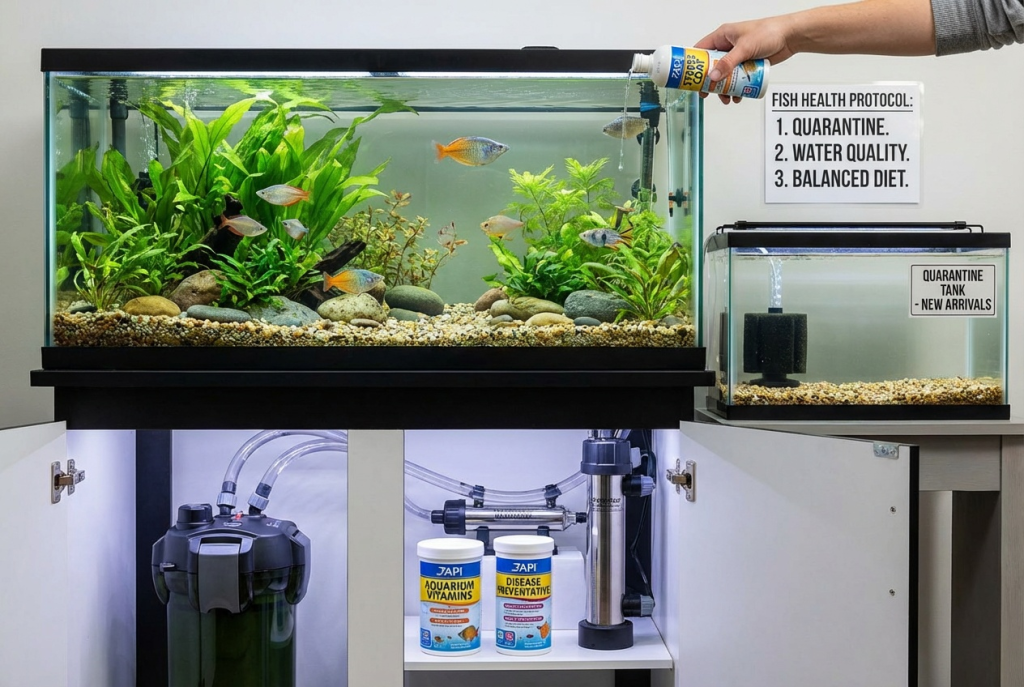

If you’ve ever dealt with an outbreak of ich, fin rot, or bacterial infection, you know how stressful it can be—for both you and your fish. Fortunately, most common aquarium illnesses can be avoided with simple routines. When you learn how to prevent fish diseases with regular tank checks, you gain control over your aquarium’s health before problems arise. Fish depend on their environment completely. Water quality, filtration, and stability all influence how strong their immune systems remain. Because of this, the quickest way to prevent disease is to make tank checks a natural part of your care routine.
Think of your aquarium like a tiny underwater world. Every element—temperature, oxygen, bacteria levels, and waste buildup—affects how your fish feel. If even one part becomes unstable, stress increases. Stress weakens immunity, and disease spreads more easily. The good news? You don’t need advanced tools or complicated systems to keep everything balanced. Most issues can be caught early by watching, listening, and testing.
This guide explains exactly how to prevent fish diseases with regular tank checks. With the right habits, your fish become healthier, more active, and more resilient. Your tank stays cleaner, clearer, and safer. And best of all, you prevent illnesses before they start.
Why Regular Tank Checks Help Prevent Fish Diseases
Fish live in the water that surrounds them. They breathe it, absorb it through their skin, and rely on it every second. When the water is clean and stable, fish thrive. However, if toxins rise or temperature fluctuates, the immune system becomes stressed. This stress creates the perfect environment for diseases to take hold.
Regular tank checks help prevent fish diseases by:
• Catching water problems early
• Preventing ammonia and nitrite spikes
• Identifying sick fish before illness spreads
• Ensuring proper oxygen levels
• Keeping filters functioning
• Reducing stress in the tank
• Preventing parasites from multiplying
What feels like a small daily habit becomes the strongest shield your fish have against disease.
Daily Observations That Prevent Fish Diseases
You don’t need a test kit every single day. Many issues reveal themselves through simple observation. Spend a few minutes watching your fish. Look for signs that something is different or concerning.
Daily checks should include:
• Behavior changes
• Appetite level
• Swimming patterns
• Color changes
• Fin condition
• Breathing rate
• Surface-breathing or gasping
• Flashing (scratching against décor)
These are early warning signs. When you catch them early, it becomes much easier to prevent fish diseases before they spread.
Daily Equipment Checks
Alongside observing your fish, check the equipment that keeps the tank running smoothly.
Verify that:
• Filters are running normally
• Heaters maintain stable temperature
• Air pumps provide proper flow
• Lights turn on and off consistently
A malfunctioning heater or clogged filter can cause rapid temperature swings or oxygen drops. Both conditions increase the risk of disease.
Weekly Water Testing to Prevent Fish Diseases
Weekly testing is one of the most powerful tools you can use. Even if your tank looks clean, water chemistry may shift behind the scenes. Invisible toxins develop quickly and stress your fish long before you notice physical symptoms.
To prevent fish diseases with regular tank checks, test:
• Ammonia
• Nitrite
• Nitrate
• pH
• Hardness (GH/KH)
• Temperature
Ammonia and nitrite should always remain at zero. Nitrate should stay below 20–40 ppm depending on your species. Stable pH prevents stress while proper hardness keeps biological processes functioning correctly.
Weekly testing creates a baseline. When you know your tank’s normal values, you can recognize when something changes.
Check the Filter Weekly to Prevent Fish Diseases
Your filter is essentially the heart of your aquarium. It removes debris, supports beneficial bacteria, and circulates water. If it slows down, clogs, or malfunctions, water quality declines sharply.
To prevent fish diseases, check your filter weekly by:
• Observing flow rate
• Inspecting sponges or media for buildup
• Cleaning only one section at a time
• Avoiding harsh tap water on beneficial bacteria
• Ensuring intake isn’t blocked
Healthy filtration reduces stress, keeps toxins low, and supports a balanced ecosystem.
Perform Routine Water Changes to Prevent Fish Diseases
Water changes are one of the simplest, most effective ways to prevent fish diseases. Even with perfect filtration, waste and dissolved organic compounds build up over time. Water changes remove these irritants and restore clarity.
General guidelines include:
• Change 20–30% weekly for most tanks
• Increase frequency for heavily stocked tanks
• Use a gravel vacuum for deeper cleaning
• Match new water temperature to tank temperature
Consistent water changes reduce disease-causing stress dramatically.
Inspect Décor and Substrate During Tank Checks
Debris hides in gravel, under decorations, and in plant roots. Waste buildup increases harmful bacteria, which leads to disease. Inspecting these areas regularly helps maintain balance.
During your weekly check:
• Lift decorations gently
• Remove trapped debris
• Check artificial plants for algae
• Trim dead leaves on live plants
• Stir small areas of substrate to improve circulation
Clean but not sterile is the goal. A healthy tank contains beneficial bacteria, but not enough waste to overwhelm it.
Use Monthly Deep Checks to Prevent Fish Diseases
Monthly maintenance creates long-term stability. During these checks, you evaluate the entire system.
Monthly tasks include:
• Rinsing filter tubing
• Cleaning algae from hard-to-reach spots
• Inspecting lighting timers
• Replacing worn airline tubing
• Checking heater accuracy with a thermometer
• Ensuring water flow is strong and even
These tasks prevent equipment failure, which is one of the top causes of fish stress and disease outbreaks.
How Temperature Stability Helps Prevent Fish Diseases
Temperature swings weaken the immune system. Many diseases—such as ich—occur after sudden drops in heat. Senior fish and sensitive species are especially vulnerable.
To prevent fish diseases with stable temperature:
• Use a reliable, adjustable heater
• Avoid placing tanks near windows
• Keep tanks away from vents or drafts
• Use a thermometer to confirm accuracy
Consistency is key. Fish thrive when they experience predictable, comfortable conditions.
Prevent Overfeeding to Reduce Disease Risk
Overfeeding causes waste buildup, moldy food, and ammonia spikes. It also weakens fish digestion. All of these problems increase disease risk.
To feed properly:
• Offer only what fish eat in 2–3 minutes
• Feed small portions
• Remove leftover food
• Vary diet to support immunity
Healthy digestion helps prevent fish diseases by keeping internal systems balanced.
Watch for Early Signs of Illness During Tank Checks
Catching illness early is the most effective way to stop it from spreading. During your daily and weekly checks, look for:
• White spots (ich)
• Frayed fins
• Cloudy eyes
• Swollen abdomen
• Rapid breathing
• Red streaks in fins
• Lethargy or hiding
• Cotton-like growths
If symptoms appear, isolate the affected fish immediately. Quarantine tanks prevent contagious outbreaks and give sick fish a better chance at recovery.
Quarantine New Fish to Prevent Fish Diseases
New fish often carry unseen parasites or bacteria. Quarantining them protects your main tank and reduces the chance of serious outbreaks.
Best quarantine practices include:
• Isolating new fish for 2–4 weeks
• Monitoring behavior and appearance
• Testing quarantine water frequently
• Treating proactively if needed
Quarantine is essential when learning how to prevent fish diseases with regular tank checks. It acts as a safety shield for your entire aquarium.
Clean and Replace Equipment Safely
Cleaning equipment incorrectly can disrupt beneficial bacteria and increase disease risk.
To clean safely:
• Use tank water for rinsing sponges
• Never replace all filter media at once
• Avoid soap or chemicals
• Clean algae with aquarium-safe tools
• Replace carbon and chemical media monthly
Balance protects your aquarium from sudden bacterial loss.
Use Consistent Lighting Routines to Prevent Fish Diseases
Lighting affects stress, sleep, and immune function. Fish need predictable day-night cycles to remain healthy.
Create stability by:
• Using automatic timers
• Avoiding sudden light changes
• Limiting total light to 8–10 hours daily
• Offering dim periods to reduce stress
Regular light cycles strengthen immune responses and encourage natural behavior.
Reduce Stress in the Aquarium to Prevent Fish Diseases
Stress is the root cause of most fish illnesses. Even slight stress weakens the immune system, making fish more vulnerable.
Reduce stress by:
• Avoiding overcrowding
• Choosing peaceful tankmates
• Providing hiding spaces
• Maintaining calm water flow
• Keeping noise and vibration low
A calm aquarium supports strong immunity and helps prevent fish diseases naturally.
Keep Records to Track Tank Health
Keeping a simple log helps you spot trends before issues escalate. Record:
• Test results
• Feeding habits
• Water changes
• Equipment maintenance
• Illness symptoms
• Behavior notes
Patterns reveal early signs of trouble and help you prevent fish diseases efficiently.
Conclusion
Understanding how to prevent fish diseases with regular tank checks allows you to keep your aquarium healthy, stable, and vibrant. These small routines—daily observations, weekly testing, monthly deep cleaning, and consistent care—act as powerful protection. By maintaining water quality, reducing stress, and catching early signs of illness, you create a thriving environment that keeps your fish strong and disease-free. With consistent attention and thoughtful care, your tank becomes a peaceful, balanced ecosystem where fish can flourish.
FAQ
1. How often should I check my tank for problems?
Daily visual checks and weekly water testing work best for disease prevention.
2. What is the most common cause of fish disease?
Stress from poor water quality, temperature changes, or overcrowding is the top cause.
3. Do all tanks need quarantine for new fish?
Yes. Quarantine significantly reduces the risk of introducing parasites or bacteria.
4. How much water should I change weekly?
Most tanks benefit from 20–30% weekly water changes.
5. Can healthy fish still get diseases?
It can happen, but strong immune systems and good tank conditions make it far less likely.