
When it comes to guinea pigs, their health truly starts with what’s in their bowl. These adorable little creatures have sensitive digestive systems, unique nutritional needs, and one major dietary demand—they can’t produce their own vitamin C. So, creating the perfect guinea pig diet isn’t just about variety; it’s about balance, freshness, and consistency.
Feeding your guinea pig correctly means giving them the best chance to live a long, healthy, and happy life. Let’s break down exactly what your piggy needs—and why each component matters.
Why Hay Is the Foundation of a Guinea Pig’s Diet
Hay isn’t just a filler—it’s the cornerstone of your guinea pig’s nutrition. Imagine it as the green, fibrous backbone of their digestive system. Without it, everything else falls apart.
Guinea pigs need an unlimited supply of high-quality hay, available 24/7. It keeps their gut moving smoothly and prevents digestive issues like bloating or impaction. But that’s not all—hay also helps wear down their continuously growing teeth, reducing the risk of painful overgrowth.
The best hay options include:
- Timothy Hay: The gold standard for adult guinea pigs. It’s high in fiber and low in calcium.
- Orchard Grass Hay: A softer, fragrant alternative that adds variety.
- Meadow Hay: Offers different textures and flavors from natural grasses.
- Alfalfa Hay: Best reserved for baby, pregnant, or nursing guinea pigs due to its higher protein and calcium content.
To keep things fresh, store hay in a cool, dry place and replace it daily. Guinea pigs can be picky eaters, so stale or dusty hay may turn them off completely.
Fresh Vegetables: The Colorful Part of the Perfect Guinea Pig Diet
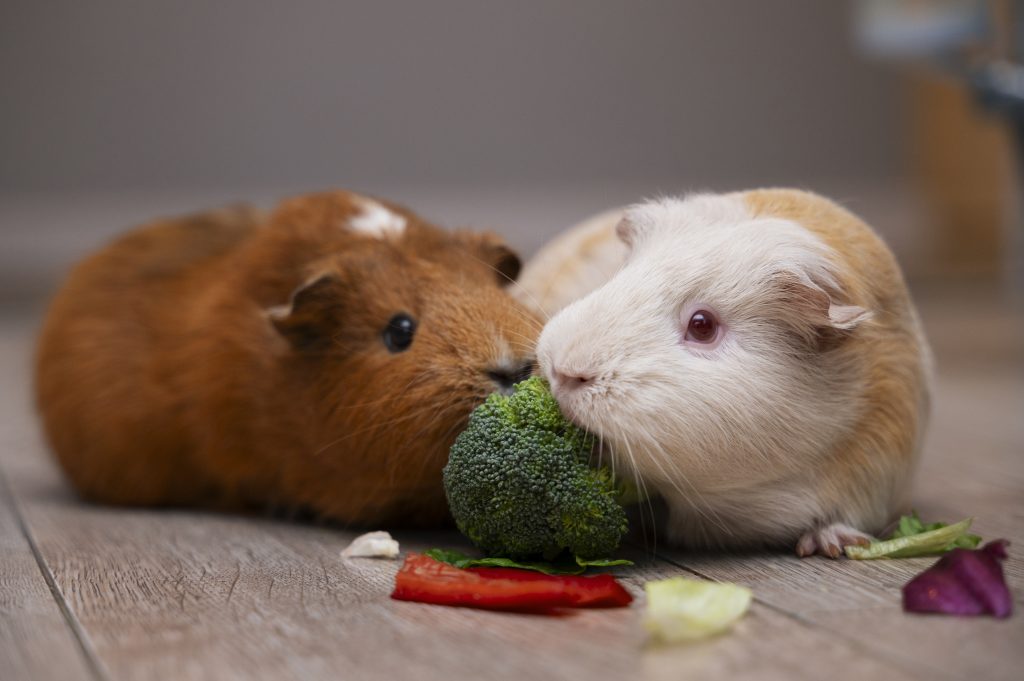
After hay, vegetables are the next big player. They provide hydration, nutrients, and flavor that keep your guinea pig’s meals exciting. Think of them as your pet’s daily salad bar—a rainbow of crunch and goodness.
Each day, your guinea pig should get around one cup of fresh vegetables per pig, divided into two meals if possible. The key is variety and moderation.
Here are some guinea pig-approved veggies:
- Leafy Greens (daily essentials): Romaine lettuce, green leaf lettuce, red leaf lettuce, cilantro, and parsley.
- Vitamin C powerhouses: Bell peppers (especially red and yellow), kale, and broccoli.
- Occasional treats: Carrots, cucumber, cherry tomatoes, and zucchini.
Avoid iceberg lettuce—it’s mostly water and offers little nutrition. Also, limit high-calcium greens like spinach or parsley to a few times per week to prevent bladder stones.
Wash vegetables thoroughly and serve them fresh, never cooked. Guinea pigs prefer crisp textures and bright flavors, and they’ll often let you know which veggies they like best.
Vitamin C: The Non-Negotiable Nutrient
Here’s something every guinea pig owner should know: guinea pigs can’t produce or store vitamin C. This means they rely entirely on you to provide it daily. Without enough vitamin C, your pet can develop scurvy, a painful and potentially life-threatening deficiency.
Symptoms of vitamin C deficiency include:
- Lethargy or weakness
- Swollen joints or limping
- Poor appetite
- Rough coat or hair loss
- Weight loss
To prevent these issues, provide 20–30 mg of vitamin C per day per guinea pig through a mix of fresh veggies and fortified pellets. Red bell peppers are one of the best natural sources, containing more vitamin C than oranges.
You can also offer vitamin C supplements if your vet recommends them. Look for chewable or liquid forms, and avoid adding drops to water—it degrades quickly and changes the taste, discouraging drinking.
Pellets: The Supporting Role in a Balanced Diet
Pellets are not the star of the show, but they do play a supporting role. Choose a plain, Timothy-based pellet fortified with vitamin C and no added seeds, nuts, or colorful bits. Those extras might look appealing but can lead to picky eating and obesity.
Feed about 1/8 cup of pellets per guinea pig daily, depending on their size and activity level. Too much can reduce their hay intake, so think of pellets as a nutritional supplement rather than the main meal.
Always store pellets in an airtight container to preserve vitamin C content, and replace them every 90 days to ensure freshness.
The Role of Fresh Water in Every Meal
It’s easy to forget, but hydration is just as crucial as food. Your guinea pig should always have access to clean, fresh water. A sipper bottle works best—it prevents contamination from bedding or droppings.
Check and refill water daily, and clean the bottle weekly to avoid bacterial buildup. During hot weather or when feeding more dry hay, guinea pigs may drink even more than usual. If you notice a sudden drop in water intake, check their health or water source immediately.
Healthy Treats: When and What to Offer
Just like us, guinea pigs love a little treat now and then. However, moderation is key. Think of treats as the dessert after a healthy meal—occasional, small, and special.
Healthy treat ideas include:
- Small slices of apple or pear (without seeds)
- A thin carrot slice
- Tiny bits of strawberry or blueberry
- A sprig of fresh herbs like mint or basil
Avoid sugary or starchy treats like banana and corn, as well as store-bought “yogurt drops” or “seed sticks,” which can cause digestive and dental issues.
Foods to Avoid in the Perfect Guinea Pig Diet
While guinea pigs can enjoy a variety of plant-based foods, not all are safe. Some can cause gas, bloating, or even toxicity.
Never feed your guinea pig:
- Iceberg lettuce
- Potato or potato leaves
- Onion, garlic, or chives
- Rhubarb or avocado
- Nuts, seeds, or grains
- Processed human foods
These foods can upset their digestive balance or lead to serious health problems. Always research new foods before introducing them and do so gradually to avoid stomach upset.
How to Create a Daily Feeding Routine
Consistency helps guinea pigs feel secure and balanced. Try feeding at the same time every day. Many owners do a morning and evening routine—fresh hay in the morning, veggies at night, and pellets in between.
A sample routine might look like this:
- Morning: Refresh hay, change water, add pellets.
- Afternoon/Evening: Serve a cup of fresh vegetables and check hay levels.
- Before bedtime: Top off hay again for overnight munching.
Routine feeding not only maintains digestion but also strengthens the bond between you and your guinea pig. They’ll quickly learn your schedule and squeak excitedly when it’s mealtime.
Signs of a Healthy Guinea Pig Diet
A guinea pig with a balanced diet will show it through their behavior and appearance. Look for:
- Bright, clear eyes
- Shiny, soft fur
- Consistent appetite
- Regular, firm droppings
- Energetic, curious behavior
If you notice weight loss, soft stool, or a lack of enthusiasm for food, something in their diet—or environment—might need adjusting. A quick vet visit can help rule out health issues.
Conclusion
The perfect guinea pig diet isn’t about complicated recipes—it’s about balance, freshness, and care. Start with unlimited hay, add a daily dose of vitamin C-rich veggies, provide high-quality pellets, and ensure constant access to water.
When you take the time to feed your guinea pig thoughtfully, you’re not just giving them food—you’re giving them health, comfort, and happiness. And those happy squeaks at feeding time? That’s your reward for getting it right.
FAQ
1. How often should I feed my guinea pig vegetables?
Once or twice daily, totaling about one cup per guinea pig. Split portions help maintain freshness and digestion.
2. Can guinea pigs eat fruit every day?
No. Fruits are high in sugar and should be limited to small pieces a few times per week.
3. What happens if my guinea pig doesn’t get enough vitamin C?
They can develop scurvy, which causes joint pain, weakness, and loss of appetite. Provide daily vitamin C sources to prevent this.
4. Are pellets necessary if I give enough veggies?
Yes. Pellets provide balanced nutrition and additional vitamin C, supporting what veggies might lack.
5. Can I give my guinea pig grass from the yard?
Only if it’s pesticide-free, freshly cut, and not exposed to animal waste. Introduce it slowly to avoid digestive upset.