
Creating the perfect cage for small parrots is not just a checklist task. It’s the foundation of your bird’s entire world. Think about it. For your parrot, the cage is home, playground, dining room, and safe haven all at once.
If you set it up thoughtfully, your bird will feel secure and stimulated. However, if the setup is cramped or dull, stress and behavior problems can quickly appear. So let’s build a space that supports health, happiness, and natural behavior from day one.
Why the Perfect Cage for Small Parrots Matters
Small parrots like budgies, lovebirds, parrotlets, and cockatiels may be tiny, but their personalities are huge. They climb, flap, chew, explore, and socialize. Therefore, the perfect cage for small parrots must support all of these instincts.
A poorly designed cage limits movement. It may also cause boredom or even physical problems like foot strain. On the other hand, a well-planned setup encourages exercise, confidence, and mental stimulation.
In other words, the cage is not just containment. It is your bird’s ecosystem.
Choosing the Right Size Cage for Small Parrots
Size is the first and most important factor in building the perfect cage for small parrots. Bigger is almost always better.
Many new owners underestimate space needs. However, even a small parrot requires room to fully extend its wings without touching the sides. Ideally, your bird should be able to hop, flutter, and climb comfortably.
As a general guideline:
- Budgies and parrotlets need a minimum of 18 x 18 x 24 inches.
- Lovebirds and cockatiels benefit from at least 24 x 24 x 30 inches.
- Horizontal space matters more than height for active fliers.
Because small parrots fly side to side, a wide cage supports natural movement. Therefore, always prioritize width over decorative height.
Bar spacing is also critical. The perfect cage for small parrots should have bar spacing between 1/2 inch and 5/8 inch. Wider gaps can be dangerous, while tighter gaps can limit climbing.
Selecting Safe Materials for a Perfect Cage for Small Parrots
Not all cages are created equal. Safety must come first.
Look for powder-coated steel or stainless steel. These materials resist rust and are easy to clean. Avoid cages with peeling paint or exposed metal that could contain harmful substances.
Furthermore, inspect welds and joints. Sharp edges can injure delicate feet or beaks. If anything feels rough to your hand, it’s too rough for your bird.
A perfect cage for small parrots also has secure door locks. Small parrots are clever. Many learn to open simple latches surprisingly fast.
Where to Place the Perfect Cage for Small Parrots
Location shapes your bird’s emotional well-being.
Place the cage in a room where the family spends time. Parrots are social animals. Therefore, isolation in a quiet corner can lead to loneliness.
However, avoid placing the cage in the kitchen. Fumes from non-stick cookware can be toxic. Also, keep the cage away from direct drafts, air conditioners, or heating vents.
Ideally, position the cage against a wall on one side. This gives your bird a sense of security. It creates a “safe back,” reducing stress.
Natural light is beneficial, yet direct sunlight all day can cause overheating. So balance is key.
Designing the Interior Layout of the Perfect Cage for Small Parrots
Now the fun begins. The interior design transforms a cage into a thriving habitat.
Imagine arranging a small studio apartment. You need sleeping space, dining area, gym zone, and entertainment center. The same logic applies here.
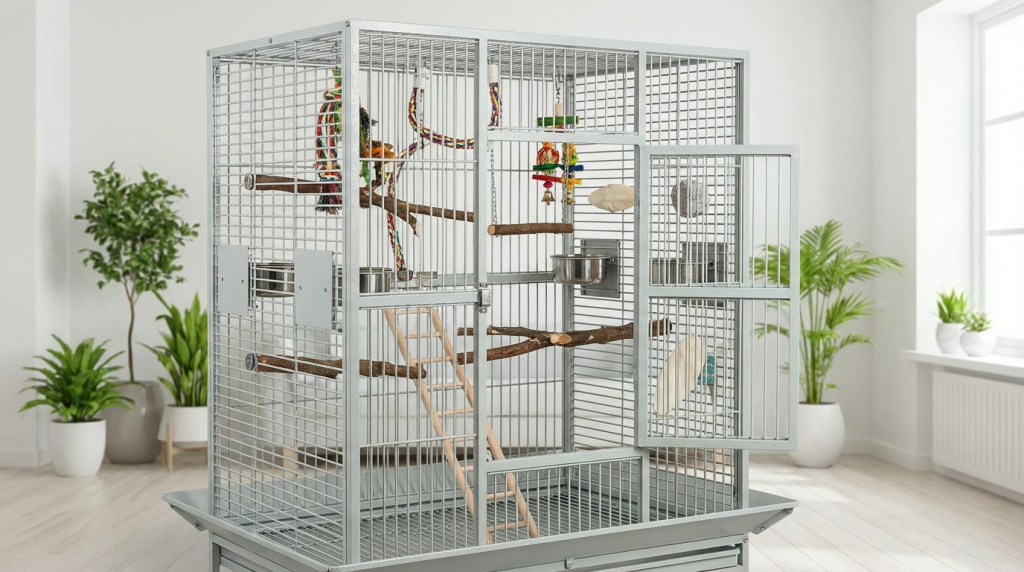
Perches: The Foundation of the Perfect Cage for Small Parrots
Perches are not decorations. They are essential for foot health.
Avoid using only smooth dowel rods. While many cages include them, uniform surfaces can cause pressure sores over time.
Instead, provide:
- Natural wood perches with varying diameters
- Rope perches for flexibility
- Textured perches for nail maintenance
Place perches at different heights. However, do not position them directly above food and water bowls. Droppings should not contaminate dishes.
Additionally, leave open flight space in the center. The perfect cage for small parrots always includes clear movement pathways.
Food and Water Stations in the Perfect Cage Setup
Food bowls should be easily accessible yet not placed beneath perches. Stainless steel bowls are preferred because they resist bacteria buildup.
Many owners use two food bowls: one for pellets and one for fresh produce. This separation helps maintain cleanliness.
Water should be changed daily. Some birds enjoy water bottles, while others prefer open bowls. Observe your bird’s preference and adjust accordingly.
Consistency creates comfort. Therefore, keep bowl placement stable so your parrot knows where to find essentials.
Toys That Complete the Perfect Cage for Small Parrots
Mental stimulation is as important as physical space.
Small parrots love shredding, chewing, and problem-solving. So rotate toys regularly. A static cage becomes boring quickly.
Include:
- Shreddable paper toys
- Soft wood chew toys
- Swings or ladders
- Foraging toys that hide treats
However, avoid overcrowding. The perfect cage for small parrots balances enrichment with open space. Too many toys can restrict movement.
Think of toys as seasoning, not clutter.
Creating a Sleep-Friendly Environment
Parrots need 10 to 12 hours of uninterrupted sleep. Without proper rest, irritability and feather issues may develop.
To support healthy sleep, establish a routine. Dim lights at the same time each evening. Some owners use a breathable cage cover.
Nevertheless, ensure airflow remains adequate. The perfect cage for small parrots supports both darkness and ventilation.
Consistency signals safety. Over time, your bird will settle more easily.
Maintaining Hygiene in the Perfect Cage for Small Parrots
Cleanliness protects health.
Line the bottom tray with plain paper or cage liners. Avoid scented materials. Replace liners daily to monitor droppings, which offer clues about health.
Food bowls should be washed daily. Perches and toys should be cleaned weekly.
Additionally, deep-clean the entire cage monthly. Remove everything, scrub bars, and rinse thoroughly.
Because bacteria can build up silently, regular maintenance preserves the perfect cage for small parrots long term.
Encouraging Exercise Beyond the Cage
Even the perfect cage for small parrots cannot replace out-of-cage time.
Supervised flight strengthens muscles and builds confidence. Therefore, allow daily safe exploration in a bird-proofed room.
Close windows. Turn off ceiling fans. Remove toxic plants.
Think of the cage as home base. However, the wider room becomes a playground for growth.
Common Mistakes When Setting Up a Cage for Small Parrots
Mistakes are common, especially for new owners.
Some cages are too small. Others are packed with toys but lack flight space. Sometimes food bowls are poorly placed, causing contamination.
Additionally, mirrors are often overused. While some birds enjoy them, others may develop unhealthy attachments.
The perfect cage for small parrots avoids extremes. It supports movement, cleanliness, stimulation, and calm.
Balance is everything.
Adapting the Perfect Cage for Small Parrots Over Time
Your bird’s needs may change.
Young parrots often crave more stimulation. Older birds may need easier perch access. Therefore, observe behavior carefully.
Is your bird chewing excessively? Add more shreddable toys. Is it avoiding certain perches? Adjust their height or diameter.
The perfect cage for small parrots evolves as your bird grows. Flexibility keeps the environment supportive.
Understanding Behavior Through Cage Design
Sometimes behavior issues are simply environmental signals.
Excessive screaming may signal boredom. Feather plucking may reflect stress or lack of stimulation. Reduced activity could indicate poor layout.
Before assuming complex problems, evaluate the cage. Often, small adjustments produce dramatic improvements.
Environment shapes emotion. Therefore, design with empathy.
Conclusion: Building a Safe Haven, Not Just a Cage
The perfect cage for small parrots is not about decoration. It is about safety, stimulation, and security.
When you choose the right size, safe materials, thoughtful layout, and enriching toys, you create more than housing. You build a sanctuary.
Your small parrot depends entirely on the environment you design. So approach the task with care. Observe, adjust, and refine.
Because when the cage feels right, your bird will show it. Through bright eyes, playful energy, and confident movement, you’ll see the difference every single day.
FAQs
- What is the minimum size for the perfect cage for small parrots?
For most small parrots, at least 18 x 18 x 24 inches is recommended, though larger is always better for comfort and flight. - How many perches should be in the perfect cage for small parrots?
Provide at least three perches with varying diameters and textures to support healthy feet and natural movement. - Should I cover the cage at night?
Yes, many parrots benefit from a breathable cover to ensure 10–12 hours of uninterrupted sleep, provided ventilation remains adequate. - How often should I clean the cage?
Spot clean daily, wash bowls every day, clean perches weekly, and perform a deep cleaning monthly for optimal hygiene. - Can small parrots stay in the cage all day?
No, daily supervised out-of-cage time is essential for exercise, mental stimulation, and overall well-being.