A calm home begins with a calm dog, and a calm dog thrives on structure. When you build a peaceful dog routine, you give your dog stability, predictability, and emotional balance. Dogs understand the world through patterns. They feel safer when they know what will happen next, and they respond to a steady rhythm of consistent daily activities. Without routine, many dogs develop anxiety, restlessness, or unwanted behaviors simply because they don’t know what to expect.
A peaceful routine brings harmony to your day as well. Your dog becomes easier to manage, walks become smoother, and mealtimes feel organized instead of chaotic. Even dogs with nervous or energetic personalities become more grounded when their day follows a steady flow. Whether you live with a young puppy or an older rescue, routine can transform their comfort level at home.
In this article, you’ll learn how to build a peaceful dog routine that supports mental health, reduces stress, and strengthens your bond. Each section gives you practical, gentle steps you can apply immediately.
Why a Peaceful Dog Routine Matters
A predictable routine helps your dog feel secure. Your dog understands when to rest, when to eat, and when to play. This lowers stress hormones and builds emotional resilience. Routines don’t have to be rigid. However, they must remain consistent enough that your dog can rely on them.
A peaceful dog routine can:
- Reduce separation anxiety
- Improve sleep quality
- Support better behavior
- Lower stress and reactivity
- Increase confidence
- Strengthen communication between you and your dog
Dogs thrive on expectations. When those expectations are clear, they relax more easily. When life feels unpredictable, tension grows. Establishing routine helps you prevent many behavior issues before they begin.
Start Your Peaceful Dog Routine with Morning Structure
Mornings shape the tone of your dog’s entire day. A peaceful dog routine begins with predictable morning habits that allow your dog to release energy, feel mentally stimulated, and settle calmly afterward.
Your morning routine may include:
- A calm greeting without excitement
- A short walk or potty break
- A few minutes of sniffing
- Fresh water
- Breakfast served consistently
- Light enrichment such as a puzzle feeder
When mornings feel steady and positive, your dog carries that energy throughout the day. Dogs don’t need long morning workouts, but they do benefit from gentle movement and mental engagement. Because sniffing lowers stress, a relaxed walk helps your dog settle naturally.
Use Consistent Meal Times to Support a Peaceful Routine
Regular meal times anchor your dog’s schedule. Food motivates dogs, so predictable feeding helps your dog understand the flow of the day. Consistency also supports digestion and prevents begging or pacing.
To reinforce a peaceful dog routine:
- Feed at the same times each day
- Avoid emotional excitement around food
- Use slow-feeder bowls when needed
- Keep mealtime short and calm
- Pair food with gentle enrichment
Many dogs relax after eating. This natural rhythm helps you build a peaceful structure around meals. Additionally, using puzzle feeders or lick mats encourages slow eating and improves mental enrichment.
Let Rest Periods Shape Your Dog’s Calm Mindset
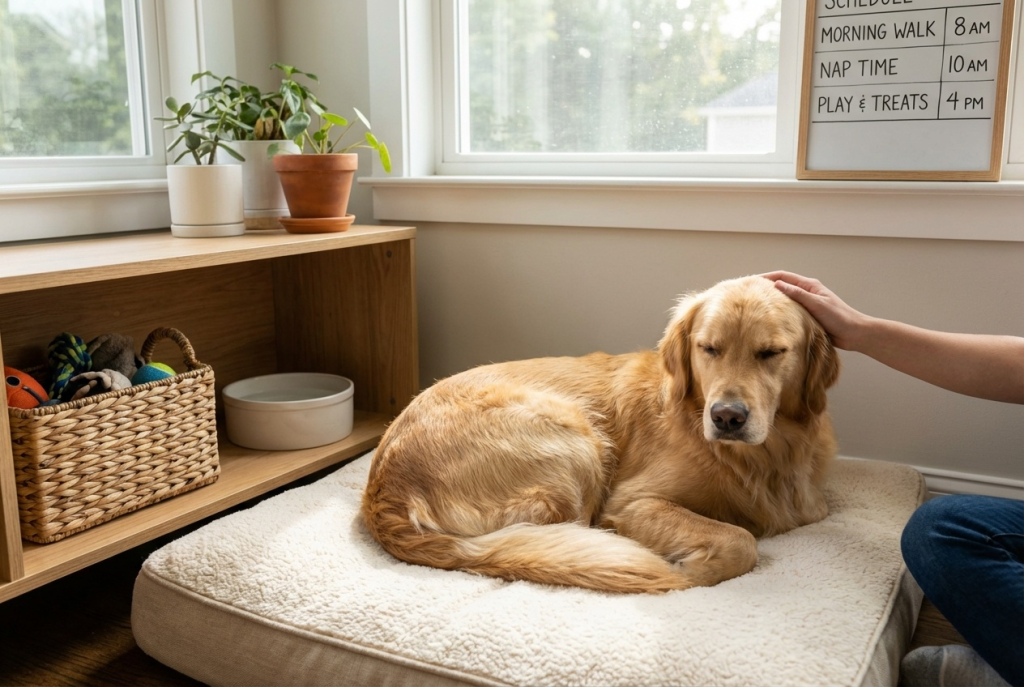
A peaceful dog routine must include ample rest. Dogs sleep far more than humans—often 12 to 16 hours a day. Without rest, dogs become overstimulated, which leads to barking, chewing, or reactivity.
Encourage smooth rest cycles by:
- Providing a comfortable bed in a quiet area
- Establishing calm after meals and walks
- Avoiding unnecessary stimulation during rest periods
- Keeping visitors or loud noises minimal if possible
Rest doesn’t have to be forced. Instead, structure your day so your dog naturally drifts into downtime. After physical activity and mental games, dogs settle more easily. A peaceful routine flows between stimulation and calm.
Use Gentle Walks to Build Emotional Stability
Walks offer more than exercise—they teach emotional regulation. When you learn to walk your dog calmly, the walk itself becomes part of your peaceful dog routine.
To maintain calm:
- Start in a low-stimulation area
- Keep the leash loose
- Allow your dog to sniff frequently
- Move slowly when needed
- Avoid busy routes until your dog is ready
Sniffing is crucial. It acts like therapy, giving your dog information and helping them decompress. Quick, rushed walks increase stress. Slow, mindful walks reduce it.
Even more importantly, walking at predictable times gives your dog structure. They won’t worry about when they’ll get outside. They relax more easily between outings.
Use Playtime to Balance Energy and Build Connection
Dogs need play, but play should be intentional rather than chaotic. Overexcited play can raise stress levels. Calm, structured play supports your peaceful dog routine.
Good options include:
- Tug with rules
- Fetch with breaks
- Scent-based games
- Soft indoor play for small spaces
- Hide-and-seek
These activities engage the brain while allowing your dog to stay emotionally regulated. Notice when your dog becomes too hyper. Slow down before excitement turns into overstimulation. Play should refresh your dog, not overwhelm them.
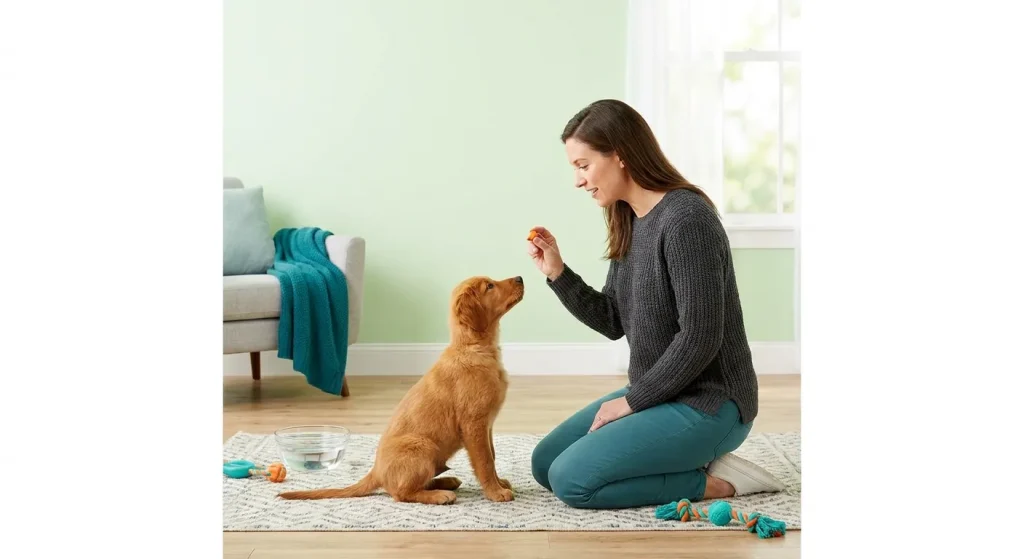
Plan Short Training Sessions Throughout the Day
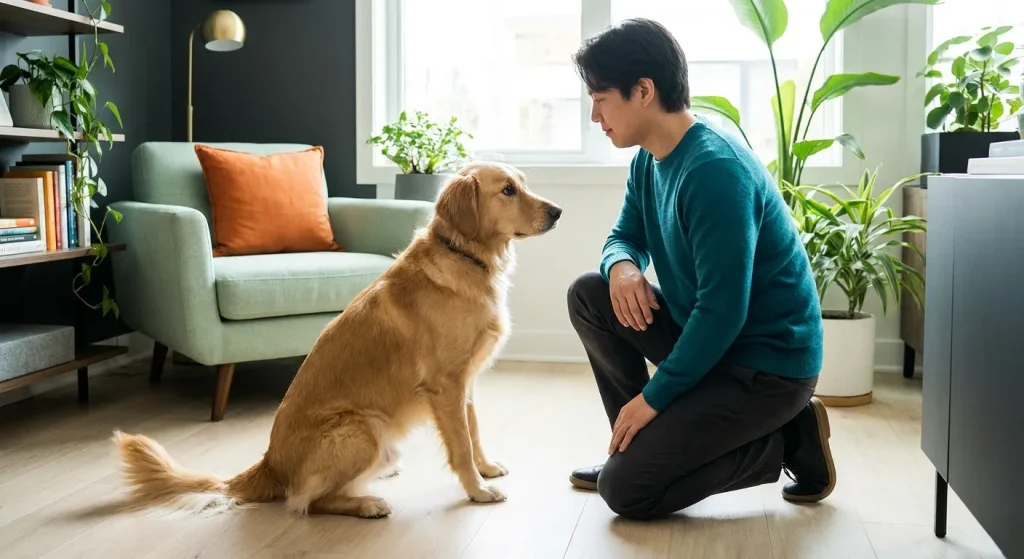
Training builds communication and strengthens the bond you share. When woven into your peaceful dog routine, training sessions teach focus and self-control.
Effective routines use:
- Short 2–5 minute sessions
- Positive reinforcement
- Calm energy
- Simple cues your dog already knows
- Occasional new skills for mental stimulation
Instead of long formal sessions, sprinkle training into daily life. Ask for a sit before meals, a down before walks, or a wait before exiting the door. These micro-training moments reinforce clarity and calmness.
Incorporate Enrichment to Reduce Stress and Build Confidence
Enrichment isn’t just entertainment—it shapes emotional wellbeing. When your dog engages with enriching activities, they burn mental energy and feel fulfilled.
Helpful enrichment tools include:
- Chew items
- Snuffle mats
- Puzzle toys
- Lick mats
- Frozen treats
- Slow feeders
- Scent work games
Rotating enrichment prevents boredom. Because enrichment encourages natural behaviors, your peaceful dog routine becomes more satisfying and complete.
Use Predictable Transitions to Avoid Stress
Transitions can be overwhelming for some dogs. Sudden changes in activity may create confusion or anxiety. Building predictable transitions into your peaceful dog routine helps your dog adjust smoothly.
Examples include:
- Brief calming time before walks
- Slow winding down before bedtime
- A cue for moving from play to rest
- A soft verbal signal before leaving the home
- A consistent departure routine to prevent anxiety
Transitions guide your dog through the day with clarity. When transitions stay calm, your dog stays balanced.
Teach Your Dog to Self-Soothe at Home
Self-soothing is an essential skill. A peaceful dog routine teaches your dog to calm themselves without constant attention or stimulation.
Encourage self-soothing with:
- Chews that last a long time
- Comfortable crate or quiet room access
- Soft background sounds
- A predictable nap schedule
- Independence training in short intervals
Adult dogs benefit from learning how to be comfortable alone. This prevents clinginess, destructive behavior, and separation anxiety.
Create a Calm Evening Routine to Signal Rest
Evenings determine how easily your dog will settle at night. A peaceful dog routine should end softly, not with loud activity or high-energy play.
Good evening habits include:
- A quiet walk
- Gentle petting
- Dim lights
- Calm tone of voice
- A predictable bedtime cue
- A simple treat or chew before bed
Dogs appreciate rhythm. Ending the day the same way helps your dog settle physically and mentally.
Avoid Overstimulation for a More Peaceful Routine
Too much activity can lead to restlessness. When building a peaceful dog routine, balance is key. Avoid overwhelming your dog with constant excitement.
Watch for signs of overstimulation:
- Excessive panting
- Jumping
- Barking
- Hyperactivity
- Difficulty settling
Reduce stimulation by spreading activities throughout the day. Allow breaks between training, play, walks, and guests. Calmness grows through pacing.
Adapt Your Peaceful Dog Routine to Your Dog’s Needs
Different dogs require different routines. A senior needs more rest. A puppy needs more structure. A nervous dog needs more predictability. Learning your dog’s personality helps you create a peaceful routine that fits their needs perfectly.
Adaptations may include:
- Shorter walks for seniors
- More scent work for anxious dogs
- More play for energetic breeds
- Lower activity levels in extreme heat
- Extra rest after busy days
Routines evolve, and adjusting them ensures you support your dog’s wellbeing with care.
Conclusion
Creating a peaceful dog routine transforms your home into a calm, predictable space where your dog feels safe, confident, and supported. With consistent rhythms, gentle transitions, enrichment, clear communication, and balanced stimulation, your dog learns to relax and trust the flow of each day. When you commit to structure without rigidity, your dog thrives emotionally and physically. A peaceful routine doesn’t just benefit your dog—it enhances your life together, creating harmony and connection that lasts.
FAQ
1. How long does it take to build a peaceful dog routine?
Most dogs adjust within a few weeks, especially when the routine stays consistent.
2. What if my dog resists the new routine?
Go slowly and use positive reinforcement. Small, predictable steps help your dog adapt.
3. Should routines change on weekends?
Try to keep key parts consistent, like meals and walks, even if your schedule shifts.
4. Can too much routine be a bad thing?
Overly rigid schedules can cause stress. Aim for gentle predictability, not strict timing.
5. How do I help a high-energy dog settle into a peaceful routine?
Use structured play, sniffing walks, and enrichment to balance their energy before rest.