
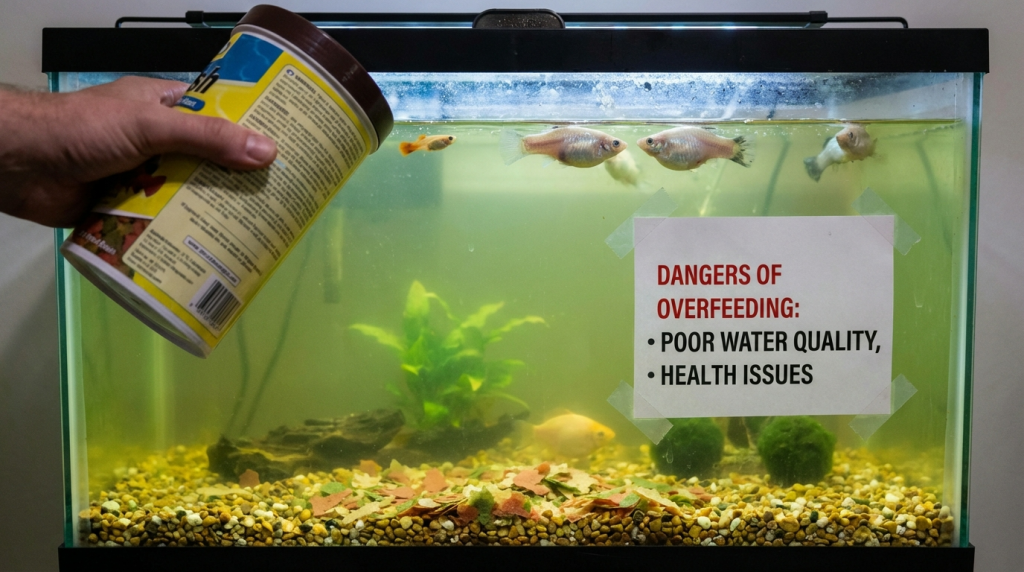

Feeding fish feels like an act of care. A pinch of flakes, a sprinkle of pellets, a little extra just in case. Yet behind that simple habit lies a silent threat. Overfeeding fish dangers often go unnoticed until problems spiral.
Fish don’t beg the way cats or dogs do. Still, they always appear hungry. That illusion tricks many owners into feeding more than necessary. Unfortunately, excess food does not equal extra health. Instead, it creates stress, disease, and polluted water.
Think of your aquarium as a closed ecosystem. Every action has consequences. When food enters the tank, it affects more than appetite. It touches water chemistry, bacteria levels, and oxygen balance.
Understanding these risks changes how you feed forever.
Why Overfeeding Happens So Easily
Overfeeding fish dangers usually start with good intentions. Most owners want thriving, active pets. Feeding becomes a way to connect.
Fish instinctively rush toward food. This behavior is survival-driven. In the wild, meals are unpredictable. Eating whenever possible makes sense. In captivity, however, food appears on schedule. Instinct does not adjust.
Another factor involves portion confusion. Flakes expand in water. Pellets sink slowly. What looks small becomes excessive quickly.
Marketing also plays a role. Some labels suggest generous feeding. That advice often benefits manufacturers more than fish.
Finally, emotional habits form. Feeding feels rewarding. Stopping early feels wrong. Awareness breaks that cycle.
How Overfeeding Fish Dangers Impact Water Quality
Water quality suffers first. Uneaten food sinks and decays. As it breaks down, ammonia levels rise.
Ammonia is toxic. Even small spikes stress fish. Prolonged exposure damages gills and internal organs.
Beneficial bacteria convert ammonia into nitrite, then nitrate. Overfeeding overwhelms this system. Filtration struggles to keep up.
Cloudy water often appears next. Algae blooms follow soon after. Oxygen levels drop as bacteria multiply.
This chain reaction happens quietly. By the time fish act sick, damage is already underway.
The Hidden Stress Fish Experience
Stress remains invisible but deadly. Overfeeding fish dangers increase stress hormones constantly.
Poor water quality irritates gills. Oxygen becomes harder to absorb. Fish breathe faster. Energy drains quickly.
Crowded bacteria compete for oxygen, especially at night. Fish may gasp near the surface.
Stress weakens immunity. Minor issues turn serious. Recovery slows.
Even peaceful species may become aggressive under stress. Behavior changes often confuse owners.
Healthy feeding routines remove this pressure. Calm fish live longer.
Digestive Problems Caused by Overfeeding
Fish digestion differs from mammals. Many species lack true stomachs. Food moves quickly through their system.
Excess food overwhelms digestion. Constipation becomes common. Bloating follows.
Swim bladder disorder often appears next. Fish struggle to maintain balance. Floating or sinking occurs.
In severe cases, internal organs compress. Pain increases. Appetite may vanish suddenly.
Feeding less solves many digestive issues. Simplicity heals.
Overfeeding Fish Dangers and Disease Risk
Disease thrives in polluted environments. Overfeeding creates perfect conditions.
Bacteria multiply rapidly. Parasites flourish. Fungal spores spread easily.
Stressed fish resist infection poorly. Open sores appear. Fin rot develops. Cloudy eyes follow.
Medication may treat symptoms. However, without correcting feeding habits, illness returns.
Prevention always beats treatment. Clean water protects health better than chemicals.
Algae Blooms and Their Ripple Effects
Algae love excess nutrients. Overfeeding supplies them constantly.
Green water blocks light. Plants suffer. Oxygen production drops.
Some algae release toxins. Fish react poorly. Invertebrates decline first.
Cleaning becomes frequent. Maintenance frustration grows.
Balanced feeding starves algae naturally. Clear water returns with patience.
The Impact on Tank Mates and Ecosystem Balance
Overfeeding fish dangers extend beyond fish. Snails, shrimp, and plants feel the effects.
Decaying food suffocates substrate. Root systems rot. Beneficial microfauna disappear.
Snails may explode in population. Shrimp struggle with molting.
Predatory fish become lethargic. Grazers lose purpose.
Every tank thrives on balance. Food disrupts that balance quickly.
Understanding Proper Feeding Portions
Portion control solves most issues. A simple rule helps.
Feed only what fish eat within two to three minutes. Observe carefully.
Small meals work better than large ones. Once daily feeding often suffices. Some species thrive on less.
Variety matters more than quantity. Rotate foods. Include fasting days weekly.
Fish benefit from rest. Digestion improves. Water stays cleaner.
Species-Specific Feeding Needs
Different fish require different approaches. Overfeeding fish dangers increase when needs are ignored.
Herbivores graze constantly in nature. Provide plant-based foods sparingly but regularly.
Carnivores need protein-rich meals. Excess causes faster waste buildup.
Bottom dwellers need targeted feeding. Sinking food prevents surface overeating.
Research species habits. Tailor routines carefully.
How Often Should You Feed Fish
Frequency depends on species and age. Juveniles eat more often. Adults require less.
Once daily works for many fish. Twice daily suits active species. Fasting days improve health.
Observe behavior after feeding. Healthy fish remain active without bloating.
Consistency matters. Random feeding disrupts digestion.
Routine builds stability.
Recognizing Signs of Overfeeding
Clues appear early. Cloudy water signals decay. Algae growth accelerates.
Fish may appear bloated. Waste strings become long and pale.
Lethargy replaces activity. Appetite decreases paradoxically.
Filter clogging increases. Odor develops.
Respond quickly. Reduce feeding immediately.
Correcting Overfeeding Without Harming Fish
Change gradually. Sudden starvation shocks systems.
Reduce portions slowly. Increase water changes temporarily.
Clean substrate gently. Remove uneaten food promptly.
Monitor ammonia and nitrate levels. Stability returns with patience.
Fish adapt quickly. Health rebounds faster than expected.
The Psychological Trap of Feeding
Humans project emotions onto fish. Feeding feels nurturing.
Yet restraint shows greater care. Fish do not equate food with love.
Observation replaces feeding as connection. Watching behavior becomes rewarding.
Interact differently. Rearrange décor. Add enrichment.
Connection deepens without excess food.
Long-Term Consequences of Chronic Overfeeding
Chronic overfeeding shortens lifespan. Organs fail early.
Breeding issues arise. Eggs weaken. Fry survival drops.
Genetic expression changes under stress. Color fades.
Tank crashes occur eventually. Recovery becomes costly.
Prevention saves time, money, and heartbreak.
Building a Healthy Feeding Routine
Routine simplifies care. Measure portions beforehand.
Use feeding rings. Control spread.
Schedule fasting days. Mark calendars.
Educate all household members. Consistency matters.
Healthy habits protect ecosystems.
Conclusion
Overfeeding fish dangers hide behind good intentions. Extra food seems harmless, yet it quietly destroys water quality, stresses fish, and fuels disease. By feeding less and observing more, you restore balance. Clean water, calm behavior, and vibrant health follow naturally. In the end, restraint becomes the most powerful form of care.
FAQ
1. How do I know if I am overfeeding my fish?
Cloudy water, bloated fish, excess waste, and rapid algae growth often indicate overfeeding.
2. Can overfeeding kill fish quickly?
Yes. Severe water pollution from excess food can cause ammonia spikes that become fatal.
3. Is it better to underfeed than overfeed?
Slight underfeeding is safer. Fish tolerate less food better than polluted water.
4. Should I feed fish every day?
Most adult fish do well with daily feeding, while some benefit from fasting days.
5. Does overfeeding affect filtration systems?
Absolutely. Excess waste clogs filters faster and reduces their efficiency.