
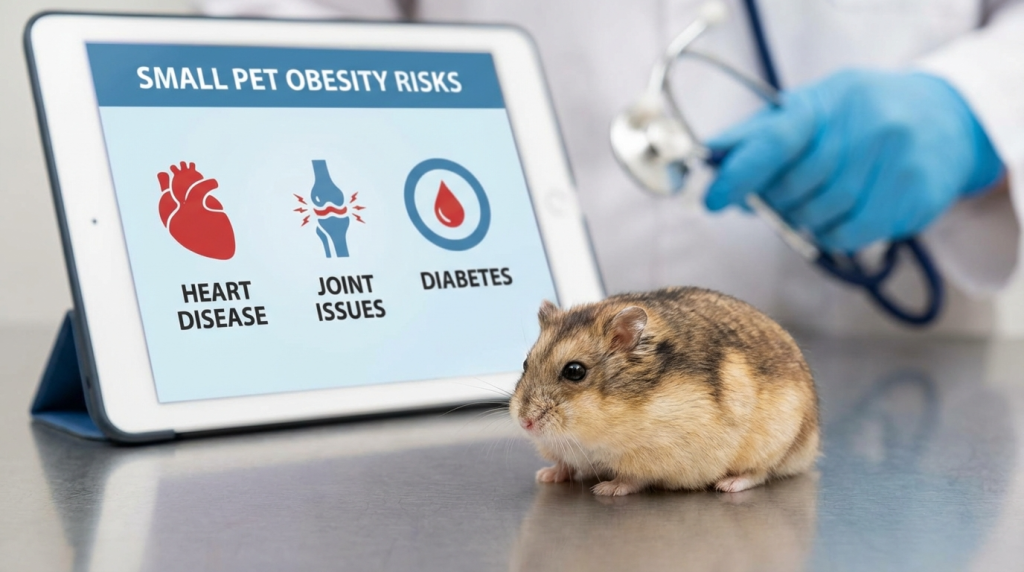

Obesity risks in small pets are far more common than most owners realize. Hamsters, guinea pigs, rabbits, ferrets, and other small companions may look adorable with extra weight, yet those extra grams can quietly shorten their lives. Unlike larger animals, small pets have delicate systems. Even minor weight gain can disrupt balance, mobility, and organ function.
Many owners associate obesity with cats and dogs. However, small pets face equal, if not greater, danger. Their compact bodies leave little room for excess fat. Think of it like overpacking a tiny suitcase. Eventually, the zipper fails.
Preventing obesity risks in small pets begins with awareness. Once you understand how weight affects their health, everyday care decisions change naturally. Feeding habits improve. Activity increases. Observation becomes sharper.
This article breaks it all down in a clear, practical way. By the end, you will know exactly how to protect your small pet from unnecessary weight-related harm.
Understanding obesity risks in small pets
Obesity risks in small pets stem from an imbalance between calories consumed and energy used. When food intake exceeds activity, fat accumulates. Over time, that fat interferes with normal body processes.
Small pets evolved to spend much of their day moving. In the wild, food is earned through foraging, burrowing, and exploration. Captivity often removes these natural behaviors. Food becomes constant. Space becomes limited.
As a result, weight gain happens quietly. Unlike sudden illness, obesity creeps in gradually. Because of this, it is often dismissed as normal growth or aging.
Yet obesity is not benign. Excess fat acts like an organ itself. It releases inflammatory substances and stresses joints. Organs are compressed. Breathing becomes harder.
Understanding these mechanisms helps owners take the issue seriously before damage occurs.
Why small pets are especially vulnerable to obesity
Obesity risks in small pets are amplified due to size and physiology. A few extra grams on a hamster are proportionally massive. That same percentage in a dog would be obvious. In a small pet, it may go unnoticed.
Additionally, many small pets have slow metabolisms. They are designed to survive on limited resources. When calorie-dense foods are constantly available, their bodies store the excess efficiently.
Housing also plays a role. Small cages limit movement. Wheels may be too small. Enrichment may be lacking. Without stimulation, inactivity becomes the norm.
Moreover, owners often equate food with love. Treats are given frequently. Vegetables are over-served. Seed mixes are refilled without measurement.
Each factor alone may seem minor. Together, they create a perfect storm for obesity.
Common small pets affected by obesity
Obesity risks in small pets affect many species, though patterns vary.
Hamsters frequently gain weight due to seed-heavy diets and limited exercise. Dwarf breeds are particularly susceptible.
Guinea pigs often become overweight from excess pellets and sugary fruits. Because they are social and vocal, begging behaviors can reinforce overfeeding.
Rabbits face obesity risks from low-fiber diets. Insufficient hay intake and excess pellets lead to fat accumulation and gut problems.
Ferrets may gain weight from inactivity and high-fat treats. Seasonal weight changes are normal, yet chronic obesity is not.
Rats, despite being intelligent and active, can become overweight in small enclosures with unrestricted food access.
Recognizing species-specific tendencies helps tailor prevention strategies effectively.
Health consequences linked to obesity in small pets
Obesity risks in small pets extend far beyond appearance. The health consequences are often severe and sometimes irreversible.
Joint strain is common. Extra weight places stress on tiny bones and joints. Over time, arthritis develops. Movement becomes painful. Activity decreases further.
Respiratory issues also occur. Fat compresses the chest cavity. Breathing becomes labored, especially during heat or stress.
Cardiovascular strain is another concern. The heart works harder to supply oxygen. Fat deposits may interfere with normal circulation.
Digestive problems arise as well. In rabbits and guinea pigs, obesity increases the risk of gastrointestinal stasis, a life-threatening condition.
Liver disease is frequently associated with obesity. Fatty liver syndrome develops silently, then progresses rapidly.
Because symptoms often appear late, prevention remains the best medicine.
Behavioral changes caused by excess weight
Obesity risks in small pets also affect behavior. These changes are subtle at first but grow over time.
Overweight pets move less. Play becomes rare. Exploration declines. What once looked like a calm temperament may actually be fatigue.
Social interactions may change. Some pets become irritable when handled due to discomfort. Others withdraw entirely.
Grooming habits often decline. In rabbits and guinea pigs, this leads to matted fur and skin infections. Hygiene suffers quickly.
Mental stimulation decreases alongside physical activity. Boredom sets in. This can result in repetitive behaviors or depression-like states.
Behavior often reflects physical health. When weight improves, personality frequently brightens as well.
Dietary causes of obesity in small pets
Diet sits at the heart of obesity risks in small pets. What and how much you feed matters greatly.
Many commercial foods are calorie-dense. Seed mixes, in particular, are problematic. Pets selectively eat high-fat seeds, ignoring healthier components.
Pellets, while balanced, are often overfed. Owners assume unlimited pellets are acceptable. In reality, portion control is essential.
Treats add up quickly. Fruits contain natural sugars that contribute to weight gain. Even vegetables, when excessive, increase calorie intake.
Hay is sometimes undervalued. For herbivores, hay should form the bulk of the diet. It provides fiber without excess calories.
Measuring food and understanding nutritional needs transforms feeding from guesswork into care.
The role of exercise in preventing obesity
Exercise plays a critical role in reducing obesity risks in small pets. Movement burns calories and supports mental health.
Inadequate space limits natural behaviors. Small pets need room to explore, climb, and forage. Larger enclosures encourage movement naturally.
Exercise wheels must be appropriately sized. Poorly fitted wheels cause injury and discourage use.
Out-of-cage time offers valuable stimulation. Supervised play areas allow pets to stretch and move freely.
Environmental enrichment also promotes activity. Tunnels, chew toys, and foraging puzzles turn movement into fun.
When exercise becomes part of daily routine, weight management follows naturally.
How environment influences weight gain
Obesity risks in small pets are heavily influenced by environment. A stimulating habitat encourages movement. A dull one promotes inactivity.
Cage layout matters. Multi-level designs promote climbing. Rearranging items periodically prevents boredom.
Temperature also affects activity. Pets kept too warm may move less. Proper climate control supports natural energy levels.
Lighting cycles influence behavior. Consistent day-night rhythms regulate appetite and activity.
Social housing can help. Some species thrive with companions. Interaction encourages movement and play.
Environment shapes habits. Adjusting it often leads to healthier behavior without force.
Monitoring weight and body condition
Monitoring weight reduces obesity risks in small pets significantly. Regular checks catch problems early.
Digital kitchen scales work well for small animals. Weekly weigh-ins create a clear trend over time.
Body condition scoring complements numbers. You should feel bones gently without excess fat. Visual cues also help once you know what to look for.
Sudden weight gain deserves attention. Gradual increase over months signals lifestyle imbalance.
Recording data provides clarity. Patterns emerge. Adjustments become easier and more precise.
Observation is a powerful tool when used consistently.
Veterinary guidance and obesity management
Veterinary support strengthens efforts to manage obesity risks in small pets. Exotic veterinarians understand species-specific needs.
Health checks rule out underlying conditions. Hormonal issues or dental problems sometimes contribute to weight gain.
Vets can design tailored diet plans. Generic advice may not suit every pet.
Safe weight loss strategies are essential. Rapid loss is dangerous for small animals.
Follow-up visits ensure progress stays on track. Professional insight adds confidence to your care approach.
Preventing obesity through daily habits
Preventing obesity risks in small pets comes down to daily choices. Small actions accumulate into lasting results.
Measure food portions consistently. Avoid free-feeding unless advised.
Prioritize hay and low-calorie foods. Limit treats intentionally.
Encourage movement through play and enrichment. Rotate toys regularly.
Observe behavior and body condition. Respond early to changes.
Build routines that support health naturally. Over time, these habits become second nature.
Conclusion
Obesity risks in small pets are real, serious, and preventable. While extra weight may seem harmless, its impact reaches every system in the body. Through mindful feeding, enriched environments, regular monitoring, and informed care, small pets can live longer, happier lives. Prevention begins with awareness and continues through everyday decisions. When health becomes the priority, small pets thrive with energy, comfort, and vitality.
FAQ
- What is considered obesity in small pets?
Obesity occurs when excess body fat interferes with normal health, movement, or behavior. - Are treats always bad for small pets?
No, but treats should be limited, appropriate, and part of a balanced diet. - How fast should a small pet lose weight?
Weight loss should be gradual and guided by a veterinarian to avoid health risks. - Can exercise alone fix obesity?
Exercise helps, but diet control is equally important for lasting results. - Do indoor small pets face higher obesity risks?
Yes, limited space and activity often increase obesity risks without proper enrichm


