
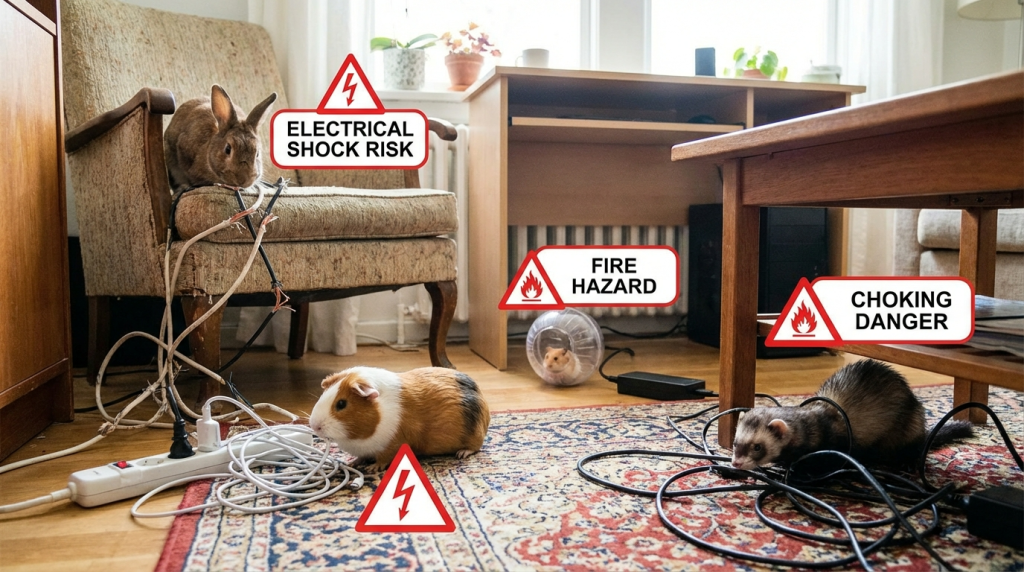

Small pets explore the world with curiosity and courage. They squeeze into corners. They chew on unfamiliar textures. They climb, burrow, and investigate every inch of your home. While that curiosity feels adorable, it can quickly become dangerous when loose wiring risks for small pets are ignored.
A dangling phone charger may seem harmless. An extension cord tucked behind a sofa might not catch your attention. However, to a rabbit, hamster, ferret, or guinea pig, that wire looks like a chew toy.
Electrical cords are silent hazards. They do not bark or hiss. Yet when left exposed, they can cause shocks, burns, and even fatal injuries. Therefore, understanding loose wiring risks for small pets is not optional. It is essential for responsible pet ownership.
Why Loose Wiring Risks for Small Pets Are So Dangerous
Small animals chew by instinct. Rodents chew constantly because their teeth never stop growing. Rabbits also gnaw to maintain dental health. Ferrets explore with their mouths.
When these natural behaviors meet exposed electrical wires, danger follows immediately. If a pet bites into a live cord, an electric shock can occur instantly. Severe burns inside the mouth are common. In some cases, cardiac arrest may follow.
Moreover, damaged wiring can spark fires. If insulation is stripped away by chewing, heat builds quickly. Consequently, both the pet and the home become vulnerable.
Loose wiring risks for small pets increase in cluttered areas. Entertainment centers, computer desks, and kitchen corners often hide multiple cables. Because these areas feel cozy and warm, pets are drawn to them.
Electrical hazards may look small. However, their consequences can be devastating.
How Small Pets Interact With Exposed Cords
Understanding behavior helps prevent accidents. Small pets do not chew cords out of mischief. They chew because texture attracts them.
Rabbits, for example, prefer flexible materials. A thin charging cable feels similar to a root in soil. Guinea pigs and hamsters investigate with quick nibbles. Even a single bite can pierce insulation.
Additionally, pets often hide beneath furniture. Under couches and beds, wires gather unnoticed. Because these spots feel secure, animals spend extended time there.
Loose wiring risks for small pets increase when cords lie along baseboards or floors. Ground-level exposure creates direct access. Unlike cats or dogs, small mammals remain close to the floor, where most wires rest.
Therefore, prevention begins with awareness. Observe your pet’s favorite hiding spots. Look at your home from their level. You may discover hazards you never noticed before.
Common Injuries Caused by Loose Wiring Risks for Small Pets
Electrical injuries can vary in severity. Some pets show immediate symptoms. Others decline gradually.
Burns inside the mouth are among the most frequent injuries. These burns may appear as swelling, drooling, or refusal to eat. Because the damage occurs internally, it may not be visible right away.
Electric shock can also affect the heart and lungs. In severe cases, breathing difficulties appear quickly. Veterinary care must be sought immediately.
Furthermore, chewing exposed cords can cause gastrointestinal blockage. If insulation or plastic fragments are swallowed, digestion may be obstructed. Surgery is sometimes required.
Loose wiring risks for small pets create more than surface wounds. They create systemic danger.
Hidden Wiring Hazards Around the Home
Many homeowners secure visible cables. However, hidden wires remain overlooked.
Behind entertainment units, cords often tangle loosely. Under desks, power strips overflow with chargers. In kitchens, appliances plug into low outlets.
Holiday decorations create seasonal danger. String lights and decorative wiring tempt curious pets. Because decorations change frequently, safety checks may be skipped.
Even heating pads or aquarium cables can attract attention. Warmth draws small mammals naturally.
Loose wiring risks for small pets multiply when multiple cords cluster together. The more cables present, the greater the temptation.
Therefore, conduct a full-room inspection regularly. Focus especially on areas where your pet roams freely.
Why Young Pets Face Greater Wiring Risks
Young animals are especially vulnerable. They explore constantly and lack fear.
Baby rabbits and hamsters chew more aggressively than adults. They test everything with sharp teeth. At this stage, training rarely stops instinct.
Additionally, smaller bodies experience greater harm from electrical shock. A mild shock for a large dog can be fatal for a small rodent.
Loose wiring risks for small pets increase when supervision decreases. Young animals require close monitoring until the environment becomes fully secured.
Prevention must begin early.
Practical Solutions to Reduce Loose Wiring Risks for Small Pets
The good news is that electrical hazards can be controlled. With thoughtful changes, you can dramatically lower risk.
Use Cord Covers and Protective Tubing
Plastic cord protectors create a barrier between teeth and wires. These covers resist chewing and reduce direct access.
Although no solution guarantees complete safety, protective tubing significantly lowers risk.
Elevate Cords Off the Floor
Whenever possible, lift cables away from ground level. Attach wires to walls using clips. Route cords behind furniture securely.
If cords remain off the floor, access becomes limited.
Block Access to High-Risk Areas
Use pet gates or playpens to restrict movement near entertainment systems or office setups.
Even temporary barriers can prevent dangerous encounters.
Bundle and Secure Cables
Loose wires invite attention. However, bundled cables appear less interesting. Use cable organizers to tidy clusters.
Organization reduces temptation and improves overall home safety.
Training and Supervision Reduce Loose Wiring Risks
Although environmental control matters most, training also plays a role.
For rabbits, gentle redirection works best. Offer safe chew toys consistently. Replace forbidden items immediately.
Ferrets respond to consistent correction. However, supervision remains necessary.
Despite training efforts, instinct persists. Therefore, never rely solely on discipline. Instead, combine supervision with environmental safeguards.
Loose wiring risks for small pets decrease dramatically when owners stay attentive.
Signs Your Pet Has Encountered Electrical Danger
Recognizing early symptoms can save lives.
Watch for drooling, pawing at the mouth, or reluctance to eat. These signs often indicate oral burns.
Rapid breathing or weakness may suggest shock. In such cases, seek veterinary care immediately.
If you discover a chewed cord, unplug it safely before inspecting your pet. Do not touch exposed wires with bare hands.
Quick action limits further injury.
Creating a Pet-Safe Electrical Plan
A safety plan strengthens prevention efforts. Start by mapping your home room by room. Identify every outlet and visible cord.
Next, install protective tubing where needed. Remove unused chargers. Repair damaged insulation immediately.
Schedule monthly safety checks. Even well-secured cords can loosen over time.
Loose wiring risks for small pets decrease when proactive habits replace reactive responses.
Consider your pet’s natural behavior as you plan. Chewers need abundant alternatives. Explorers require safe play zones.
A thoughtful approach creates a secure environment without sacrificing comfort.
Long-Term Benefits of Eliminating Loose Wiring Risks for Small Pets
When electrical hazards disappear, peace of mind grows.
You no longer worry about hidden dangers during free-roam time. Your pet explores confidently within safe boundaries.
Additionally, reducing loose wiring risks for small pets protects your property. Electrical damage can lead to costly repairs or fires.
Most importantly, your pet’s health improves. Without fear of hidden shocks or burns, daily life becomes safer and calmer.
Small changes create lasting protection.
Conclusion
Loose wiring risks for small pets often hide in plain sight. Exposed cords, tangled cables, and low outlets may seem minor, yet they pose serious threats. Small animals chew instinctively, and electrical hazards respond without warning.
However, with awareness, organization, and protective tools, these risks can be dramatically reduced. Elevate cords, install covers, block access, and inspect regularly. Your pet depends on you to create a safe space.
When you remove hidden dangers, you do more than protect a cable. You protect a curious life that trusts you completely.
FAQ
1. Why are electrical cords dangerous for small pets?
Small pets chew instinctively, and biting live wires can cause burns, shock, or fatal injuries.
2. Which small pets face the highest wiring risk?
Rabbits, hamsters, guinea pigs, and ferrets face high risk because they chew frequently.
3. How can I protect cords from chewing?
Use cord covers, elevate wires, bundle cables, and block access to high-risk areas.
4. What should I do if my pet chews a wire?
Unplug the cord safely and seek immediate veterinary care if symptoms appear.
5. Are cord protectors completely safe?
Cord protectors reduce risk significantly, but supervision and regular inspection remain essential.