
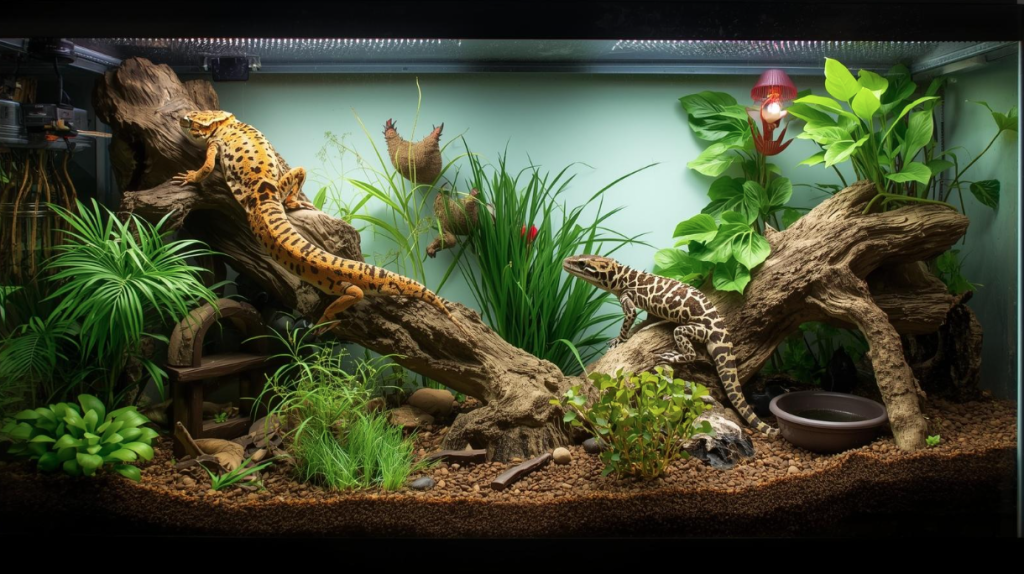

Creating the perfect leopard gecko habitat feels a bit like designing a tiny desert apartment. Everything has to work together. Temperature. Space. Comfort. Safety. When one element is off, stress creeps in. When everything aligns, your gecko thrives.
Leopard geckos are hardy, but they are not careless survivors. In the wild, they rely on precise conditions to stay healthy. Your job is to recreate those conditions indoors, without overcomplicating things. Luckily, the ideal leopard gecko habitat is simple once you understand the basics.
This guide walks you through every detail, from enclosure size to nighttime temperatures. By the end, you’ll know exactly how to build a habitat that feels safe, natural, and comfortable for your gecko.
Why the Right Leopard Gecko Habitat Matters
A leopard gecko habitat is more than a tank. It’s the foundation of health.
When the setup is correct, digestion works smoothly. Shedding becomes easier. Stress levels stay low. Behavior remains calm and predictable.
On the other hand, poor habitat design leads to common problems. Appetite drops. Impaction risk increases. Aggression or lethargy appears.
Because leopard geckos hide discomfort well, habitat issues often go unnoticed until health declines. That’s why setup matters from day one.
Think of the habitat as life support. Get it right, and everything else becomes easier.
Choosing the Correct Enclosure Size
Space influences behavior.
For a single adult, a 20-gallon long enclosure is the minimum standard. Floor space matters more than height. Leopard geckos are ground dwellers, not climbers.
Juveniles can start smaller, but upgrading becomes necessary as they grow. Crowded spaces increase stress and limit temperature gradients.
A wider enclosure allows proper warm and cool zones. It also gives room for hides and enrichment.
Bigger isn’t overwhelming. Instead, it offers choice, which builds confidence.
Glass Tanks vs Other Enclosure Types
Glass tanks remain the most popular option.
They retain heat well and allow easy visibility. Ventilation is usually adequate with a mesh lid.
Plastic tubs can work temporarily, especially for quarantine. However, visibility and heat control become harder long term.
Wooden vivariums provide excellent insulation but require proper ventilation and sealed interiors.
For beginners, glass tanks offer the best balance of safety and control.
Understanding Temperature Gradients
Temperature drives everything.
Leopard geckos are ectothermic. They rely on external heat to digest food and regulate metabolism.
A proper leopard gecko habitat includes a warm side and a cool side. The warm side should stay around 88–92°F. The cool side should remain near 75–80°F.
Without a gradient, geckos cannot self-regulate. That leads to digestive problems and stress.
Gradients give control back to the animal.
Best Heating Methods for Leopard Geckos
Under-tank heaters work best.
Heat mats placed beneath one side of the enclosure create belly heat, which supports digestion. Always use a thermostat to prevent overheating.
Overhead heating can supplement, especially in cooler rooms. However, intense basking lights are unnecessary.
Avoid heat rocks. They cause burns and provide uneven heat.
Safe, controlled warmth supports long-term health.
Nighttime Temperatures Explained
Leopard geckos tolerate cooler nights.
Temperatures can drop to around 65–70°F without harm. Nighttime heat is only necessary if your home becomes very cold.
If supplemental heat is needed, use ceramic heat emitters. These provide warmth without light.
Darkness supports natural rhythms.
Lighting Needs in a Leopard Gecko Habitat
Leopard geckos are crepuscular.
They don’t require intense UVB like diurnal reptiles. However, low-level UVB can still provide benefits.
A low-output UVB bulb helps with vitamin D synthesis and bone health. If UVB is not used, proper calcium supplementation becomes critical.
Lights should follow a day-night cycle. Twelve hours on. Twelve hours off.
Consistency supports circadian rhythm.
Substrate Choices: What Works and What Doesn’t
Substrate selection matters more than aesthetics.
Paper towels work well for juveniles and quarantine. They are safe and easy to clean.
Tile and slate provide a natural look and support nail wear. They also retain heat well.
Loose substrates like sand carry impaction risk. Although marketed as natural, they often cause problems.
A safe leopard gecko habitat prioritizes function over appearance.
The Importance of Multiple Hides
Hides create security.
Every leopard gecko habitat needs at least three hides. One on the warm side. One on the cool side. One humid hide.
Hides should feel snug. Oversized hides reduce the sense of safety.
When geckos feel hidden, stress drops. Exploration increases.
Security builds confidence.
Setting Up a Proper Humid Hide
Shedding requires moisture.
A humid hide prevents retained shed, especially around toes and tail. Use damp moss or paper towels inside a closed hide.
Place the humid hide near the warm side to create gentle evaporation.
Check moisture regularly. It should be damp, not soaked.
A proper humid hide prevents common shedding issues.
Water Dishes and Hydration
Water must always be available.
Use a shallow, sturdy dish. Clean it daily to prevent bacterial growth.
Some geckos prefer to soak occasionally, especially during shedding.
Fresh water supports digestion and hydration.
Simple details matter.
Decor and Enrichment Without Clutter
Enrichment adds stimulation.
Rocks, logs, and artificial plants provide texture and cover. However, overcrowding creates stress.
Leave open floor space for movement.
Everything should be stable. Loose decor can collapse and cause injury.
Balance comfort with exploration.
Feeding Area Considerations
Feeding affects habitat cleanliness.
Designate a feeding area to monitor intake easily. Remove uneaten insects promptly.
Some owners use feeding dishes for worms. Others hand-feed.
Clean feeding reduces pest issues and stress.
Maintaining Cleanliness in the Habitat
Clean habitats support health.
Spot-clean daily. Remove waste and shed skin.
Deep clean monthly. Use reptile-safe disinfectants.
Avoid harsh chemicals.
Cleanliness prevents parasites and bacteria.
Humidity Levels Explained
Leopard geckos prefer low humidity.
Ambient humidity should remain around 30–40%. Excess moisture causes respiratory problems.
The humid hide provides localized moisture without raising overall humidity.
Use a hygrometer to monitor levels.
Balance prevents illness.
Monitoring Equipment You Should Always Use
Measurement prevents mistakes.
Use digital thermometers on both warm and cool sides. Infrared temp guns help check surface temperatures.
Thermostats control heating devices safely.
Guessing leads to problems. Measuring prevents them.
Common Habitat Mistakes to Avoid
Some mistakes appear harmless.
Overheating causes dehydration. Poor substrate causes impaction. Single hides cause stress.
Ignoring gradients leads to digestive issues.
Learning from others’ mistakes saves time and money.
Adjusting the Habitat as Your Gecko Ages
Needs change over time.
Juveniles grow quickly. Adults become more sedentary.
Monitor behavior and adjust layout accordingly.
A flexible leopard gecko habitat evolves with its occupant.
Signs Your Leopard Gecko Habitat Is Working
Healthy habitats produce healthy behavior.
Regular feeding. Smooth shedding. Calm movement. Steady weight.
If these signs appear, your setup is working.
Observation confirms success.
Conclusion
The perfect leopard gecko habitat is not complicated, but it is intentional. Every element, from temperature gradients to hides, plays a role in health and comfort. When the habitat feels right, stress fades and natural behavior emerges.
By focusing on safety, simplicity, and consistency, you create more than a setup. You create a home where your leopard gecko can thrive for years to come.
FAQ
1. What size enclosure is best for a leopard gecko?
A 20-gallon long enclosure is the minimum recommended size for one adult leopard gecko.
2. Do leopard geckos need UVB lighting?
Low-level UVB is beneficial but not mandatory if proper calcium supplementation is provided.
3. What is the safest substrate for a leopard gecko habitat?
Tile, slate, or paper towels are the safest options and reduce impaction risk.
4. How many hides should be in the habitat?
At least three hides are required: warm, cool, and humid.
5. How often should the habitat be cleaned?
Spot-clean daily and deep clean about once a month for optimal hygiene.