

If you’ve ever seen your cat staring out the window, tail flicking in slow motion, you might have wondered—what’s going on in that little mind? Indoor cats live safe, comfortable lives, but without the challenges of the outside world, their sharp instincts can dull. The key to keeping them happy and well-behaved lies in one essential thing: mental stimulation.
When cats get bored, they find their own ways to stay entertained—scratching furniture, meowing at 3 a.m., or pouncing on your ankles. But with the right strategies, you can channel that energy into positive, enriching activities that keep your feline companion sharp, calm, and content.
Why Mental Stimulation Matters for Indoor Cats
Indoor cats don’t have trees to climb or prey to chase. Their world is limited, so their mind must find new ways to stay engaged. Mental stimulation keeps a cat’s instincts alive. It prevents anxiety, reduces destructive behavior, and even helps maintain a healthy weight.
A cat that uses her brain is also a happier cat. Think of it as giving her a “job”—a reason to get up, explore, and think. Without this daily engagement, she may slip into a lazy routine or develop behavioral issues caused by frustration or boredom.
In short, mental stimulation isn’t a luxury—it’s a necessity for any indoor feline’s well-being.
Interactive Play: The Foundation of a Stimulated Mind
Let’s start with the most natural way to engage your cat—playtime. Play mimics hunting, the ultimate feline mental workout. Every toy becomes prey, every movement a strategic challenge.
Use interactive toys like feather wands, laser pointers, and string teasers to bring out her inner predator. Rotate the toys frequently so she doesn’t lose interest. A laser pointer session might feel like simple fun to you, but to your cat, it’s a thrilling hunt that sharpens reflexes and focus.
Try scheduling two or three play sessions a day for about 10–15 minutes each. Cats are sprinters, not marathon runners, so short bursts of excitement are ideal. End each session with her “catching” the toy to complete the hunt. That moment of success gives her mental satisfaction and confidence.
Puzzle Feeders: Turn Mealtime Into Brain Time
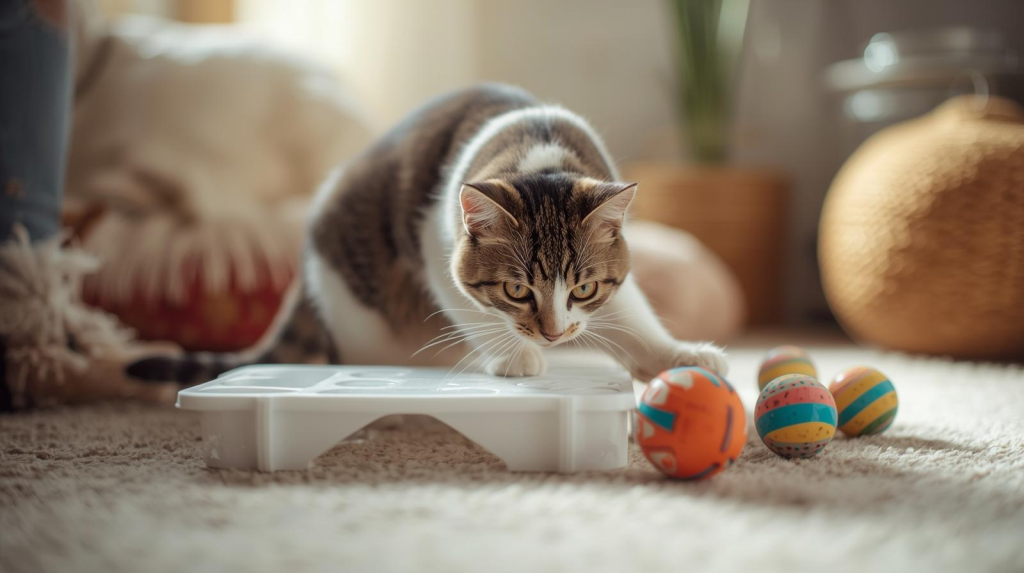
Feeding is another opportunity to make your cat think. Instead of pouring kibble into a bowl, try puzzle feeders. These devices make cats work for their food, simulating the challenge of foraging or hunting.
You can find various puzzle feeders—balls that release kibble as they roll, towers that require pawing to access treats, or flat boards with hidden compartments.
For a DIY version, hide small portions of dry food around the house or in cardboard boxes with holes. Your cat will sniff, paw, and figure out how to get the food out. It’s an excellent combination of mental exercise and reward.
Over time, puzzle feeding helps reduce overeating and adds meaningful challenge to her routine.
Create an Enriched Environment
Your cat’s environment is her kingdom, but even a palace can feel dull if nothing ever changes. Environmental enrichment means designing your space to offer variety, challenge, and comfort.
Start with vertical space—cats love to climb and observe from above. Install cat trees, shelves, or perches near windows. A high vantage point gives her a sense of control and adventure.
Next, focus on sensory enrichment. Cats rely heavily on sight, sound, and smell. Rotate toys, introduce new textures like crinkly mats or sisal posts, and play nature sounds such as birdsong or rustling leaves. These small changes mimic outdoor stimuli and keep her environment fresh.
And don’t underestimate the power of a good window view. Setting up a perch overlooking a yard or street gives her “cat TV”—endless entertainment from watching birds, leaves, and passing cars.
Training and Tricks: Build a Smarter Cat
Many people assume cats can’t be trained, but that’s far from true. Cats are clever, observant, and capable of learning tricks and commands just like dogs—when properly motivated.
Use clicker training to teach your cat simple behaviors like “sit,” “high five,” or “come.” Pair the click sound with a treat to reinforce good actions. Training not only challenges her brain but strengthens the bond between you two.
Start small. Reward her when she responds, and keep sessions short. Over time, she’ll associate learning with positive experiences and begin anticipating training time with enthusiasm.
Trick training isn’t just cute—it boosts confidence, encourages focus, and provides mental structure for an otherwise free-spirited feline.
Hunting Games and Foraging Fun
Cats are natural hunters. Even if your cat has never caught a mouse in her life, her instincts are alive and well. Channel those instincts through controlled hunting games.
Hide small toys or treats around the room and encourage her to “hunt” them down. Move her favorite toy behind furniture, under blankets, or through tunnels so she has to track it. These simple activities turn your home into a stimulating playground.
You can also use scent trails—rub a treat on the floor or a toy and let her follow the smell to the source. It engages her natural foraging senses and adds an extra layer of challenge.
Companionship and Social Interaction
Cats are often labeled as solitary animals, but they thrive on connection. While they enjoy independence, they also crave meaningful social time with their humans.
Talking to your cat, grooming her, or simply sitting together provides comfort and emotional stimulation. Cats read your tone, movement, and facial expressions, and interacting with you helps them feel secure and valued.
If your cat enjoys the company of other felines, consider adopting a second cat. Having a playmate adds daily enrichment and companionship—though introductions must be handled carefully and gradually to avoid stress.
Safe Outdoor Access: The Ultimate Adventure
Nothing stimulates a cat like the real world. If possible, consider creating safe outdoor experiences. Catios—enclosed patios for cats—offer the thrill of fresh air and sights without danger.
You can also train your cat to walk on a harness and leash. Start indoors, allowing her to get comfortable with the harness before venturing outside. The smells, textures, and sounds of nature will excite and engage her senses more than any toy ever could.
Outdoor exploration (under supervision) helps release pent-up energy and enhances overall mental health.
Rotation and Novelty: Keep It Fresh
Cats are curious, but they also get bored fast. A toy that thrilled them last week might barely earn a glance today. That’s why rotating enrichment activities is crucial.
Store half your toys away and swap them every few days. Rearrange furniture, add new hiding spots, or introduce cardboard boxes for exploration. Even a paper bag can become a new world to conquer.
Consistency in routine combined with small surprises keeps your cat alert, engaged, and mentally flexible.
Reading Your Cat’s Signals
Every cat has a unique personality. Some love climbing and chasing, while others prefer puzzles or observation. Pay attention to what excites your cat most. Her ears, tail, and posture will tell you what’s working.
If she starts pacing, over-grooming, or vocalizing excessively, she might be under-stimulated or stressed. Gradually increase enrichment until she seems more balanced. The goal is to challenge her mind without overwhelming her senses.
Building an enriching lifestyle for your indoor cat isn’t about expensive gadgets—it’s about understanding her instincts and making your home a place where those instincts can thrive.
Conclusion
Keeping indoor cats mentally stimulated means giving them a life filled with curiosity, challenge, and satisfaction. When you create opportunities for hunting, climbing, exploring, and problem-solving, you awaken the feline genius within.
A stimulated cat is healthier, calmer, and more affectionate. And in return, you’ll have a happier, more harmonious home. The best part? Every moment you spend engaging her mind strengthens the bond you share—a reminder that love, for cats, is also a matter of the mind.
FAQ
1. How much playtime does an indoor cat need each day?
Most cats benefit from two or three 10–15 minute play sessions daily. Short, frequent bursts mimic their natural hunting rhythm.
2. What are the best toys for indoor cat mental stimulation?
Interactive toys like feather wands, puzzle feeders, and treat-dispensing balls are excellent choices for keeping cats engaged.
3. Can I train my cat to do tricks?
Yes! With clicker training and treats, most cats can learn commands like “sit,” “come,” and even “high five.”
4. How can I tell if my cat is bored?
Signs include excessive sleeping, destructive scratching, meowing at night, or overeating. These behaviors often signal under-stimulation.
5. Is it safe to take my indoor cat outside?
Yes, but only under supervision. Use a secure harness and leash or a catio for safe outdoor enrichment experiences.