If you’ve ever wondered how often should guinea pigs see the vet, you’re not alone. Guinea pigs may look hardy and energetic, but they are incredibly skilled at hiding illness. In the wild, showing weakness attracts predators, so they evolved to mask pain and discomfort until conditions become severe. Because of this survival instinct, many health issues progress silently. By the time guinea pigs show obvious symptoms, the illness may already be advanced.
Regular veterinary visits prevent this outcome. When you stick to a consistent checkup schedule, you give your guinea pig the advantage of early detection. Minor concerns are caught before they escalate, and chronic conditions are managed with accurate guidance. Even though guinea pigs are small, their health needs are far from simple. They rely heavily on proper nutrition, dental care, and environmental stability. A vet who understands small mammals helps you meet those needs confidently.
Understanding exactly how often guinea pigs should see the vet ensures that you protect their long-term wellbeing. A routine approach creates a healthier, more comfortable life for your pet, reduces emergency risks, and strengthens the bond you share.
Why Guinea Pigs Need Regular Vet Visits
Guinea pigs are prey animals. Because of this, they instinctively hide weakness or pain. This natural behavior allows illnesses to worsen quietly. When you rely solely on visual cues at home, problems may go unnoticed. Regular exams identify these issues early and ensure your guinea pig stays healthy.
Common hidden conditions include:
• Dental overgrowth
• Respiratory infections
• Digestive imbalance
• Skin parasites
• Vitamin C deficiency
• Urinary stones
• Heart issues
• Early signs of arthritis
Many of these conditions are treatable when caught early. When left unnoticed, however, they may cause long-term damage or become life-threatening.
A consistent veterinary routine supports prevention, not just treatment.
How Often Should Guinea Pigs See the Vet for Routine Care?
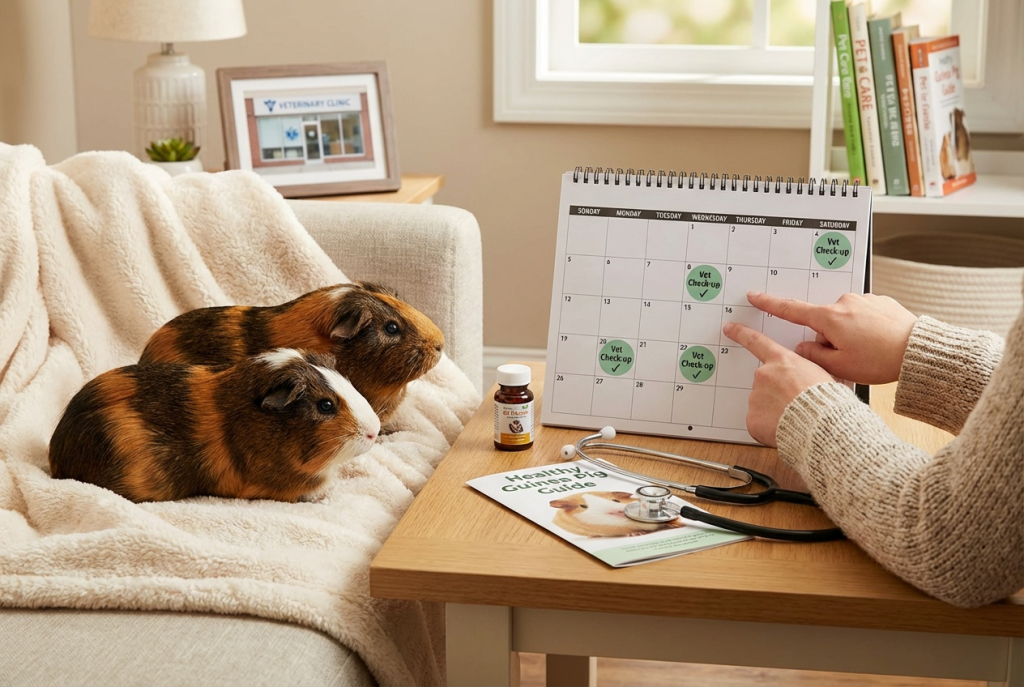
Healthy adult guinea pigs should see the vet at least once per year. This annual exam includes a full physical evaluation, dental check, weight assessment, and a review of diet and environment. Because guinea pigs rely on subtle cues to communicate discomfort, a yearly exam often uncovers potential issues.
However, depending on age, health status, and risk factors, some guinea pigs benefit from more frequent visits. Senior guinea pigs, for example, need more oversight to ensure comfort and quality of life. Let’s explore how these schedules differ.
Why Annual Exams Matter for Guinea Pigs
Annual checkups act as a baseline for your guinea pig’s health. During these visits, the vet evaluates:
• Weight stability
• Muscle tone
• Dental alignment
• Lung and heart sounds
• Coat and skin condition
• Nail length
• Hydration levels
• Abdominal sensitivity
Because guinea pig teeth grow continuously, dental problems appear often. Annual dental assessments help detect overgrowth before it causes appetite loss, pain, or serious infection.
These exams also provide the perfect opportunity to discuss nutrition. Proper vitamin C intake is crucial, so vets evaluate your guinea pig’s diet to ensure it includes adequate leafy greens and fortified pellets.
Do Young Guinea Pigs Need More Frequent Visits?
Baby guinea pigs, also called pups, usually don’t require immediate frequent visits unless there is an obvious concern. However, a wellness exam during the early months still offers benefits. A young guinea pig’s first veterinary visit helps confirm:
• Proper growth
• Early dental development
• Weight gain stability
• Absence of congenital defects
This early check establishes a baseline for future exams. Although young guinea pigs typically visit once a year, you should schedule additional visits if you notice decreased appetite, lethargy, or unusual vocalization.
How Often Should Senior Guinea Pigs See the Vet?
Senior guinea pigs—usually those older than five—require extra care. Aging often brings changes in mobility, digestion, and organ function. Because of this, senior guinea pigs should see the vet twice a year. More frequent visits allow earlier detection of:
• Arthritis
• Heart disease
• Kidney stress
• Weight loss
• Dental wear
• Reduced immunity
• Urinary complications
Small shifts in weight or appetite may signal larger issues in older guinea pigs. Frequent exams help you address problems quickly.
Signs Your Guinea Pig Needs an Immediate Vet Visit
Even with routine visits scheduled, emergencies happen. Guinea pigs decline quickly when ill, so early action is essential. Seek immediate veterinary help if your guinea pig shows:
• Labored breathing
• Refusal to eat
• Sudden weight loss
• Drooling
• Blood in urine
• Severe lethargy
• Bald patches or excessive itching
• Loud vocalizations during elimination
• Diarrhea
• Limping or stiffness
These symptoms should never wait for a scheduled exam. Prompt care protects your guinea pig’s health and comfort.
How Often Should Guinea Pigs See the Vet for Dental Checks?
Because guinea pigs have open-rooted teeth that grow continuously, dental health requires regular attention. When teeth grow too long or misalign, the results include painful sores, difficulty eating, and infections.
During annual exams, veterinarians check the incisors and molars. However, some guinea pigs need dental trimming or filing more often. High-risk guinea pigs include:
• Those with known misalignment
• Those with a history of dental problems
• Breeds with short skulls (e.g., American-type)
• Seniors with weakened jaw structure
If your guinea pig begins to drop food, chew unusually, or show reduced appetite, schedule a dental-specific visit. Many dental problems worsen quickly, so early intervention is essential.
How Nutrition Affects Vet Visit Frequency
Diet strongly influences how often guinea pigs should see the vet. Poor nutrition increases the risk of multiple conditions, including:
• Scurvy
• Digestive imbalance
• Bladder stones
• Obesity
• Low immunity
Veterinarians often detect subtle nutritional issues long before symptoms worsen. Because of this, regular exams help you fine-tune your guinea pig’s diet. A proper diet includes:
• Unlimited hay
• Fresh vegetables daily
• Vitamin C-rich greens
• A small portion of fortified pellets
• Clean water at all times
When the diet is balanced, your guinea pig may require fewer urgent vet visits in the long run.
Parasite Checks and How Often They’re Needed
External parasites such as mites and lice cause itching, hair loss, and discomfort. Internal parasites may cause digestive problems or weight loss. Annual fecal tests during regular exams help detect internal parasites early.
However, if your guinea pig shows signs like scratching, dandruff, or patchy fur, schedule a visit immediately. External parasites spread quickly and cause severe irritation if untreated.
How Environment Influences Vet Visit Frequency
A guinea pig’s environment shapes its overall health. When a habitat is too small, too warm, too damp, or too stressful, health problems multiply. Even well-intentioned owners sometimes struggle with humidity levels, ventilation, or flooring safety.
Veterinarians evaluate your guinea pig’s environment during routine exams and suggest improvements. When the environment matches the guinea pig’s needs closely, fewer emergency visits occur.
Factors vets often assess include:
• Cage size
• Bedding type
• Cleanliness
• Temperature
• Humidity
• Exercise space
• Hideouts
• Socialization
Stable environments protect immune function and reduce stress-related health problems.
How Weight Monitoring Helps Reduce Emergency Visits
Weight changes are one of the earliest indicators of illness in guinea pigs. Regular weigh-ins at home help you catch problems before they escalate. A small digital kitchen scale works perfectly.
Track weight weekly and note any changes. Combinations of weight loss and appetite changes are red flags. Share your weight records with your veterinarian during checkups. These logs help them detect patterns and intervene earlier.
How Often Should Guinea Pigs See the Vet If Bonded With Another?
Bonded guinea pigs often mirror each other’s habits, including eating, drinking, and moving. Because of this, a sick guinea pig may mask symptoms by following its companion’s routine. For bonded pairs or trios, regular exams become even more important.
Take all guinea pigs to the vet yearly. If one becomes sick, bring the bonded partner as well. Stress levels stay lower when companions remain together.
Understanding Preventive Care vs. Emergency Care
Routine care focuses on prevention. Emergency care treats sudden illness. Understanding how often guinea pigs should see the vet allows you to reduce emergency situations significantly. Many urgent conditions start as mild issues easily detected during routine exams.
Preventive care includes:
• Annual exams
• Dental checks
• Parasite screening
• Weight evaluation
• Diet review
• Environmental assessment
Emergency care covers problems that cannot wait. Prompt action prevents prolonged suffering and increases recovery chances.
Budgeting for Veterinary Care
Knowing how often guinea pigs should see the vet helps you plan financially. Annual and semi-annual visits provide predictable costs. Consider setting aside a small emergency fund. Because guinea pigs decline quickly, delayed treatment can lead to more expensive interventions. Preventive care reduces long-term expenses significantly.
Conclusion
Understanding how often guinea pigs should see the vet is essential for keeping your pet healthy, happy, and thriving. Annual exams create a foundation for preventive care, while semi-annual visits help seniors stay comfortable. Regardless of age, guinea pigs benefit from consistent monitoring, accurate diagnosis, and early treatment. When you stick to a routine schedule and remain alert to warning signs, you give your guinea pig the best chance at a long, healthy life. Their wellbeing depends on your awareness, preparation, and commitment to proactive care.
FAQ
1. How often should healthy adult guinea pigs see the vet?
Healthy adults should have at least one exam per year.
2. How often should senior guinea pigs go to the vet?
Seniors should be seen twice yearly for early detection of age-related issues.
3. Do guinea pigs need vaccines?
No. Guinea pigs do not require vaccines, but they still need regular wellness exams.
4. Should bonded guinea pigs visit the vet together?
Yes. Traveling together reduces stress and keeps bonding secure.
5. Is weight loss always a sign to see the vet?
Yes. Sudden or consistent weight loss signals underlying illness and needs prompt veterinary evaluation.