
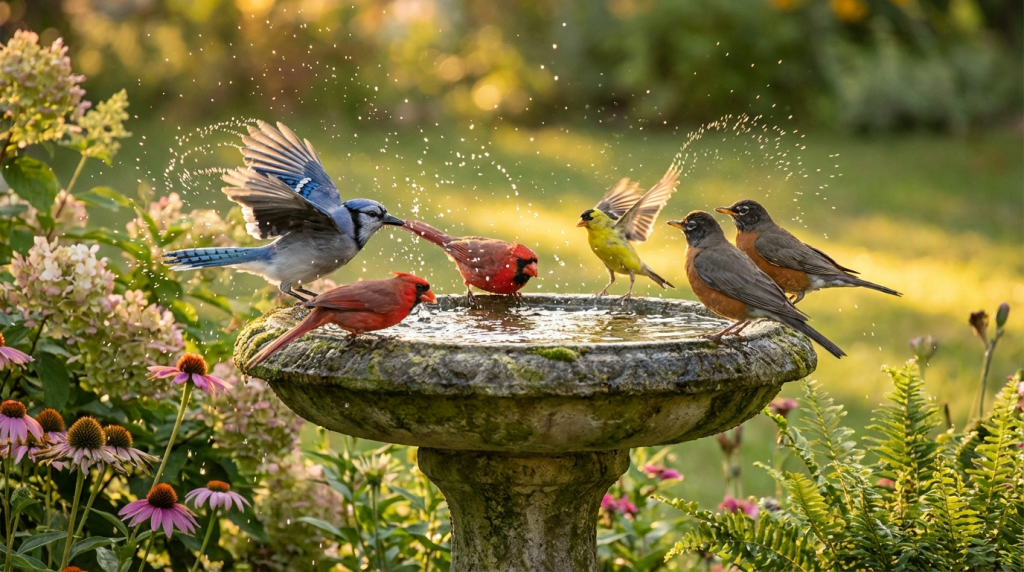

If you’ve ever watched a bird splash enthusiastically in water or rub against wet leaves, you’ve seen instinct in action. Understanding how birds like to bathe is not just charming; it is essential for their health. Bathing supports feather condition, skin health, and even emotional well-being.
However, not all birds bathe the same way. A cockatiel’s gentle mist preference differs greatly from a lovebird’s energetic splash session. Therefore, knowing how birds like to bathe based on species can prevent stress and encourage natural behavior.
Let’s explore how different birds approach bath time and how you can create a safe and enjoyable bathing routine at home.
Why Bathing Matters: Understanding How Birds Like to Bathe Naturally
In the wild, birds encounter rain, dew, streams, and puddles. Bathing is not optional. It removes dust, dirt, and parasites. It also keeps feathers aligned for proper flight and insulation.
When you understand how birds like to bathe, you support their preening process. Preening distributes natural oils that protect feathers. However, without moisture, that oil cannot spread effectively.
Additionally, bathing reduces feather itchiness during molting. Therefore, regular opportunities for bathing promote comfort.
Because birds are highly sensitive to their environment, a proper bathing routine reduces stress and encourages activity.
Small Finches and Canaries: Gentle Splashers
Finches and canaries prefer shallow water.
If you observe how birds like to bathe in these species, you’ll notice they hop into a low dish and flutter quickly. They do not need deep bowls. Instead, they prefer small containers where they can stand comfortably.
Water should be lukewarm and fresh. Place the bath inside the cage for short periods, usually in the morning.
These birds typically bathe several times per week if given the chance. However, they decide when to enter the water. Forcing contact creates anxiety.
Finches enjoy independence during bath time. Therefore, simply provide access and observe from a distance.
Parrots and Parakeets: Misting vs Bowl Bathing
Parrots vary widely in preference.
Some parrots love shallow bowls. Others prefer misting. If you want to understand how birds like to bathe in parrot species, experimentation is helpful.
Cockatiels often prefer gentle misting that mimics rainfall. Budgies may enjoy both methods.
Use a clean spray bottle with fine mist. Never soak the bird directly. Instead, allow droplets to fall lightly over feathers.
Additionally, always let the bird move away if it chooses.
Because parrots are intelligent, they quickly show their preferences. Watch body language closely.
Large Parrots: Enthusiastic Bathers
Macaws, African greys, and amazons often enjoy dramatic water sessions.
When exploring how birds like to bathe in larger species, you may see wings fully extended while splashing vigorously.
Some large parrots enjoy shower perches. The sound of running water often excites them.
However, water temperature must remain comfortable. Avoid cold or hot extremes.
Provide stable footing during bath time. Slippery surfaces cause stress.
These species may bathe once or twice weekly, though some request more frequent sessions.
Doves and Pigeons: Calm and Deliberate Bathers
Doves and pigeons approach water calmly.
They prefer shallow trays placed in a stable location. When observing how birds like to bathe in these species, you’ll notice slow, deliberate dipping rather than energetic splashing.
Because they are ground-oriented birds, place bath dishes low and wide.
Additionally, clean water immediately afterward. Pigeons tend to soil water quickly during bathing.
Consistency encourages routine participation.
Lovebirds and Cockatiels: Playful Splashers
Lovebirds often bathe energetically. Cockatiels, by contrast, may prefer mist.
If you’re learning how birds like to bathe in companion species, remember personality plays a role.
Some birds dive enthusiastically into bowls. Others test water cautiously.
Offer options when possible. Shallow bowls and gentle misting can coexist.
Bathing frequency depends on humidity and molting cycles. During dry seasons, more frequent bathing may be appreciated.
Budgies: Flexible Bathers
Budgies are adaptable.
Some budgies prefer bathing in leafy greens misted with water. Others jump into shallow bowls immediately.
Understanding how birds like to bathe means recognizing flexibility within species.
Offer variety until preference becomes clear.
Budgies often bathe several times weekly if water is available.
Always remove bath dishes after use to maintain cage hygiene.
Tropical Species and Humidity Needs
Birds from humid climates may crave frequent bathing.
Tropical parrots often require higher humidity. Therefore, misting can supplement environmental moisture.
If you want to replicate how birds like to bathe naturally in rainforest habitats, combine light misting with shallow dishes.
Humidity supports feather health. However, proper ventilation must be maintained.
Never leave cages damp for extended periods.
Signs Your Bird Enjoys Bathing
Body language speaks clearly.
If your bird fluffs feathers, spreads wings, or chirps during water exposure, bathing is likely enjoyable.
Conversely, if it retreats, flattens feathers tightly, or appears tense, stop immediately.
Because understanding how birds like to bathe depends on observation, patience is key.
Allow your bird to control the pace.
How Often Should Birds Bathe?
Frequency varies by species and environment.
Most companion birds benefit from bathing two to three times weekly.
During molting, more frequent sessions may be welcomed. However, daily bathing is not always necessary.
If feathers appear dusty or dull, consider increasing opportunities.
Regular bathing promotes smoother preening.
Water Temperature and Safety
Always use lukewarm water.
Cold water may shock smaller birds. Hot water damages delicate skin.
Depth should remain shallow enough for standing. Deep containers create panic.
Additionally, never use soap or additives.
Clean, fresh water alone supports natural feather maintenance.
Creating a Safe Bathing Routine
Consistency builds trust.
Offer baths at similar times of day. Morning is ideal because feathers dry before nighttime.
After bathing, ensure the room remains draft-free.
Because birds rely on dry feathers for insulation, adequate drying time is essential.
Never use blow dryers unless specifically recommended by a veterinarian.
Common Bathing Mistakes to Avoid
Some mistakes disrupt natural habits.
Forcing a bird into water creates fear. Spraying directly into the face causes stress.
Using scented water products can damage feather oils.
Understanding how birds like to bathe prevents these errors.
Let choice guide the process.
The Role of Bathing in Emotional Health
Bathing is enrichment.
Water play stimulates curiosity. It encourages movement and wing stretching.
For captive birds, bathing mimics natural rainfall experiences.
When birds bathe comfortably, confidence often increases.
Because feather condition influences flight and comfort, bathing indirectly supports overall vitality.
Conclusion: Respect Individual Preferences
Learning how birds like to bathe means recognizing diversity.
Finches prefer shallow dishes. Cockatiels may favor mist. Large parrots often enjoy shower sessions.
By observing body language and offering safe options, you create a positive experience.
Bathing is not just about cleanliness. It is about honoring instinct.
Provide gentle opportunities. Watch closely. Adjust thoughtfully.
When you respect natural preferences, your bird stays cleaner, calmer, and healthier every day.
FAQs
- How often should my bird bathe?
Most birds benefit from bathing two to three times weekly, though frequency depends on species and environment. - Can I use soap when bathing my bird?
No, only clean lukewarm water should be used to protect natural feather oils. - Why does my bird avoid bathing?
Some birds need time to feel comfortable. Offer different methods such as misting or shallow dishes. - Is misting better than bowl bathing?
It depends on the species and individual preference. Many birds enjoy both methods. - Can birds get sick from bathing?
Not if done properly. Ensure warm water, draft-free drying conditions, and gentle handling.