
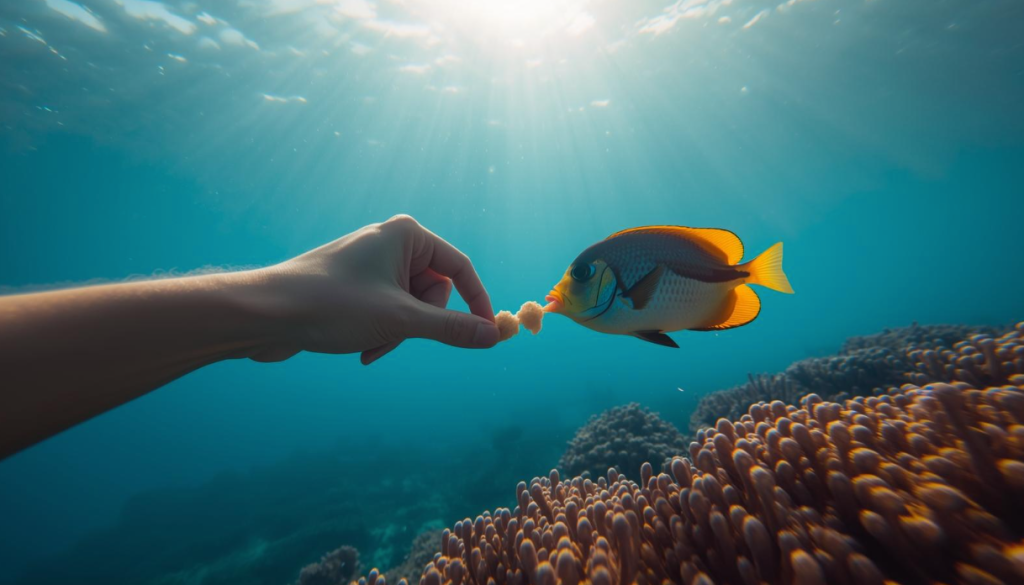

Hand-feeding fish sounds unusual to many aquarium owners. Fish are often seen as distant, instinct-driven creatures. Yet anyone who keeps fish long enough notices something interesting. They recognize routines. They respond to presence. Some even follow fingers along the glass.
So the question becomes simple. Can you hand-feed fish safely and actually build trust?
The answer is yes, but only when done correctly.
Hand-feeding is not about forcing interaction. Instead, it’s about patience, consistency, and respect for fish behavior. When approached calmly, hand-feeding becomes a bridge. It connects your world with theirs. Like earning the trust of a shy animal, the process takes time, but the reward feels deeply satisfying.
This guide explains how to hand-feed fish safely while protecting their health and reducing stress. More importantly, it shows how trust develops naturally when fish feel secure.
Understanding Fish Behavior Before You Hand-Feed Fish Safely
Before you ever place your hand in the water, you need to understand how fish perceive their environment. Fish rely on movement, vibration, and visual cues. Sudden changes often signal danger.
In the wild, large objects entering water usually mean predators. Therefore, your hand initially triggers a fear response. That reaction isn’t personal. It’s survival.
However, fish also learn quickly. When the same shape appears without harm, curiosity replaces fear. Over time, repeated calm exposure teaches fish that your presence equals safety and food.
To hand-feed fish safely, you must work with instinct, not against it.
Which Fish Are Suitable for Hand-Feeding
Not all fish are ideal candidates for hand-feeding. Species temperament matters.
Larger, social fish adapt more easily. Cichlids, koi, goldfish, oscars, and some gouramis often respond well. These species already interact actively during feeding.
Smaller, skittish fish may remain cautious. That doesn’t mean they can’t learn. It simply means progress will be slower.
Aggressive or territorial fish require extra caution. While some can be hand-fed, safety becomes the priority.
Knowing your species helps you set realistic expectations.
Preparing the Tank Environment for Safe Hand-Feeding
A calm tank supports trust-building.
First, ensure water quality remains excellent. Stress increases when fish feel unwell. Clean water, proper filtration, and stable temperature matter.
Next, observe feeding behavior. Fish should approach the surface confidently before hand-feeding begins. If fish hide during feeding, more time is needed.
Lighting also matters. Avoid bright overhead lights during hand-feeding sessions. Softer lighting reduces stress and encourages exploration.
When the environment feels predictable, fish become receptive.
Why Clean Hands Matter When You Hand-Feed Fish Safely
Cleanliness protects fish health.
Before placing your hand in the tank, wash thoroughly with plain water. Avoid soap, lotion, sanitizer, or residue of any kind. Chemicals transfer easily and harm fish.
Dry your hands completely before feeding. Excess water from other sources can introduce contaminants.
This step may seem small. However, clean hands are essential to hand-feed fish safely.
Choosing the Right Food for Hand-Feeding
Food choice affects both safety and success.
Floating pellets, gel foods, or thawed frozen foods work best. These options allow fish to approach without biting aggressively.
Avoid sharp-edged pellets or overly small food that sticks to skin. Food should be visible and easy to take.
Feed small amounts. Overfeeding leads to water quality issues and digestive problems.
The goal is trust, not excess.
Starting Slow: The First Step to Hand-Feed Fish Safely
The first step involves presence, not contact.
Begin by placing your hand near the surface without food. Keep fingers still. Let fish observe.
Repeat this daily. Over time, fish learn your hand causes no harm.
Once fear fades, introduce food near your hand without touching it. Allow fish to associate your presence with feeding.
Only move forward when fish remain calm.
How to Position Your Hand During Feeding
Hand position matters more than people realize.
Keep fingers together. Open hands look larger and more threatening. A relaxed, cupped hand feels less invasive.
Lower your hand slowly into the water. Sudden movements create panic.
Hold food between fingers or rest it gently on your palm. Let fish approach at their pace.
Stillness builds trust faster than movement.
Reading Fish Body Language During Hand-Feeding
Fish communicate through movement.
Calm fish swim smoothly. They approach cautiously, then retreat slightly before returning. This pattern signals curiosity.
Rapid darting, hiding, or erratic swimming means stress. If this occurs, withdraw slowly and pause the session.
Never chase fish with your hand. Let them control the interaction.
Listening to body language ensures you hand-feed fish safely.
Building Trust Through Consistency
Trust grows through repetition.
Feed at the same time daily. Use similar movements. Speak softly nearby. These patterns create predictability.
Over days or weeks, fish begin anticipating your presence. They swim toward you instead of away.
Consistency transforms fear into familiarity.
Trust doesn’t rush. It unfolds.
How Long Does It Take to Hand-Feed Fish Safely
Every fish progresses differently.
Some species adapt within days. Others require weeks. Shy fish may take months.
Patience remains essential. Forcing interaction resets progress.
Celebrate small wins. A fish approaching your hand is success. Touch comes later.
Time invested builds lasting results.
Safety Tips to Prevent Accidental Bites
While most fish don’t intend harm, accidental bites happen.
Avoid hand-feeding carnivorous species known for strong jaws unless experienced. Use feeding tools when necessary.
If a fish bites gently, remain still. Sudden withdrawal startles the entire tank.
Most bites feel like a tap, not pain. However, awareness prevents injury.
Safety protects both fish and keeper.
Why Hand-Feeding Improves Fish Confidence
Hand-feeding does more than entertain.
Fish exposed to positive interaction show reduced stress during maintenance. They hide less. They explore more.
Confidence improves feeding response and overall activity.
A confident fish displays brighter colors and healthier behavior.
Trust benefits health.
Avoiding Common Mistakes When Hand-Feeding
Mistakes slow progress.
Moving too quickly overwhelms fish. Feeding too often causes dependence. Touching fish unnecessarily increases stress.
Avoid forcing contact. Let fish initiate interaction.
Mistakes don’t ruin progress permanently, but patience always repairs trust.
Teaching Fish to Follow Your Hand
Once fish feel comfortable, you can guide movement gently.
Move your hand slowly across the surface during feeding. Fish will follow.
This exercise strengthens association and mental stimulation.
However, avoid overdoing it. Balance interaction with independence.
Mental enrichment supports wellbeing.
Can You Touch Fish During Hand-Feeding?
Touch should remain minimal.
Some fish tolerate brief contact. Others dislike it strongly. Always respect individual preference.
Never grab or restrain fish. Touching is optional, not required for trust.
True bonding occurs through choice, not control.
Health Benefits of Reduced Stress in Fish
Lower stress improves immunity.
Fish experiencing calm interaction show better appetite and coloration. Healing accelerates. Disease resistance improves.
Stress reduction also reduces aggression within community tanks.
Trust supports harmony.
When You Should Stop Hand-Feeding
Hand-feeding isn’t mandatory forever.
If fish show stress, stop temporarily. During illness or tank changes, pause interaction.
Hand-feeding should enhance life, not disrupt it.
Flexibility keeps the process healthy.
Hand-Feeding in Different Aquarium Types
Freshwater and pond fish adapt easily.
Marine fish can learn too, but saltwater tanks require stricter hygiene. Use caution.
Pond fish like koi often excel at hand-feeding due to frequent surface interaction.
Environment influences technique.
Teaching Children to Hand-Feed Fish Safely
Supervision matters.
Teach slow movements and patience. Explain fish behavior clearly.
Hand-feeding becomes a learning opportunity when done respectfully.
Education builds empathy.
Conclusion
To hand-feed fish safely, patience outweighs technique. Trust grows through calm presence, consistency, and respect for natural behavior. When fish feel safe, curiosity replaces fear. Over time, that curiosity becomes connection.
Hand-feeding is not about control. It’s about communication. When done correctly, it deepens understanding and enriches life on both sides of the glass.
FAQ
1. Is it safe to hand-feed fish?
Yes, when hands are clean and movements remain calm, hand-feeding is safe for both fish and keeper.
2. How long does it take for fish to trust my hand?
It varies by species and personality, ranging from days to several weeks.
3. Can hand-feeding stress fish?
It can if rushed. Slow progression prevents stress and builds confidence.
4. Should I hand-feed fish every day?
Occasional hand-feeding works best. Balance interaction with normal feeding routines.
5. Do all fish enjoy hand-feeding?
No, some fish prefer distance. Respect individual comfort levels.