
Guinea pigs may be small, but their needs are anything but. Too often, they’re placed in cramped cages with little thought given to comfort, movement, or mental stimulation. While they might survive in those conditions, they certainly don’t thrive. Building the ultimate guinea pig habitat setup is one of the most important steps you can take as an owner.
Guinea pigs are social, curious animals. They explore, forage, communicate, and rest throughout the day. When their environment supports those behaviors, their personalities shine. On the other hand, poor housing leads to stress, illness, and shortened lifespans.
This guide walks you through how to build a guinea pig habitat setup that supports physical health, emotional wellbeing, and long-term happiness. From cage size to bedding, enrichment, and placement, every detail matters.
Why a Proper Guinea Pig Habitat Setup Matters
Environment shapes everything.
Guinea pigs spend nearly their entire lives inside their habitat. As a result, cage size, layout, and cleanliness directly affect their health. Small or poorly designed enclosures restrict movement, increase stress, and allow waste to build up quickly.
By contrast, a well-planned guinea pig habitat setup encourages exercise, reduces odor, and supports natural behaviors. Healthy guinea pigs are more active, vocal, and social.
Good housing isn’t optional. It’s essential care.
Understanding Natural Guinea Pig Behavior
Guinea pigs are prey animals.
In the wild, they stay low to the ground, move frequently, and rely on hiding spaces for safety. They also graze throughout the day and communicate constantly with their herd.
Because of this, a proper habitat must include open space, hiding areas, and easy access to food. When these needs are met, guinea pigs feel secure.
Security leads to confidence.
Choosing the Right Cage Size
Bigger is always better.
The minimum recommended size for two guinea pigs is about 7.5 square feet. However, 10.5 square feet or more is ideal. Larger spaces allow running, popcorning, and social interaction.
Single guinea pigs should never be housed alone long-term. Companionship is part of proper habitat planning.
Space prevents conflict and boredom.
Why Pet Store Cages Are Often Inadequate
Many commercial cages fall short.
They are often tall rather than wide, which limits floor space. Guinea pigs need room to move horizontally, not climb vertically.
Wire floors also cause foot injuries and discomfort. Solid-bottom cages are far safer.
Marketing doesn’t equal suitability.
C&C Cages: A Popular Habitat Choice
C&C cages are highly recommended.
They are modular, customizable, and spacious. Made from grid panels and coroplast bases, they provide excellent ventilation and flexibility.
Owners can expand layouts, add ramps, and create zones easily.
Adaptability supports long-term care.
Flooring and Bedding Options
Comfort starts underfoot.
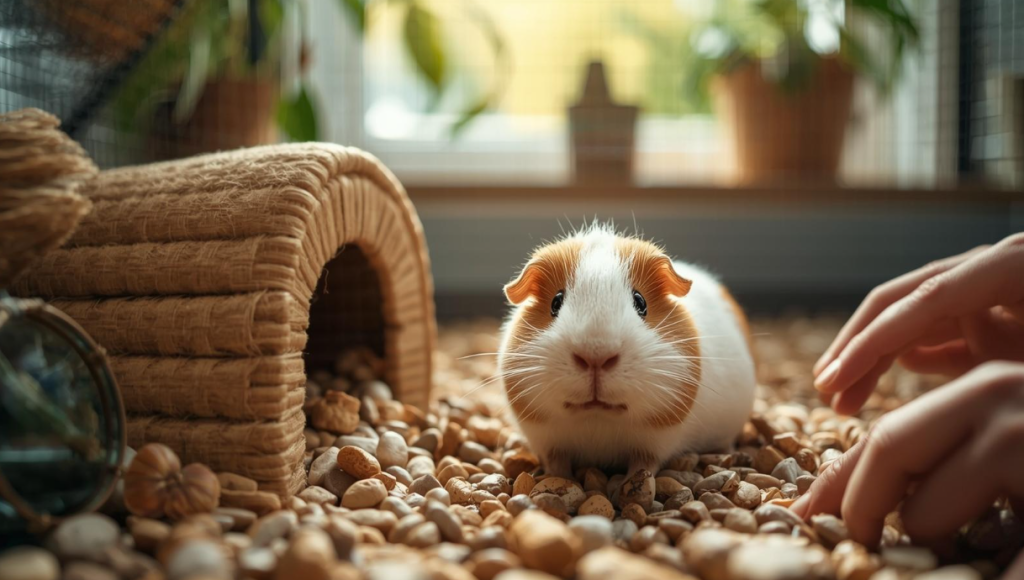
Soft, absorbent bedding protects feet and controls odor. Popular options include paper bedding, aspen shavings, and fleece liners.
Avoid pine or cedar bedding. These woods release harmful oils that irritate respiratory systems.
Safe bedding supports health daily.
Fleece Bedding: Pros and Cons
Fleece is reusable and economical.
It wicks moisture when layered properly and reduces waste. However, it requires frequent washing and daily spot cleaning.
For owners willing to maintain it, fleece works well.
Maintenance determines success.
Creating a Functional Habitat Layout
Layout influences behavior.
Designate areas for sleeping, eating, and playing. Open space encourages movement, while corners provide security.
Avoid cluttering the cage. Balance openness with hiding spots.
Flow creates comfort.
Hiding Places and Shelters
Guinea pigs need safe retreats.
At least one hide per guinea pig is recommended. These can be plastic igloos, wooden houses, or fleece tunnels.
Multiple exits reduce dominance disputes.
Safety reduces stress.
Hay Racks and Feeding Stations
Hay is life for guinea pigs.
Unlimited access to fresh hay supports digestion and dental health. Hay racks keep it clean and accessible.
Place hay near resting areas to encourage natural grazing.
Availability supports wellness.
Food Bowls and Water Bottles
Stable placement matters.
Heavy ceramic bowls prevent tipping. Water bottles should be checked daily for proper flow.
Some guinea pigs prefer bowls for water. Observe preferences.
Consistency prevents dehydration.
The Importance of Enrichment
Boredom causes problems.
Enrichment encourages exploration and mental stimulation. Tunnels, chew toys, and foraging opportunities keep guinea pigs engaged.
Rotate items regularly to maintain interest.
Engagement improves mood.
Safe Toys and Chew Items
Chewing is natural.
Wooden chew toys, untreated cardboard, and hay-based items help maintain dental health.
Avoid painted or treated materials.
Safety comes first.
Lighting and Day-Night Cycles
Guinea pigs prefer natural rhythms.
Place habitats in well-lit rooms without direct sunlight. Avoid constant artificial lighting.
Regular day-night cycles support rest and activity.
Balance supports health.
Temperature and Ventilation
Guinea pigs are temperature sensitive.
Ideal temperatures range from 65°F to 75°F. Heat stress is dangerous, while cold drafts cause illness.
Good airflow without drafts keeps conditions stable.
Climate control matters.
Habitat Placement in Your Home
Location affects stress.
Choose quiet areas with gentle activity. Avoid kitchens, laundry rooms, or loud entertainment spaces.
Guinea pigs enjoy observing people, but constant noise overwhelms them.
Calm environments build trust.
Cleaning and Maintenance Routines
Clean habitats prevent disease.
Spot clean daily. Replace bedding weekly or more often as needed. Wash fleece regularly.
Neglect leads to odor, bacteria, and health problems.
Routine creates reliability.
Odor Control Without Chemicals
Smell signals cleanliness.
Frequent cleaning and proper bedding control odor naturally. Avoid sprays or scented products.
Fresh air and absorbent materials do the work.
Simplicity works best.
Multi-Level Designs and Ramps
Levels add interest when done correctly.
Ramps must be gentle and covered with non-slip material. Platforms should be spacious.
Never sacrifice floor space for height.
Safety comes before style.
Housing Multiple Guinea Pigs
Social needs affect design.
More guinea pigs require more space, hides, and feeding areas. Crowding increases conflict.
Plan expansions before adding companions.
Growth requires preparation.
Monitoring Behavior in the Habitat
Behavior reveals comfort.
Active exploration, vocalizing, and relaxed posture indicate success. Hiding constantly or aggression signals problems.
Observe daily and adjust as needed.
Feedback guides improvement.
Common Habitat Setup Mistakes
Mistakes are common.
Using cages that are too small. Skipping hides. Choosing unsafe bedding. Neglecting enrichment.
Awareness prevents harm.
Education improves care.
Budget-Friendly Habitat Ideas
Quality doesn’t require luxury.
DIY C&C cages, fleece liners, and homemade toys reduce cost. Smart planning stretches budgets.
Creativity supports care.
Upgrading Habitats Over Time
Needs change.
Young guinea pigs grow. Groups expand. Habits evolve. Habitats should adapt accordingly.
Flexibility ensures longevity.
Why Habitat Quality Affects Lifespan
Environment influences longevity.
Guinea pigs in enriched, clean habitats live longer, healthier lives. Stress-related illnesses decrease.
Comfort supports resilience.
Building a Habitat That Grows With Your Pets
Think long-term.
Choose materials and designs that allow expansion. Planning ahead avoids frequent replacements.
Future-proofing saves effort.
Conclusion
Building the ultimate guinea pig habitat setup is an investment in health, comfort, and happiness. It’s not about aesthetics or convenience. It’s about creating a space where guinea pigs feel safe enough to be themselves.
With proper space, safe bedding, thoughtful layout, and regular maintenance, your guinea pigs will thrive. They’ll move more, communicate more, and live longer. A well-built habitat doesn’t just house guinea pigs. It supports their entire way of life.
FAQ
1. What is the minimum cage size for guinea pigs?
Two guinea pigs need at least 7.5 square feet, though larger is always better.
2. Can guinea pigs live on wire floors?
No, wire floors cause foot injuries and discomfort.
3. How often should I clean a guinea pig habitat?
Spot clean daily and fully clean at least once per week.
4. Do guinea pigs need toys?
Yes, enrichment supports mental health and natural behaviors.
5. Where should I place the guinea pig cage in my home?
Choose a quiet, well-lit area away from drafts, heat, and loud noise.