
Guinea pigs might be small, but their need for stimulation is anything but. These intelligent, social creatures crave variety, play, and attention every day. Without it, boredom and stress can quickly take over. Building a daily enrichment routine for your guinea pigs isn’t just about toys or treats—it’s about giving them a life full of excitement, comfort, and trust.
In this guide, we’ll explore exactly how to create a guinea pig enrichment routine that keeps your furry friends both mentally and physically healthy. Whether you’re a new owner or an experienced caretaker, these ideas will help your pets thrive.
Why Enrichment Matters for Guinea Pigs
Imagine living in the same small room with nothing to do, day after day. Sounds dull, right? That’s how guinea pigs feel without enrichment. They’re naturally curious animals that love exploring, chewing, and socializing.
Enrichment supports both their physical and emotional health. It helps them stay active, reduces anxiety, and strengthens their bond with you. A well-designed enrichment routine can also prevent destructive habits like over-grooming, biting cage bars, or refusing to eat.
A daily enrichment routine helps you give your guinea pigs a life filled with comfort, curiosity, and joy—something every pet deserves.
Setting the Foundation: Environment First
Before diving into daily activities, start with the right environment. A stimulating cage setup forms the base of a healthy enrichment routine.
Make sure your guinea pigs have:
- Plenty of space: The cage should allow room to run, hide, and explore. Multi-level setups can help add variety.
- Comfortable bedding: Use safe materials like paper-based or fleece liners. Avoid cedar or pine shavings that can cause respiratory issues.
- Hideouts: Provide at least one hideaway per guinea pig. Caves, tunnels, or wooden huts help them feel safe.
- Chew options: Their teeth grow constantly, so offer hay, wooden blocks, or chew sticks daily.
Think of their habitat like a mini adventure park—safe, cozy, and filled with surprises.
Morning Routine: Start the Day with Energy
Guinea pigs are crepuscular, meaning they’re most active during morning and evening hours. This makes the morning a perfect time for enrichment.
Start the day by:
- Refreshing hay and water: Offer unlimited fresh hay and clean water daily.
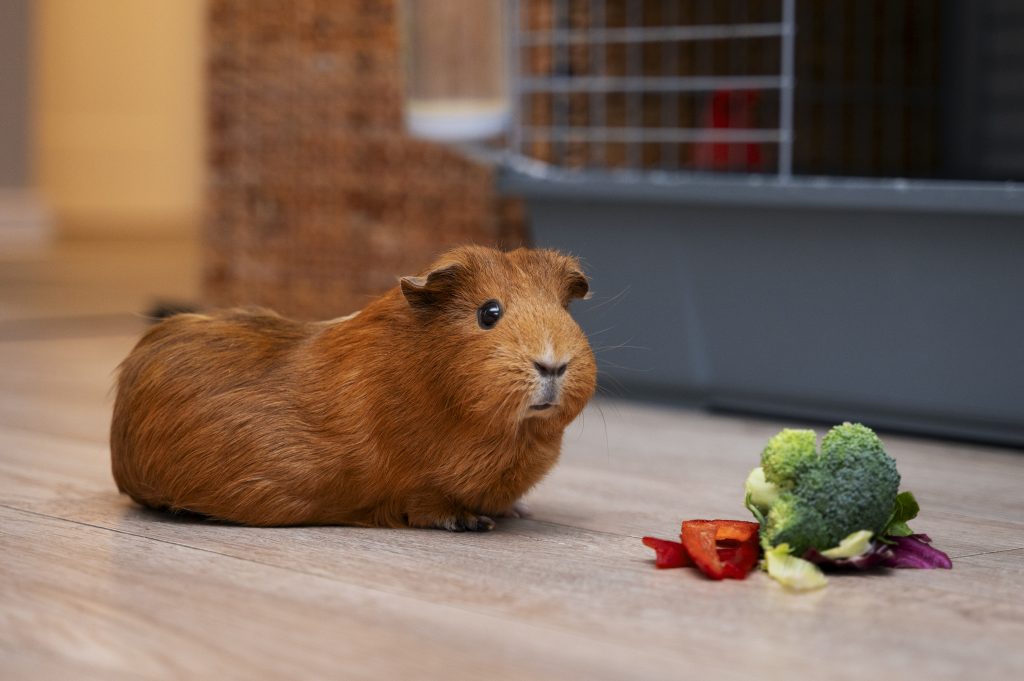
- Interactive feeding: Scatter small portions of vegetables around the cage instead of serving them in one spot. It encourages foraging and exploration.
- Morning talk time: Speak softly or hum while you clean their cage or refill supplies. They’ll start associating your voice with calm and comfort.
- Short floor time: Let them out for 10–15 minutes in a guinea pig-safe play area. Include cardboard tunnels or low ramps for light exercise.
These small rituals set a positive tone for the rest of the day.
Midday Enrichment: Keep Curiosity Alive
While guinea pigs tend to rest during midday, gentle stimulation keeps their minds active without overwhelming them.
Here’s how to make their afternoons interesting:
- Rotate toys: Switch out tunnels, chew blocks, or hanging toys to keep things new.
- Sensory exploration: Add safe herbs like basil or cilantro for a fresh scent.
- Food puzzles: Hide small treats in toilet paper rolls stuffed with hay. It encourages natural foraging instincts.
- Quiet interaction: If your guinea pigs are awake, hand-feed them a veggie or sit near their cage to maintain social bonding.
Remember, enrichment doesn’t always mean active play—sometimes it’s about calm engagement.
Evening Routine: Bonding and Exploration
Evening is playtime prime for guinea pigs. They’re alert, energetic, and ready to interact. This is when your enrichment routine truly shines.
You can include:
- Extended floor time: Let them explore a larger area under supervision. Add boxes, paper bags, and low tunnels to simulate a mini adventure trail.
- Social play: If you have multiple guinea pigs, allow them to interact freely. Their gentle squeaks and chatter are signs of contentment.
- Lap time: Sit with your guinea pigs wrapped in a soft towel. Offer treats while gently stroking them—it builds trust and relaxation.
- Obstacle fun: Create simple mazes using cardboard barriers. Watching your guinea pigs navigate them is both adorable and enriching.
End the session with calm cuddles or quiet time in their cage, helping them wind down before bedtime.
Weekly Variety: Avoiding Routine Fatigue
Just like people, guinea pigs can get bored doing the same thing every day. Refresh their environment weekly to keep excitement high.
Try these ideas:
- Change cage layout: Move tunnels, hideouts, and food dishes around.
- Introduce new textures: Add safe items like seagrass mats or fleece hammocks.
- Offer themed days: For example, “treat hunt Tuesday” or “tunnel maze Friday.”
- Rotate toys: Keep a small toy collection and swap them regularly to maintain novelty.
This prevents predictable routines and makes every day feel like a new adventure for your pets.
The Role of Nutrition in Enrichment
Food can be fun too. Feeding time is one of the easiest opportunities for enrichment. Instead of simply dropping pellets into a bowl, use feeding as an engaging activity.
Here’s how:
- Forage feeding: Scatter veggies or pellets in hay piles.
- DIY treat balls: Place leafy greens inside a small paper ball for them to unwrap.
- Hanging snacks: Clip vegetables at different cage heights for added challenge.
- Taste rotation: Offer a variety of safe veggies like bell peppers, romaine, or cucumber throughout the week.
This not only keeps their diet balanced but also encourages exploration and chewing—key components of daily enrichment.
Social and Emotional Enrichment
Guinea pigs are herd animals, meaning they thrive on companionship. A single guinea pig can easily become lonely, so keeping them in pairs or groups is ideal.
If you already have multiple guinea pigs, encourage positive social interactions:
- Provide space: Ensure there’s enough room to prevent territorial stress.
- Observe body language: Gentle nudges and quiet squeaks are normal. Aggression means they may need separation.
- Mirror play: For solo guinea pigs, a mirror can simulate companionship, but it’s not a substitute for a real friend.
- Your bond matters too: Daily talking, gentle handling, and feeding by hand strengthen trust and reduce anxiety.
Emotional enrichment is just as important as physical activity. A happy guinea pig is one that feels loved, safe, and understood.
Signs Your Guinea Pig Is Thriving
When your guinea pigs are getting enough enrichment, you’ll notice clear signs of happiness and health.
These include:
- Energetic exploring and playful squeaks
- Healthy appetite and bright eyes
- Gentle chattering or purring when you approach
- Calm behavior during handling
- Resting together peacefully with cage mates
If your guinea pigs seem lethargic, withdrawn, or show repetitive behaviors, it may mean they’re bored. Adjust the routine by adding new toys, more social time, or additional floor sessions.
Troubleshooting Common Enrichment Mistakes
Even the most loving owners can miss a few details when creating routines. Here’s what to avoid:
- Overcrowded cages: Too many toys or hideouts can make guinea pigs feel trapped.
- Unsafe materials: Avoid plastic toys with sharp edges or small parts that can be swallowed.
- Ignoring rest time: Constant stimulation can lead to stress. Include quiet hours.
- Lack of rotation: Reusing the same toys daily reduces engagement.
The key is balance—enough activity to keep them alert, but enough calm to help them rest.
Building a Lasting Bond Through Enrichment
A thoughtful enrichment routine doesn’t just benefit your guinea pigs—it also strengthens your connection with them. Each playful moment, shared snack, or gentle grooming session builds trust.
With time, you’ll learn their favorite games, veggies, and hiding spots. And when they greet you with excited squeaks each morning, you’ll know the effort was worth it.
Creating a daily guinea pig enrichment routine is more than a checklist—it’s a lifestyle of care, curiosity, and companionship.
Conclusion
A strong guinea pig enrichment routine transforms your pets’ lives. It keeps them active, sharp, and emotionally balanced. From morning foraging to evening cuddles, every moment counts.
When you commit to daily enrichment, you’re not just preventing boredom—you’re nurturing happiness. And that joy comes full circle every time your guinea pigs squeal with excitement when you walk into the room.
FAQ
1. How much time should I spend enriching my guinea pigs each day?
Aim for at least 1–2 hours of active interaction daily, split between morning and evening sessions.
2. Can I use cat or rabbit toys for my guinea pigs?
Some are fine, but always check for size and material safety. Avoid toys with small detachable parts or toxic coatings.
3. What foods are best for foraging enrichment?
Use safe vegetables like romaine, bell pepper, or cucumber. Avoid iceberg lettuce and anything high in sugar.
4. Do guinea pigs need companions for enrichment?
Yes, guinea pigs are social animals. A bonded pair or group is best for mental and emotional health.
5. How can I tell if my guinea pigs are bored?
Signs include chewing cage bars, hiding constantly, or showing little interest in food or play. Introduce new toys and social time to fix this.