When you groom double-coated dogs, you are caring for more than just surface hair. You are maintaining a natural climate-control system built into their bodies. This layered coat protects against heat, cold, moisture, and debris. However, if it is handled improperly, lasting damage can occur.
Many owners assume trimming or shaving helps with shedding or summer heat. Unfortunately, that belief often leads to coat imbalance. Instead of solving a problem, it creates one.
If you share your home with a Husky, Golden Retriever, German Shepherd, Akita, or similar breed, understanding how to groom double-coated dogs properly will protect their health for years.
Let’s walk through it carefully and correctly.
Understanding the Double Coat Before You Groom Double-Coated Dogs
Before you begin brushing, you need to understand what makes this coat unique.
A double coat consists of two distinct layers. The undercoat is soft, dense, and insulating. The outer layer, often called guard hairs, is coarser and longer. Together, these layers regulate temperature and repel moisture.
When you groom double-coated dogs incorrectly, especially by shaving them, you disrupt this balance. The undercoat may grow back faster than the guard hairs. As a result, the texture changes and protection weakens.
Think of the coat like a well-designed roof. Remove one layer, and the entire structure loses efficiency.
Therefore, preservation should always be your goal.
Why You Should Never Shave a Double-Coated Breed
One of the biggest mistakes people make when they groom double-coated dogs is shaving the fur.
Although it may seem logical in hot weather, shaving removes natural insulation. The coat actually helps keep dogs cool by trapping air close to the skin.
Once shaved, the coat can grow back unevenly. Sometimes the undercoat dominates. In other cases, guard hairs return patchy or thin.
Additionally, shaved skin becomes vulnerable to sunburn and irritation.
Instead of shaving, focus on controlled de-shedding and proper brushing. That approach maintains structure while reducing loose fur.
Essential Tools to Groom Double-Coated Dogs Safely
Using proper tools protects the coat’s integrity.
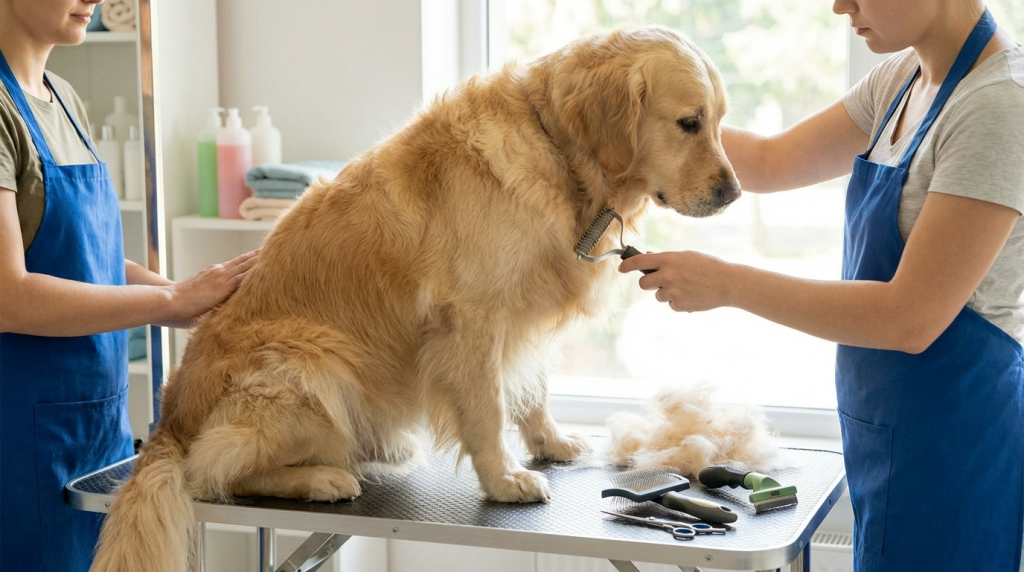
When you groom double-coated dogs, choose equipment designed for layered fur. Avoid harsh stripping blades unless you are trained in breed-specific grooming.
Reliable tools include:
- Slicker brush for surface and light undercoat removal
- Undercoat rake for seasonal shedding
- Wide-tooth comb for finishing
- High-velocity dryer for blowing out loose fur
Each tool should be used gently. Pressing too hard can scratch the skin or break guard hairs.
Quality tools make the process smoother and safer.
Step-by-Step Process to Groom Double-Coated Dogs Correctly
A structured routine prevents mistakes.
First, brush the coat thoroughly before bathing. Dry brushing loosens undercoat efficiently.
Next, bathe with a mild dog shampoo. Heavy conditioners should be avoided because they flatten the coat. Rinse completely to prevent residue buildup.
After bathing, dry the coat fully. A high-velocity dryer works best. It separates layers and removes dead undercoat without cutting hair.
Once dry, brush in sections. Move from the skin outward. Lift the fur gently and check for tangles.
Work patiently. Rushing increases breakage.
How Often Should You Groom a Double-Coated Dog?
Frequency depends on breed and season.
During shedding seasons, typically spring and fall, grooming may be needed weekly. This is when the undercoat loosens heavily.
Outside shedding periods, brushing every two to three weeks usually maintains coat health.
Regular sessions prevent mat formation and reduce household shedding.
Additionally, consistent grooming distributes natural oils, which keep the coat resilient and shiny.
Managing Seasonal Coat Blow Without Damage
When double-coated dogs “blow coat,” the shedding can seem overwhelming.
However, this is a natural cycle. Your role is to assist the process safely.
Use an undercoat rake gently. Follow with a slicker brush to remove loose hair. Work in layers rather than attacking the entire coat at once.
Never use aggressive scraping tools repeatedly in one spot. That can thin the guard hairs.
Patience produces better results than force.
Preventing Matting While Protecting Coat Structure
Mats often develop in high-friction areas.
Behind the ears, under the legs, and around the tail base are common spots. Check these areas carefully each session.
If small tangles appear, loosen them with your fingers first. Then use a wide-tooth comb.
Cutting should be a last resort. Excessive trimming alters the coat’s balance.
When you groom double-coated dogs carefully, you maintain fullness without over-thinning.
Bathing Guidelines for Double-Coated Breeds
Bathing should be moderate.
Overbathing strips natural oils that protect the fur. Unless your dog is dirty or shedding heavily, monthly bathing is usually sufficient.
Use lukewarm water. Hot water may dry the skin.
Drying thoroughly is critical. Damp undercoat can trap moisture and encourage matting.
A high-velocity dryer ensures the coat separates properly and dries completely.
Professional Grooming: What to Communicate
If you use a groomer, communicate clearly.
Explain that shaving is not acceptable unless medically necessary. Ask about de-shedding techniques and drying methods.
An experienced groomer understands how to groom double-coated dogs without altering coat function.
If you notice thinning or uneven regrowth after a visit, reassess future appointments.
Advocating for your dog prevents avoidable damage.
Nutrition’s Role in Coat Health
Healthy coats begin inside the body.
Omega-3 fatty acids support skin elasticity and fur strength. Adequate protein ensures steady growth.
If shedding seems excessive outside seasonal cycles, diet may need evaluation.
Proper hydration also improves coat texture.
When grooming and nutrition work together, results become visible quickly.
Signs the Coat Is Being Damaged
Watch for warning signs.
If fur appears patchy or soft where it was once coarse, thinning may have occurred. If guard hairs feel brittle, over-brushing could be the cause.
When you groom double-coated dogs properly, the coat should feel layered and springy.
Changes in texture signal imbalance.
Adjust technique immediately if needed.
Image Alt Text Recommendations
For best SEO practice, use descriptive alt text such as:
- “how to groom double-coated dogs safely with slicker brush”
- “undercoat rake used to groom double-coated dogs during shedding season”
- “high velocity dryer for double-coated dog grooming”
- “proper brushing technique for double-coated dog coat care”
These descriptions reinforce the topic naturally while improving accessibility.
Conclusion: Protect the Coat, Protect the Dog
To groom double-coated dogs correctly is to preserve their built-in protection system.
Their layered fur regulates temperature, shields from moisture, and supports overall comfort. Shaving or aggressive thinning disrupts this design.
Instead, brush consistently. Remove loose undercoat gently. Avoid unnecessary trimming.
With proper tools, patience, and knowledge, you maintain a thick, balanced coat that functions exactly as nature intended.
When the coat stays healthy, your dog stays comfortable, protected, and resilient in every season.
FAQs
- Is it ever safe to shave double-coated dogs?
Shaving is usually discouraged unless required for medical reasons, as it can permanently alter coat regrowth. - How often should double-coated dogs be brushed?
Weekly brushing during shedding season and every few weeks otherwise is typically sufficient. - Does shaving reduce shedding long term?
No, shedding continues because the undercoat cycle remains active. - What tools are best for double-coated dog grooming?
A slicker brush, undercoat rake, and high-velocity dryer are commonly recommended. - Can a damaged double coat fully recover?
Sometimes partial recovery occurs, but full restoration is not always guaranteed after shaving.