
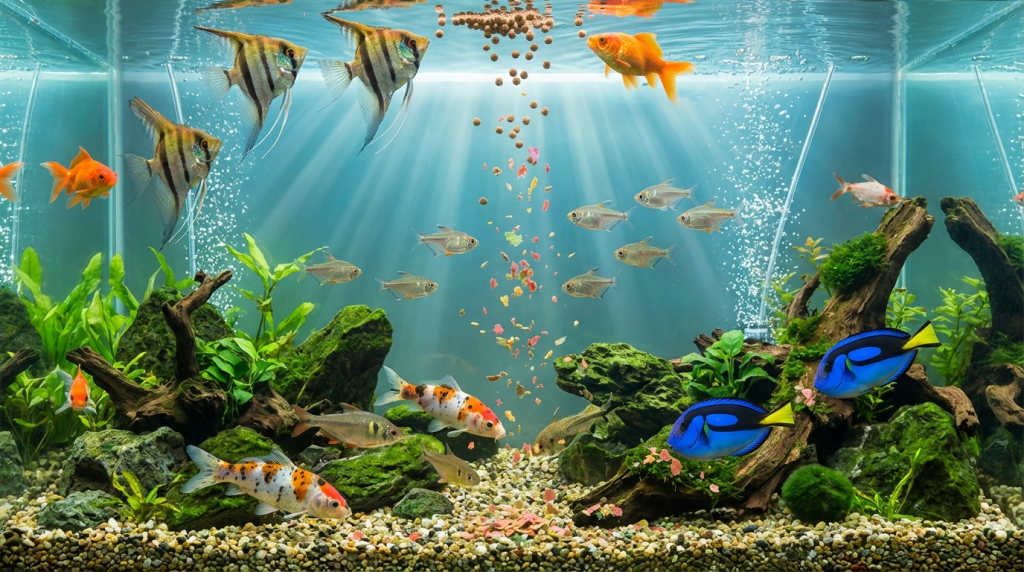

Feeding fish by species is not just a helpful tip. It is the foundation of a healthy aquarium. Every fish has evolved to eat specific foods in the wild. When you respect that natural design, everything changes. Colors brighten. Energy improves. Disease becomes less common.
Yet many aquarists still use one generic flake for every tank. It seems simple. However, fish are not all built the same. Some are hunters. Others are grazers. Some nibble plants all day, while others stalk prey at night.
If you want your aquarium to thrive rather than survive, you must understand feeding fish by species. Think of it like fueling different vehicles. You would not put diesel in a sports car. Likewise, you should not feed carnivore pellets to herbivores.
Let’s explore how species-specific nutrition transforms your tank.
Why Feeding Fish by Species Matters
Fish have digestive systems designed for particular diets. Herbivores have longer intestines. Carnivores have shorter, protein-focused systems. Omnivores sit somewhere in between.
When the wrong food is offered regularly, problems develop. For example, herbivores fed too much protein often suffer bloating. Carnivores fed plant-heavy diets may lose muscle mass. Over time, weakened immunity follows.
Moreover, feeding fish by species reduces waste. Fish digest appropriate food more efficiently. That means less uneaten material and fewer toxins in the water. Water quality improves naturally.
Proper feeding also supports behavior. Predatory fish become more alert when given protein-rich foods. Grazers stay active when plant matter is available throughout the day. As a result, the tank becomes more dynamic and balanced.
In short, nutrition shapes everything.
Understanding Carnivorous Fish Diets
Carnivorous fish are built to hunt. In the wild, they eat insects, worms, crustaceans, and smaller fish. Their bodies are designed to process high protein efficiently.
Examples include bettas, cichlids, arowanas, and many marine predators. For these species, protein is not optional. It is essential.
When feeding fish by species that are carnivores, focus on:
- High-protein pellets
- Frozen bloodworms
- Brine shrimp
- Krill
- Insect-based foods
However, balance still matters. Overfeeding protein can cause fatty buildup. Therefore, portions should be controlled. Small meals once or twice daily are ideal.
Additionally, variety supports full nutrition. Even carnivores benefit from different protein sources. A rotating menu prevents deficiencies.
Above all, observe your fish. If they become sluggish or bloated, adjust portions. Feeding fish by species requires attention, not guesswork.
Herbivorous Fish and Plant-Based Feeding
Herbivores spend their days grazing algae and plant matter. Their digestive systems are long because plant fiber takes time to break down.
Common herbivorous species include plecos, mollies, tangs, and many freshwater grazers. For these fish, constant access to plant-based food is important.
When feeding fish by species that are herbivores, provide:
- Spirulina flakes
- Algae wafers
- Blanched vegetables like zucchini
- Seaweed sheets
- Plant-based pellets
Fiber is crucial. Without it, digestion slows. Consequently, constipation and swim bladder issues may appear.
It is also helpful to include fresh vegetables weekly. Zucchini slices clipped to the tank wall create natural grazing behavior. This not only improves nutrition but also reduces boredom.
Feeding fish by species that graze requires patience. Unlike predators, they eat slowly and continuously. Therefore, smaller frequent offerings work best.
Omnivorous Fish and Balanced Nutrition
Omnivores are flexible eaters. They consume both plant matter and protein. This group includes guppies, tetras, angelfish, and many community fish.
Because omnivores eat a mix, feeding fish by species in this category means balance. They need both protein and plant ingredients in appropriate ratios.
A quality omnivore diet should include:
- Mixed flake formulas
- Micro pellets
- Occasional frozen treats
- Spirulina blends
- Small crustaceans
Variety keeps omnivores vibrant. However, too much protein can still create issues. Similarly, too much plant matter can limit growth. Therefore, rotating foods every few days works well.
Think of omnivores as balanced athletes. They perform best when fuel sources are diversified.
Feeding Bottom Dwellers by Species
Bottom dwellers are often misunderstood. Many aquarists assume leftovers are enough. Unfortunately, that assumption leads to malnutrition.
Corydoras, loaches, and certain catfish require targeted feeding. When feeding fish by species that dwell at the bottom, sinking pellets or wafers are essential.
Do not rely on surface flakes drifting downward. Dominant fish will often consume most of the food before it reaches the substrate. As a result, bottom feeders go hungry.
Offer sinking foods after lights dim. This allows shy species to eat peacefully. In addition, include occasional protein treats for omnivorous bottom fish.
Feeding fish by species ensures every layer of the tank receives proper nutrition.
Feeding Marine Fish by Species
Saltwater species are even more specialized. Reef fish often have precise dietary needs. Some eat plankton constantly. Others nip coral or algae.
For example, tangs need heavy algae content. Meanwhile, clownfish thrive on mixed marine protein diets.
When feeding fish by species in marine tanks, research is critical. Frozen mysis shrimp, marine pellets, and seaweed sheets are commonly used. However, not every species responds the same way.
Additionally, reef-safe feeding requires caution. Overfeeding increases nitrate levels, which can harm coral. Therefore, portion control is vital.
Feeding fish by species in saltwater aquariums demands planning. Yet the reward is a vibrant reef full of life.
Feeding Frequency and Portion Control
Regardless of species, overfeeding is the most common mistake. Fish have small stomachs. In fact, many are about the size of their eye.
Feed only what they can consume within two to three minutes. If food sinks uneaten, you are offering too much.
Furthermore, adult fish often thrive on one or two meals daily. Juveniles may require more frequent feeding.
A fasting day once per week can also support digestion. This mimics natural cycles in the wild.
When feeding fish by species, adjust frequency according to activity level. Active swimmers may need slightly more. Slow-moving species require less.
Consistency is key.
Signs Your Fish Diet Needs Adjustment
Healthy fish are active and colorful. They display steady growth and clear eyes. If something seems off, diet may be involved.
Watch for:
- Bloated bellies
- Stringy waste
- Faded color
- Lethargy
- Aggressive feeding behavior
These signs often signal imbalance. Therefore, reevaluate feeding fish by species and adjust ingredients or portions.
Additionally, monitor water quality. Excess waste suggests improper digestion or overfeeding. Cleaner water often follows better dietary alignment.
Creating a Species-Specific Feeding Plan
Start by listing every species in your tank. Research their natural diet. Then categorize them as carnivore, herbivore, or omnivore.
Next, select foods that match each group. Keep at least two varieties per category. This ensures rotation and balanced nutrition.
Establish a schedule. For example, offer protein on certain days and plant-based supplements on others. Feed bottom dwellers separately if needed.
Finally, observe. Feeding fish by species is dynamic. Fish grow. Needs shift. Therefore, stay flexible.
An aquarium is like a living orchestra. When each section receives the right fuel, harmony follows.
The Long-Term Benefits of Feeding Fish by Species
Over time, species-specific feeding produces dramatic results. Fish live longer. Diseases appear less often. Colors intensify. Breeding behavior may even improve.
Moreover, maintenance becomes easier. Balanced digestion reduces waste. Water changes become less frequent.
You also develop a deeper connection with your aquarium. Watching fish respond eagerly to appropriate food is rewarding.
Feeding fish by species is not complicated. It simply requires awareness and intention. However, the impact is profound.
When you match diet to biology, you respect nature’s design. In return, your tank becomes a thriving ecosystem rather than a decorative container.
Conclusion
Feeding fish by species is the single most powerful step you can take to improve aquarium health. Every fish carries instincts shaped by evolution. When you honor those instincts through proper nutrition, vitality follows.
Instead of guessing, choose precision. Instead of convenience, choose understanding. Your fish will reward you with color, activity, and longevity. In the end, species-specific feeding is not just about food. It is about creating balance in a small underwater world that depends entirely on you.
FAQ
1. Why is feeding fish by species important?
Different species have unique digestive systems and nutritional needs. Matching diet to species prevents illness and promotes growth.
2. Can all community fish eat the same food?
While some omnivores share similar diets, species-specific adjustments improve long-term health and color.
3. How often should I feed my fish?
Most adult fish thrive on one or two meals daily. Portions should be small and fully consumed within minutes.
4. What happens if I overfeed my fish?
Overfeeding leads to obesity, poor digestion, and water quality issues due to excess waste.
5. Are frozen foods better than flakes?
Frozen foods often provide higher protein and variety, especially for carnivorous species, but balanced rotation works best.