
Parrots often live longer than many pets, and some species thrive well into their 40s, 50s, or beyond. With such long lifespans, they depend on you to adjust their care as they age. Understanding how to feed senior parrots for longevity is one of the most meaningful ways you can support their comfort, health, and happiness. While nutrition matters at every life stage, it becomes especially important in later years because aging parrots experience slower metabolism, reduced digestion, and changes in activity level. The right feeding strategy keeps them vibrant, active, and engaged.
Senior parrots may develop health concerns such as arthritis, liver sensitivity, kidney strain, and immune changes. They may also eat more slowly, show texture preferences, or become picky about flavors they once loved. Some even lose interest in hard foods because their beaks weaken or their jaw muscles change. When you understand how to feed senior parrots for longevity, you can adapt easily and support their nutritional needs with care.
This guide explores the best foods, feeding habits, supplements, and strategies that keep aging parrots strong. With the right adjustments, your senior parrot enjoys a healthier, more comfortable life.
Why Learning to Feed Senior Parrots for Longevity Matters So Much
Nutrition plays a major role in how parrots age. Because their organs work harder with time, quality nutrition keeps wear and tear to a minimum. Senior parrots benefit from nutrient-dense foods that are gentle on their digestive systems and supportive of immune function.
Feeding for longevity helps:
• Support heart and liver health
• Protect joints
• Maintain healthy weight
• Improve feather condition
• Boost immunity
• Support clear cognition
• Keep digestion moving smoothly
Even small nutritional adjustments have a noticeable impact. When you feed senior parrots with intention, you create a foundation for longer, healthier years.
Recognizing When to Adjust a Senior Parrot’s Diet
Before making changes, look for signs that your parrot needs updated feeding routines. Common indicators include:
• Eating less than before
• Becoming selective with textures
• Weight loss or subtle muscle decline
• Changes in droppings
• Dry or brittle feathers
• Reduced activity
• Increased thirst
• Slower chewing
These signs do not always mean something is wrong, but they do signal that it’s time to rethink how to feed senior parrots for longevity. Senior birds deserve meals tailored to their changing needs.
Start With a Vet Check Before You Feed Senior Parrots Differently
A wellness check helps you understand your parrot’s health baseline. Senior birds should receive yearly exams, ideally including bloodwork. These screenings reveal liver values, kidney function, weight changes, vitamin levels, and metabolic shifts.
A vet may recommend:
• Lower-fat diets
• Lower-protein diets
• Added supplements
• Softer textures
• Targeted nutrients
A personalized plan ensures you feed senior parrots safely and effectively.
Choose High-Quality Pellets as the Foundation
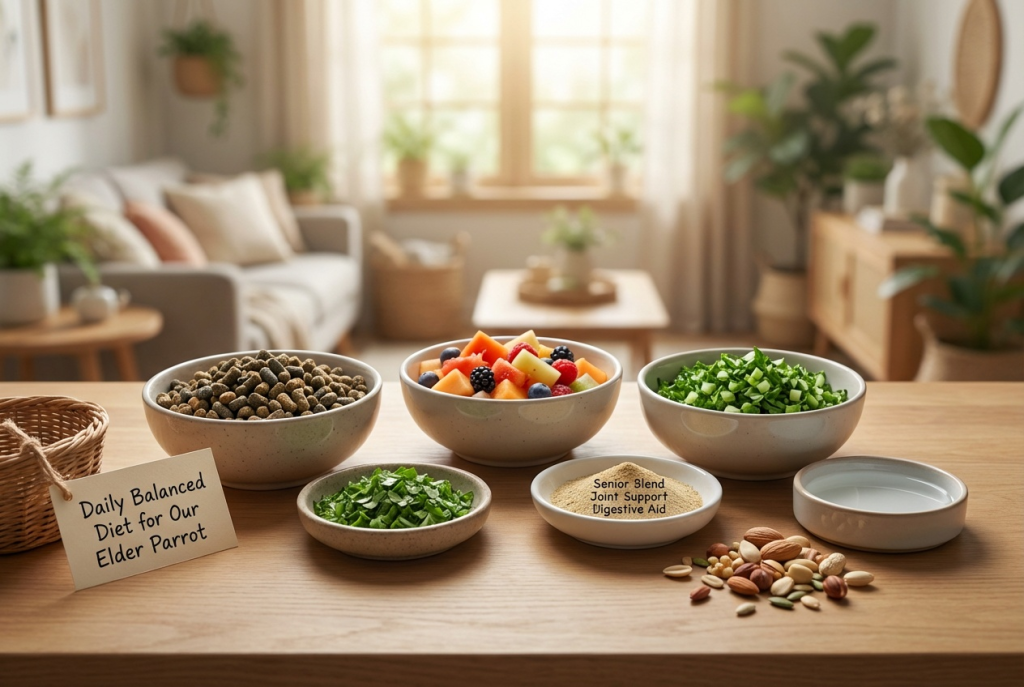
Pelleted diets create a consistent nutritional base. While some young parrots thrive on mixed diets, senior birds often digest pellets more efficiently. Pellets provide balanced vitamins, minerals, amino acids, and healthy fats in ratios designed for long-term health.
When selecting pellets:
• Choose age-appropriate or senior-friendly formulas
• Avoid added sugars or artificial dyes
• Look for brands with natural ingredients
• Choose species-specific formulas when possible
Pellets help you feed senior parrots predictably, eliminating guesswork in nutrient balance.
Use Fresh Produce to Support Longevity
Fresh fruits and vegetables provide antioxidants, hydration, fiber, and micronutrients essential to aging parrots. They also protect the immune system and support digestion.
Great vegetables include:
• Leafy greens
• Bell peppers
• Carrots
• Squash
• Broccoli
• Green beans
• Cucumbers
Fruits should be fed sparingly due to sugar levels, but excellent choices include:
• Berries
• Apples (seedless)
• Mango
• Papaya
• Kiwi
Providing a colorful variety ensures your senior parrot receives diverse nutrients.
Hydration Plays a Major Role When You Feed Senior Parrots
Older parrots may not drink as much as they should, yet hydration is essential for kidney and liver function. Because these organs naturally weaken with age, water becomes even more important for longevity.
Hydration tips include:
• Offering fresh water twice daily
• Including water-rich vegetables
• Trying bird-safe herbal teas (unsweetened)
• Mixing water into soft foods
• Providing shallow water dishes for easy access
Proper hydration supports digestion, detoxification, and overall vitality.
Adjust Protein Levels to Protect Aging Organs
You must learn to adjust protein levels when figuring out how to feed senior parrots for longevity. Younger parrots require higher protein for growth and feather development, but older birds benefit from moderate protein. Too much protein strains the kidneys and liver, especially in species prone to metabolic issues.
Safer protein sources include:
• Cooked eggs (small amounts)
• Legumes
• Quinoa
• High-quality pellets
Avoid offering large amounts of animal protein unless recommended by a vet.
Reduce Fat to Support Senior Parrot Health
Fat provides energy, but senior parrots usually move less and burn fewer calories. Excess fat increases the risk of obesity, liver issues, and cardiovascular strain. Many older birds do best on diets with lower fat and higher moisture.
Foods to limit include:
• Seeds
• Nuts
• Fatty treats
Seeds may still be included sparingly for enrichment, but they should never form the bulk of a senior parrot’s diet.
Incorporate Omega-3s for Brain and Joint Support
Omega-3 fatty acids support brain health, reduce inflammation, and protect joints—making them essential for senior parrots. They also improve skin and feather condition.
You may offer:
• Flaxseed (ground finely)
• Chia seeds
• Hemp seeds
• Small amounts of fish oil (vet-approved only)
Omega-3s help senior parrots stay agile, alert, and comfortable.
Offer Softer Foods to Support Easier Eating
Some senior parrots struggle with hard foods because their beaks become weaker or their jaws tire easily. Offering soft, warm foods can make eating more enjoyable.
Soft food ideas include:
• Warm mashed vegetables
• Cooked grains
• Soaked pellets
• Bird-safe purees
• Softened legumes
Softer textures maintain interest in meals and encourage steady nutrient intake.
Variety Keeps Senior Parrots Engaged and Healthy
Variety isn’t just enriching—it provides nutritional diversity. Feeding senior parrots different textures, colors, and flavors keeps their minds active and prevents boredom during meals.
Try rotating:
• Leafy greens
• Squash varieties
• Multiple pellet brands
• Warm mash bowls
• Seasonal produce
Variety helps aging birds maintain appetite and emotional wellbeing.
Use Supplements Carefully and Only When Needed
Supplements can support longevity, but they must be used thoughtfully. Because parrots absorb nutrients efficiently, over-supplementing can be harmful.
Common supplements used for senior parrots include:
• Calcium
• Vitamin D
• Milk thistle
• Probiotics
• Omega-3 oils
Always consult a vet before adding any supplement to avoid toxicities or imbalance.
Monitor Weight to Feed Senior Parrots Correctly
Senior parrots may lose weight or gain weight unexpectedly. Monitoring their weight ensures you catch changes early. Weight changes indicate:
• Metabolic issues
• Malabsorption
• Organ decline
• Dehydration
• Dietary imbalances
Weigh your parrot weekly using a digital scale and record results. Early detection protects longevity.
Keep Meal Portions Consistent and Predictable
Routine matters when feeding senior parrots. Predictable meals reduce stress, support digestion, and create fewer fluctuations in blood sugar. Senior birds thrive with structured feeding times because their bodies function more steadily with routine.
Aim for:
• Morning meal of pellets and vegetables
• Afternoon enrichment foods
• Evening soft or warm foods
Stability keeps senior parrots calm, balanced, and well-nourished.
Signs Your Senior Parrot’s Diet Needs Adjusting
As you learn how to feed senior parrots for longevity, stay alert for subtle signs that indicate dietary changes are needed.
Watch for:
• Declining appetite
• Changes in droppings
• Dull feathers
• Slower movements
• Excess sleeping
• Weight changes
• Increased irritability
When you adjust diet early, you prevent complications and protect long-term health.
Senior Parrot Feeding Mistakes to Avoid
To feed senior parrots safely, avoid:
• High-seed diets
• Excessive nuts
• Abrupt diet changes
• Sugary treats
• Over-supplementing
• Underfeeding due to appetite changes
These mistakes can shorten lifespan or worsen existing health issues.
Making Mealtimes Enjoyable for Senior Parrots
Older parrots rely on emotional engagement as much as physical nourishment. Making meals enjoyable boosts appetite and improves quality of life.
Try:
• Feeding warm foods for comfort
• Hand-offering treats for bonding
• Using foraging toys with soft foods
• Adding mild flavors like cinnamon (species-safe)
Positive mealtime experiences encourage better eating and greater interest.
Conclusion
Learning how to feed senior parrots for longevity helps you support their health during their most vulnerable years. With thoughtful food choices, fresh produce, hydration, soft textures, and careful nutrient balance, you can help your aging parrot thrive. Senior birds still have enormous potential for joy, connection, and activity. When you nourish their bodies with intention and consistency, you extend their comfort and wellbeing one meal at a time. Feeding with love truly becomes the key to a longer, brighter life.
FAQ
1. When does a parrot become a senior?
Most parrots are considered senior around age 7–10, depending on species.
2. Should senior parrots still eat pellets?
Yes. Pellets provide balanced nutrition and remain essential for older birds.
3. Can senior parrots eat seeds?
They can, but only sparingly. Seeds are high in fat and should not be a staple.
4. Do older parrots need supplements?
Some do, but only with veterinary approval to avoid nutrient imbalances.
5. How often should a senior parrot see the vet?
Yearly wellness exams are ideal, but twice-yearly exams are better for older birds.