
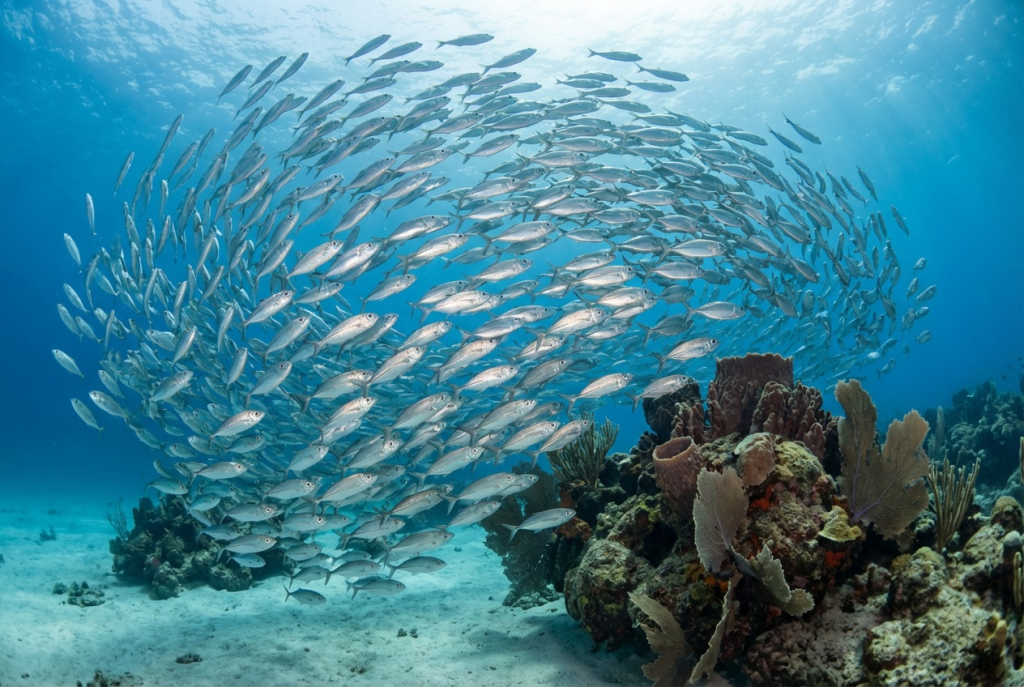

When you watch a group of fish glide through the water in a synchronized pattern, it feels almost magical. Schooling is one of the most beautiful natural behaviors in the aquarium world. It creates movement, harmony, and a sense of life inside your tank. But schooling is more than a visual pleasure—it’s an important social behavior that helps reduce stress and boost confidence in many species. Understanding how to encourage schooling behavior in fish helps you create a tank where they feel calm, connected, and safe.
Schooling behavior develops naturally in species that evolved to move in groups. Fish rely on the coordination of their school for protection, communication, and efficient swimming. When you learn how to encourage schooling behavior in fish, you also support their emotional wellbeing. Fish living alone or in groups that are too small may become timid, aggressive, or withdrawn. Others may hide constantly or swim erratically.
The good news? You can encourage schooling by adjusting only a few key elements in your aquarium: group size, tank layout, lighting, water quality, enrichment, and environmental stability. This guide explains how to create conditions that naturally foster schooling, no matter the species you keep.
Why It’s Important to Encourage Schooling Behavior in Fish
Schooling serves several biological and psychological functions. Encouraging schooling behavior in fish helps them feel secure and reduces their stress response. When fish move as a coordinated group, they take cues from one another. This allows them to:
• Avoid predators
• Navigate obstacles
• Conserve energy
• Find food easily
• Maintain social stability
• Mimic natural movement patterns
Without proper schooling conditions, some fish may become anxious or aggressive. Others may lose color, stop eating, or remain isolated. Encouraging schooling behavior in fish helps restore their natural instincts, allowing them to thrive in your aquarium.
Choose the Right Species to Encourage Schooling Behavior in Fish
Not all fish are true schoolers. Some species are shoaling fish, meaning they prefer company but don’t necessarily move in tight formation. Others are solitary by nature. Species that typically benefit from schooling behavior include:
• Tetras
• Rasboras
• Danios
• Barbs
• Corydoras
• Rainbowfish
• Hatchetfish
• White cloud minnows
When you choose the right species, encouraging schooling behavior in fish becomes much easier. Shoaling species like guppies or mollies may swim together loosely, while true schoolers maintain coordinated patterns when comfortable.
Keep the Right Group Size to Encourage Schooling Behavior in Fish
Group size is one of the most important factors. Many species fail to school because they are kept in groups that are too small. When you increase numbers, their confidence rises and natural behavior returns.
As a general guideline:
• Keep at least six fish of the same species
• Ten or more increases schooling stability
• Larger groups reduce stress dramatically
For example, neon tetras kept in groups of three behave nervously, while a group of twelve forms tight, beautiful schools. Encouraging schooling behavior in fish starts with respecting their instinctive need for companions.
Offer a Spacious Tank Layout to Encourage Schooling Behavior in Fish
Schooling requires room to move. Tight tanks or cluttered environments discourage coordinated movement because fish cannot swim freely. When you create open space, schooling becomes easy and natural.
To encourage schooling behavior in fish, design your tank with:
• Long horizontal swimming areas
• Clear pathways across the middle of the tank
• Decorations pushed to the sides or rear
• Open zones without tall obstacles
Wide tanks work better than tall tanks for schooling species. Movement should feel effortless and uninterrupted.
Use the Right Lighting to Encourage Schooling Behavior in Fish
Lighting affects how confident fish feel. Too-bright lighting may cause schooling fish to hide or scatter. Dimmer lighting and natural gradients help them stay together.
To encourage schooling behavior in fish:
• Use soft, diffused lighting
• Add floating plants for shade
• Create shadowed areas for security
• Choose gradual light transitions at sunrise and sunset
Balanced lighting helps fish feel safe enough to swim in groups rather than splitting up.
Replicate Natural Environments to Encourage Schooling Behavior in Fish
In the wild, schooling fish live in flowing rivers, calm streams, and densely planted waters. You can replicate these conditions by choosing the right plants, substrates, and décor.
For example:
• Use live plants like java fern, vallisneria, or water sprite
• Add driftwood for structure
• Include smooth rocks or leaf litter
• Provide gentle current from a well-placed filter
These elements mimic the natural habitat and encourage schooling behavior in fish by reducing stress and stimulating instinctual movement.
Maintain Excellent Water Quality to Encourage Schooling Behavior in Fish
Stress disrupts schooling. Fish won’t swim confidently in groups if water conditions feel unstable. Clean, well-filtered water encourages natural behavior.
Keep water quality stable by:
• Performing weekly water changes
• Maintaining proper temperature
• Using a high-quality filtration system
• Testing water regularly for ammonia, nitrite, nitrate, and pH
Because sudden changes disturb social behavior, stability is essential when trying to encourage schooling behavior in fish.
Provide Gentle Water Flow to Encourage Schooling Behavior in Fish
Many schooling species originate from environments with soft, steady current. They rely on water movement to orient themselves and swim smoothly as a group.
To encourage schooling behavior in fish:
• Use a filter that produces smooth, even flow
• Avoid strong jets that scatter fish
• Position flow to create circulation but not turbulence
Moderate flow encourages coordinated movement, making the school behave cohesively.
Encourage Natural Feeding Patterns to Strengthen Schooling Behavior
Feeding is a social activity in many species. When fish learn to feed together, it reinforces schooling. Spread food across the tank so fish gather and move as a group rather than competing aggressively.
Tips include:
• Use floating foods for surface-schooling species
• Offer sinking pellets for mid-level and bottom schoolers
• Feed small portions at regular intervals
• Use feeding rings to focus group behavior
The more consistently fish eat together, the stronger their schooling response becomes.
Avoid Aggressive Tankmates That Disrupt Schooling Behavior
Stress from aggressive species ruins schooling. If your schooling fish feel threatened, they will hide or break formation. Always choose peaceful tankmates.
Avoid pairing schooling species with:
• Large cichlids
• Territorial barbs
• Predatory fish
• Fin nippers
Calm companions help encourage schooling behavior in fish by improving confidence.
Use Tankmates That Boost Confidence and Schooling Behavior
Some species encourage others to feel more secure. When kept with peaceful dither fish—active, non-threatening species—shy schooling fish may behave more naturally.
Dither fish promote schooling by:
• Signaling that conditions are safe
• Increasing movement in the tank
• Reducing fear-based hiding
This strategy works especially well in planted tanks.
Provide Enrichment That Encourages Schooling Behavior
Enrichment supports active, confident movement throughout the day. When fish feel mentally stimulated, they school more consistently.
Enrichment ideas include:
• Adding plant clusters for exploration
• Rearranging décor occasionally
• Offering varied foods
• Creating flow variations
• Using dim-to-bright light cycles
These strategies encourage schooling behavior in fish by making the environment engaging and supportive.
Observe Behavior to Adjust Conditions
Every species behaves differently. Some prefer tight schooling, while others stay loosely grouped. Observing your fish helps you fine-tune your tank to encourage schooling behavior in fish.
Watch for:
• How closely they swim
• Their preferred zones
• Response to lighting
• Reaction to current
• Group spacing
When you adjust conditions gradually, schooling becomes stronger and more predictable.
How Stress Disrupts Schooling Behavior in Fish
Because stress weakens schooling instincts, reducing stress is essential. Stress causes fish to scatter, hide, or become aggressive. Learning how to encourage schooling behavior in fish means learning how to manage stress.
Common stressors include:
• Poor water quality
• Overcrowding
• Wrong tankmates
• Loud vibrations
• Rapid temperature changes
• Underfeeding or overfeeding
Reducing these triggers allows fish to relax and behave naturally.
Create Stability to Encourage Schooling Behavior in Fish
Consistency is the backbone of natural schooling. Fish school best in stable environments where nothing changes too quickly.
Ensure stability by:
• Keeping lighting schedules consistent
• Feeding at the same times
• Avoiding frequent tank rearrangements
• Maintaining steady water parameters
Predictability promotes calm, cohesive movement.
Conclusion
Learning how to encourage schooling behavior in fish helps you create a tank filled with harmony, movement, and natural beauty. With the right group size, tank layout, lighting, water flow, and environmental stability, your fish develop confidence and instinctual coordination. When you prioritize their comfort, reduce stress, and replicate their natural habitat, schooling becomes effortless. Your aquarium transforms into a vibrant, living ecosystem where every fish moves with purpose and peace.
FAQ
1. Why won’t my schooling fish swim together?
Usually the group is too small, the tank is too bright, or the environment feels stressful.
2. How many fish do I need for schooling?
Most species need at least six, though ten or more encourages stronger schooling.
3. Does tank size affect schooling behavior?
Yes. Larger tanks with open swimming areas support natural group movement.
4. Do all fish species school?
No. Only true schooling or shoaling species display this behavior consistently.
5. Will current help my fish school better?
A gentle, steady current encourages more coordinated swimming and natural behavior.