
Living with more than one cat can feel like hosting a quiet drama series. Some days are peaceful. Other days involve hissing, chasing, or tense standoffs. If that sounds familiar, you are not alone. Many cat owners wonder how to encourage friendly play between cats without forcing interactions or creating stress.
Cats are social in their own way. However, their version of friendship looks different from ours. Play is one of the safest bridges between tolerance and genuine bonding. When guided properly, it builds trust and releases energy. When misunderstood, it turns into conflict.
The good news is this. You can encourage friendly play cats naturally with the right environment, timing, and expectations. Let’s explore how to make that happen step by step.
Understanding What Friendly Play Looks Like in Cats
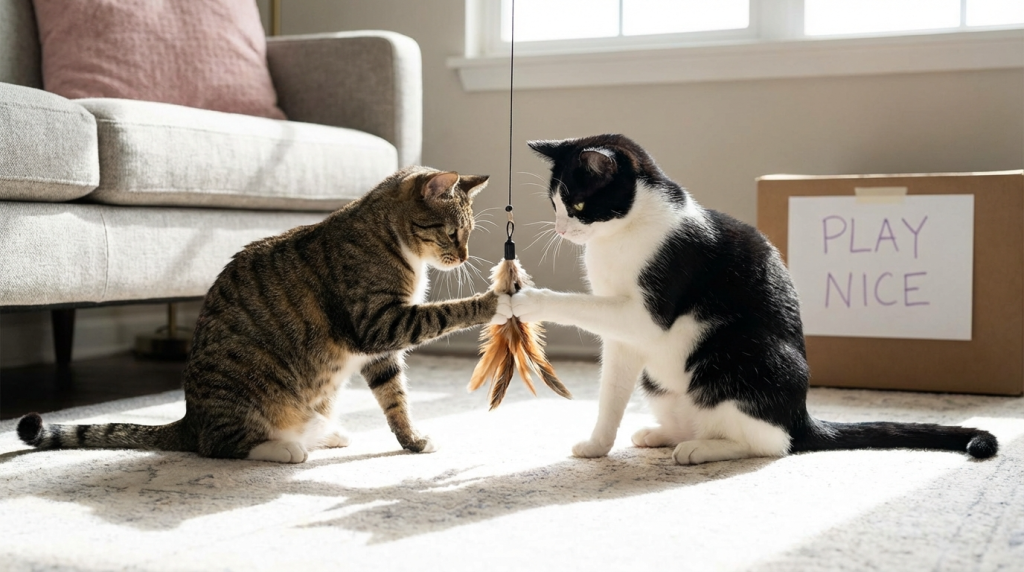
Before you encourage friendly play cats, you must recognize what healthy play actually is. Play between cats often looks intense. There may be chasing, wrestling, and swatting. However, true play stays balanced.
During friendly play, roles switch. One cat is not always the aggressor. Bodies remain loose. Ears stay mostly forward. Breaks happen naturally.
In contrast, real aggression looks rigid. Hissing escalates. Growling becomes constant. One cat tries to escape repeatedly.
Understanding this difference prevents unnecessary interference. Sometimes, what looks rough is actually normal. Observation builds confidence.
Why Some Cats Struggle to Play Together
Not all cats grow showed proper social play. Kittens learn boundaries from siblings and mothers. When separated too early, those lessons may be missing.
Personality also matters. Some cats are bold explorers. Others prefer solitude. Age differences add another layer. A playful kitten may overwhelm a senior cat.
Past experiences influence reactions as well. Cats remember stress. Therefore, patience becomes essential.
Encouraging friendly play cats requires respect for individual comfort levels.
Creating the Right Environment for Positive Play
Environment shapes behavior more than many owners realize. Crowded spaces increase tension. Limited resources trigger competition.
Start by spreading essentials throughout your home. Multiple food bowls, litter boxes, and resting spots reduce pressure.
Vertical space helps tremendously. Cat trees, shelves, and window perches give escape routes. A cat that feels trapped cannot play safely.
Lighting also matters. Bright, open areas reduce ambush-style conflict.
When the environment supports choice, friendly play becomes more likely.
Using Interactive Toys to Encourage Friendly Play Cats
Toys act as neutral mediators. They redirect energy away from each other and toward shared fun.
Wand toys work especially well. They allow you to control distance and pace. Move the toy like prey, not like chaos.
Laser pointers can be useful when followed by a physical toy. Otherwise, frustration builds.
Rotate toys frequently. Novelty keeps engagement high.
Play sessions before meals work best. After play, feeding creates a positive emotional loop.
The Importance of Structured Play Sessions
Unplanned play often leads to misunderstandings. Structured sessions reduce that risk.
Set aside time daily. Ten to fifteen minutes is enough. Keep sessions predictable.
Begin with distance. Allow each cat to engage separately with the same toy. Gradually bring them closer.
End sessions before excitement peaks. Stopping early prevents escalation.
Consistency builds safety. Safety builds trust.
Reading Body Language During Play
Cats communicate constantly through subtle signals. Learning to read them changes everything.
Watch tails closely. Gentle swishing indicates engagement. Fast whipping signals irritation.
Ears provide clues too. Slight rotation is normal. Flattened ears suggest discomfort.
Pauses are healthy. If one cat disengages, respect it.
Intervene calmly when signals shift. Use distraction, not punishment.
Encouraging Friendly Play Between Cats of Different Ages
Age gaps require thoughtful adjustments. Kittens play hard. Older cats prefer calm interactions.
Match energy levels through toy choice. Fast toys for kittens. Slow-moving toys for seniors.
Shorter sessions suit older cats. Frequent breaks prevent overload.
Reward calm coexistence. Not all bonding involves wrestling.
Friendly play adapts to life stage.
How Scent Plays a Role in Cat Play Behavior
Scent is a cat’s emotional language. Familiar smells create comfort.
Swap bedding between cats regularly. This blends group scent.
Use pheromone diffusers to reduce baseline stress. They do not force friendship, but they lower tension.
Avoid strong cleaning products in shared areas. Neutral scents feel safer.
When scent harmony exists, play flows more smoothly.
Preventing Play From Turning Into Aggression
Even friendly play can cross lines. Prevention relies on timing and awareness.
Interrupt early when intensity rises. Clap softly or toss a pillow nearby. Avoid yelling.
Separate cats briefly if needed. Allow cooling-off time.
Never punish after the fact. Cats do not connect delayed correction.
Redirect energy instead. Offer toys or engage one-on-one.
Calm redirection preserves trust.
Encouraging Shy Cats to Join Play
Some cats observe before participating. That is okay.
Provide safe viewing spots. Elevated perches allow distance.
Use quieter toys initially. Slow feathers or rolling balls feel less threatening.
Praise curiosity. Even watching counts as progress.
Confidence grows gradually. Respect the pace.
The Role of Routine in Encouraging Friendly Play Cats
Cats thrive on predictability. Routine reduces anxiety.
Play at the same times daily. Pair play with meals.
Keep household changes minimal when possible.
Consistency signals safety. Safety encourages exploration.
When life feels predictable, play feels optional rather than risky.
Common Mistakes That Block Friendly Play
Many owners accidentally sabotage progress. Forced interactions top the list.
Holding cats together creates fear. Fear blocks learning.
Ignoring resource competition also causes issues. Play cannot fix hunger or stress.
Another mistake involves overstimulation. Longer sessions are not better.
Balance always wins.
When Cats Prefer Parallel Play
Not all friendly play involves interaction. Parallel play still counts.
Cats playing near each other build tolerance. Tolerance often precedes bonding.
Celebrate peaceful coexistence. It is a success.
Friendship looks different for every pair.
How Long It Takes to See Improvement
Progress varies widely. Some cats bond quickly. Others take months.
Measure success realistically. Reduced tension is progress.
Setbacks happen. They do not erase growth.
Patience outperforms pressure every time.
When to Seek Professional Help
If aggression persists or injuries occur, seek help.
Certified behaviorists assess triggers accurately.
Early guidance prevents entrenched habits.
Asking for help shows commitment, not failure.
Conclusion
Learning how to encourage friendly play between cats is about building trust, not forcing friendship. With the right environment, structured play, and patient observation, cats learn to share space calmly. Over time, playful moments replace tension, and your home becomes a quieter, more balanced place for everyone.
FAQ
1. How often should I play with my cats together?
Daily short sessions work best, especially when timed before meals.
2. Is rough play always bad between cats?
No. Balanced play with role switching and breaks is usually healthy.
3. Can older cats learn to play with younger cats?
Yes, with adjusted pace, shorter sessions, and appropriate toys.
4. Should I separate cats after a play fight?
Only if stress signals appear or one cat cannot disengage.
5. Do pheromone diffusers really help with play issues?
They reduce overall stress, which often makes friendly play easier.