
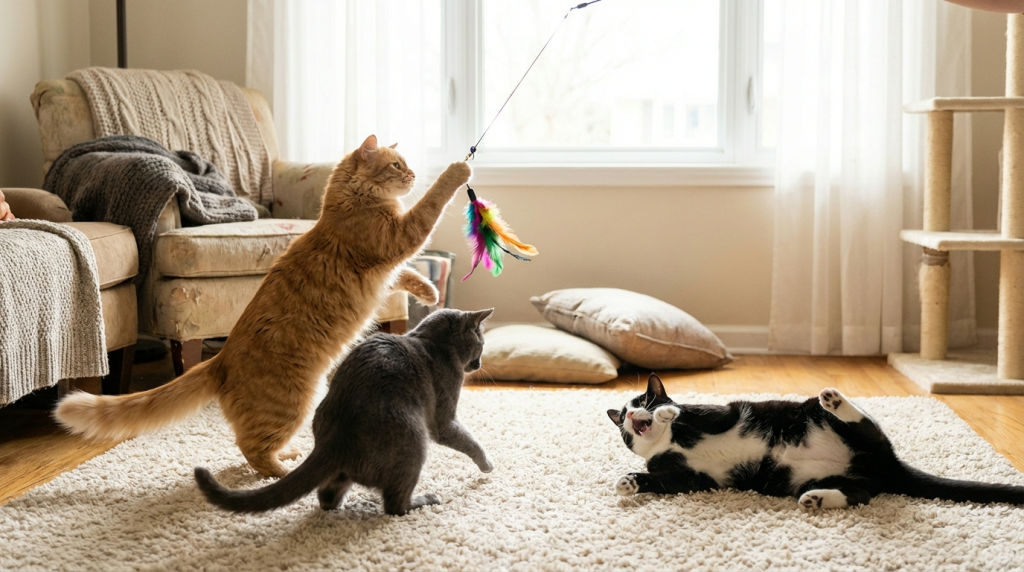

If you share your home with more than one cat, you already know something important. Cats can be affectionate roommates. However, they can also become rivals in seconds. One minute they nap side by side. The next minute tails puff and paws swing.
Therefore, learning how to encourage friendly play between cats is essential. Play builds trust. It releases tension. It helps cats understand each other’s boundaries. Without healthy play, small misunderstandings can grow into real conflict.
The good news? Friendly interaction is not random. It can be guided. With patience and structure, you can encourage friendly play between cats and create a calmer home.
Why It’s Important to Encourage Friendly Play Between Cats
Cats are natural hunters. Their instincts include stalking, chasing, pouncing, and wrestling. When those instincts are expressed safely, bonds often grow stronger.
However, if energy is not released constructively, frustration builds. That frustration may be redirected toward another cat. What looks like aggression may simply be unused energy.
Moreover, play teaches social rules. Kittens learn bite control and body limits through wrestling. Adult cats also benefit from safe sparring.
When you encourage friendly play between cats, you create an outlet for instinct. As a result, tension decreases.
Additionally, positive interaction builds familiarity. Familiarity builds trust. Trust reduces fear-based reactions.
Therefore, play is not just entertainment. It is emotional glue.
Understanding the Difference Between Play and Fighting
Before you can encourage friendly play between cats, you must recognize what healthy play looks like.
Play is usually silent. Bodies remain loose. Tails may flick, yet fur stays flat. Cats take turns chasing or pinning.
In contrast, real fighting includes growling, hissing, and stiff posture. Ears flatten. Fur may puff. One cat tries to escape repeatedly.
Furthermore, friendly wrestling pauses naturally. Cats disengage and reset. Aggression escalates instead of stopping.
Watch closely. If both cats re-engage willingly, play is likely happening.
However, if one hides or avoids consistently, adjustments are needed.
Understanding these signals helps you intervene calmly when necessary.
Creating the Right Environment to Encourage Friendly Play Between Cats
Environment shapes behavior. Therefore, your home setup matters more than you think.
First, provide enough space. Overcrowding increases tension. Each cat needs personal territory.
Second, create vertical zones. Cat trees, shelves, and window perches allow escape routes. Height reduces pressure.
Third, ensure separate resources. Each cat should have its own food bowl, water dish, and litter box.
Competition for essentials increases rivalry. Eliminating competition supports harmony.
Additionally, reduce loud noises during play sessions. Calm surroundings help cats feel secure.
When the environment feels safe, you can more easily encourage friendly play between cats.
Use Interactive Toys to Encourage Friendly Play Between Cats
Interactive toys are powerful tools. Wand toys mimic prey. Laser pointers trigger chase instincts. Moving objects stimulate curiosity.
However, play sessions must be structured carefully.
Start by engaging both cats at once. Use two toys if necessary. This prevents competition over one object.
Encourage simultaneous movement. Let them chase parallel rather than collide.
Additionally, end each session with a reward. A small treat signals closure and satisfaction.
Structured play teaches them to associate each other with fun.
Over time, you may notice spontaneous friendly wrestling emerging.
Timing Matters When You Encourage Friendly Play Between Cats
Cats have natural energy peaks. These often occur at dawn and dusk.
Schedule interactive sessions during those windows. High energy becomes directed energy.
Avoid initiating play when one cat is sleepy or stressed. Mismatched energy leads to irritation.
Furthermore, keep sessions short. Ten to fifteen minutes is enough. End before frustration appears.
Frequent, short sessions work better than long, intense ones.
Consistency builds rhythm. Rhythm builds trust.
Encourage Friendly Play Between Cats Through Positive Reinforcement
Positive reinforcement strengthens desired behavior.
When you see gentle wrestling or relaxed chasing, offer calm praise. Use a soft voice. Toss a treat nearby.
However, avoid shouting if tension rises. Loud corrections increase anxiety.
Instead, redirect gently. Use a toy to interrupt rough behavior.
Additionally, reward peaceful coexistence. If both cats rest in the same room calmly, acknowledge it.
Small rewards create strong associations.
Eventually, they link each other’s presence with positive outcomes.
Gradual Introductions Encourage Friendly Play Between Cats
If your cats are newly introduced, slow exposure is key.
Begin with scent swapping. Exchange bedding. Allow each cat to explore the other’s smell.
Next, allow visual contact through a barrier. Observe body language carefully.
Short supervised sessions follow. Keep them brief. End on a positive note.
Rushing introductions often leads to fear-based aggression.
Patience reduces defensive reactions. Calm exposure builds familiarity.
Over time, curiosity replaces suspicion.
Reading Body Language While You Encourage Friendly Play Between Cats
Subtle signals reveal emotional states.
Relaxed whiskers and soft eyes indicate comfort. Upright ears signal alert interest.
Conversely, rigid posture signals tension. Rapid tail flicking may mean overstimulation.
When encouraging friendly play between cats, watch for balance. Both should participate willingly.
If one consistently retreats, reduce intensity.
Understanding these cues prevents escalation.
Managing Rough Play Before It Turns Aggressive
Sometimes friendly play becomes too intense. That shift can happen quickly.
If you notice mounting tension, distract with a toy. Do not use your hands.
Clapping softly or dropping a pillow between them can break focus without fear.
Never grab an angry cat. Scratches may occur.
Instead, separate calmly if needed. Allow cooling-off time.
Then resume structured play later.
Prevention works better than correction.
Encourage Friendly Play Between Cats with Energy Outlets
Boredom fuels conflict. Therefore, enrichment is essential.
Provide puzzle feeders. Hide small treats around the house. Rotate toys weekly.
Window perches offer mental stimulation. Watching birds satisfies hunting instincts.
Additionally, solo play reduces excess energy before group sessions.
A tired cat is a calmer cat.
When energy levels are balanced, friendly interaction increases naturally.
Human Influence on How Cats Play Together
Your emotional state matters. Cats sense tension easily.
If you appear anxious during play, they may mirror that stress.
Instead, remain relaxed. Speak gently. Move slowly.
Moreover, avoid favoritism. Unequal attention breeds jealousy.
Spend individual time with each cat daily.
Balanced affection prevents competition for your approval.
You are the emotional thermostat of the household.
When to Seek Help While Trying to Encourage Friendly Play Between Cats
Most mild conflicts resolve with structured intervention. However, persistent aggression may require professional advice.
Consult a veterinarian first. Pain or illness can trigger irritability.
If medical causes are ruled out, a feline behaviorist may help.
While rare, medication is sometimes used temporarily for severe anxiety.
Support ensures long-term harmony.
Long-Term Success When You Encourage Friendly Play Between Cats
Friendship between cats develops like a slow sunrise. It unfolds gradually.
Celebrate small progress. A shared nap. A gentle nose touch. Mutual grooming.
These moments signal trust.
Continue structured play even after harmony improves.
Routine maintains stability.
Over time, you may see them chase, tumble, and rest together with ease.
That transformation feels rewarding because it was built intentionally.
Conclusion
To encourage friendly play between cats, you must combine patience, structure, and empathy. By creating a supportive environment, using interactive toys, reading body language, and reinforcing positive behavior, you guide instinct toward connection instead of conflict. Play becomes more than entertainment. It becomes a bridge between personalities. With steady effort, your home can shift from tension to trust, and your cats can build a relationship rooted in safe, joyful interaction.
FAQ
- How can I tell if my cats are playing or fighting?
Play is usually quiet and balanced, while fighting includes hissing, growling, and attempts to escape. - How often should I encourage friendly play between cats?
Short daily sessions during high-energy times, such as dawn or dusk, work best. - What if one cat always starts the rough play?
Provide extra solo playtime for that cat to release energy before group interaction. - Can treats help encourage friendly play between cats?
Yes. Reward calm behavior and gentle interaction to build positive associations. - Is it normal for cats to swat during play?
Light swatting is common in play, as long as no distress signals or injuries occur.