
Indoor cats often enjoy safe and comfortable lives, yet many struggle with inactivity and boredom over time. Unlike outdoor cats that naturally climb, hunt, jump, and explore throughout the day, indoor cats sometimes spend long hours sleeping or remaining inactive in limited spaces. While rest remains important for feline health, too little movement may contribute to obesity, stiffness, anxiety, destructive behavior, and reduced mental stimulation. Fortunately, owners can encourage cat movement naturally by creating an environment that supports exploration, play, climbing, and curiosity every day.
Cats naturally enjoy observing, stalking, jumping, climbing, and investigating new surroundings.
When homes support these instincts properly, cats usually become more physically active and emotionally engaged.
Importantly, movement does not require forcing exercise routines unnaturally.
Instead, the goal involves designing spaces that motivate cats to move voluntarily through curiosity and enrichment.
Small environmental changes often create surprisingly positive results over time.
As owners improve indoor environments thoughtfully, cats frequently become happier, healthier, and more emotionally balanced naturally.
Why Indoor Cats Need More Movement
Many indoor cats receive fewer opportunities for natural activity than outdoor cats.
Owners who encourage cat movement help support healthier muscles, joints, digestion, and emotional wellness.
Physical activity also improves circulation and helps maintain healthier body weight over time.
Importantly, movement affects mental health just as strongly as physical health.
Inactive cats sometimes develop boredom-related habits such as overeating, nighttime hyperactivity, scratching furniture, or excessive vocalization.
Regular movement supports emotional stimulation while reducing frustration and stress naturally.
Cats generally feel more fulfilled when they can express natural hunting and climbing behaviors safely indoors.
Vertical Space Changes Everything
Cats naturally feel safer and more confident when they can climb and observe from elevated areas.
Owners who encourage cat movement often achieve great results by adding vertical climbing opportunities throughout the home.
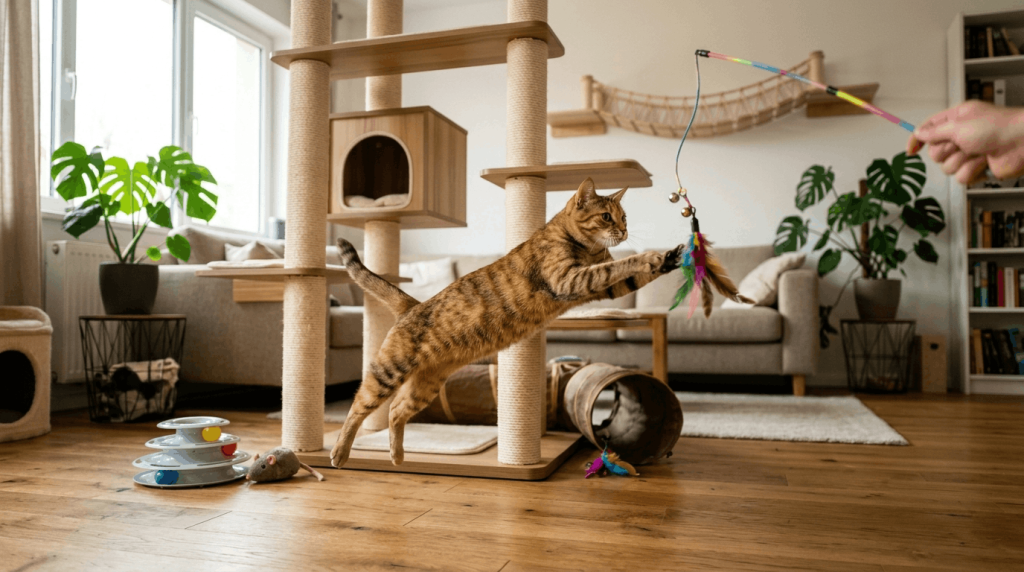
Cat trees, wall shelves, climbing towers, and window perches all motivate cats to jump, stretch, and explore regularly.
Vertical movement also increases exercise naturally without requiring large floor spaces.
Importantly, elevated resting spots help cats feel emotionally secure because they can monitor surroundings comfortably.
Cats frequently use vertical spaces more than owners initially expect once accessible options become available.
Interactive Play Builds Healthy Activity
Play remains one of the most effective ways to encourage cat movement indoors consistently.
Interactive toys that mimic prey behavior often trigger natural feline instincts immediately.
Wand toys, feather teasers, rolling balls, and motorized toys encourage chasing, pouncing, and jumping naturally.
Importantly, movement feels more rewarding when cats can engage hunting instincts successfully.
Short play sessions several times daily usually create better results than occasional long sessions.
Cats often stay mentally engaged longer when toys rotate regularly rather than remaining constantly available.
Food Puzzles Encourage Natural Exploration
Feeding methods strongly influence activity levels in indoor cats.
Owners who encourage cat movement sometimes use puzzle feeders or food-dispensing toys to increase physical and mental engagement simultaneously.
Instead of eating quickly from bowls, cats work gradually for food through problem-solving and movement.
Food puzzles encourage walking, pawing, climbing, and investigating throughout the day.
Importantly, these activities mimic natural hunting behavior more effectively than traditional feeding routines.
Cats often become more stimulated and emotionally satisfied when meals involve mild challenges and exploration.
Window Views Inspire Curiosity
Cats love observing movement outdoors.
Birds, insects, trees, people, and changing weather all provide valuable mental stimulation naturally.
Owners who encourage cat movement often place climbing structures or resting areas near windows intentionally.
Cats frequently jump, stretch, climb, and reposition themselves repeatedly while observing outdoor activity.
Importantly, window access helps reduce boredom significantly for indoor cats.
Safe screened windows or secure window perches create especially enriching experiences for curious felines.
Creating Safe Pathways Around the Home
Cats enjoy moving through environments that feel interesting and accessible.
Owners who encourage cat movement sometimes create pathways connecting climbing areas, resting spots, and play zones together.
Bookshelves, cat bridges, shelves, and furniture arrangements may all support safer movement opportunities.
Importantly, pathways help cats stay active without needing constant owner interaction.
Cats naturally explore spaces more often when movement feels rewarding and safe.
Thoughtful layouts therefore encourage healthier daily activity levels naturally.
Rotate Toys to Maintain Interest
Cats often lose interest in toys that remain available constantly.
Owners who encourage cat movement usually rotate toys regularly to maintain excitement and curiosity.
Introducing familiar toys again after short breaks often renews engagement successfully.
Simple rotation strategies help prevent boredom while keeping indoor environments mentally stimulating.
Importantly, novelty encourages exploration and activity naturally.
Cats remain more likely to chase, investigate, and move around when environments feel dynamic rather than predictable.
Encourage Climbing and Jumping Safely
Jumping supports muscle development, coordination, flexibility, and confidence.
Owners who encourage cat movement should provide sturdy and safe climbing surfaces suited to the cat’s age and physical ability.
Older cats may benefit from gradual climbing options with easier access points.
Younger cats often enjoy taller towers and energetic jumping opportunities.
Importantly, stability matters greatly because unstable furniture may create fear or injury risks.
Safe climbing experiences help cats feel more confident exploring vertically throughout the home.
Why Mental Enrichment Matters
Physical movement and mental stimulation work together closely in feline wellness.
Owners who encourage cat movement also support healthier emotional balance through enrichment activities.
Training games, scent exploration, treat hunts, and interactive puzzles all engage the feline mind constructively.
Cats experiencing healthy mental stimulation often display calmer and more balanced behavior overall.
Importantly, mentally enriched cats usually seek movement more naturally because curiosity remains active and engaged.
Multiple Resting Zones Support Exploration
Cats prefer having choices throughout their environment.
Owners who encourage cat movement often place comfortable resting areas in different rooms and heights around the home.
Moving between resting zones naturally increases activity during the day.
Cats enjoy choosing different sleeping spots depending on temperature, lighting, noise, and mood.
Importantly, accessible resting areas encourage more exploration than forcing cats into one limited location consistently.
Use Treats Strategically
Treats may help motivate hesitant or less active cats.
Owners who encourage cat movement sometimes place treats in elevated or interactive locations to promote gentle exploration.
For example, treats hidden inside puzzle toys or placed near climbing shelves encourage walking and investigation naturally.
Importantly, treats should support healthy activity without contributing to overeating or obesity.
Small portions used thoughtfully often work best for motivation and enrichment.
Helping Older Cats Stay Active
Senior cats still benefit greatly from regular movement and enrichment.
Owners who encourage cat movement should adjust environments to match changing mobility needs gradually.
Lower climbing shelves, soft ramps, heated resting spots, and accessible pathways help aging cats remain engaged comfortably.
Gentle interactive play also supports joint flexibility and emotional stimulation naturally.
Importantly, older cats may move more slowly yet still require meaningful daily activity for long-term wellness.
Reduce Stress Through Environmental Design
Stress sometimes reduces feline activity significantly.
Cats feeling anxious or overwhelmed often hide, withdraw, or avoid exploration completely.
Owners who encourage cat movement should therefore create calm and emotionally secure environments as well.
Quiet resting spaces, predictable routines, vertical escape areas, and gradual introductions to changes help reduce stress naturally.
Emotionally secure cats generally feel more confident exploring and moving throughout the home.
The Importance of Daily Interaction
Human interaction strongly influences feline activity and emotional wellness.
Owners who encourage cat movement often engage cats through short but consistent daily interaction sessions.
Talking gently, initiating play, practicing training games, or offering affection all support emotional connection naturally.
Cats frequently become more active when owners participate positively in enrichment routines.
Importantly, even independent cats benefit emotionally from regular social engagement.
Outdoor Experiences Can Help Safely
Some cats enjoy supervised outdoor experiences safely through harness walks, enclosed patios, or catios.
Owners who encourage cat movement sometimes provide controlled outdoor access to increase exploration opportunities naturally.
Fresh air, new scents, and changing environments stimulate curiosity significantly.
Importantly, outdoor experiences should always prioritize safety carefully.
Secure supervision prevents injury, escape, disease exposure, and dangerous encounters with wildlife or traffic.
Signs Your Cat Needs More Activity
Many behavioral and physical signs indicate insufficient stimulation.
Cats needing more movement sometimes gain excess weight, sleep excessively, overeat, vocalize frequently, or display destructive habits.
Owners who encourage cat movement often notice improvements in mood, energy, and behavior gradually over time.
Increased curiosity, healthier sleep patterns, and calmer nighttime behavior frequently develop alongside better activity levels.
Importantly, even small daily improvements create meaningful long-term health benefits.
A More Active Cat Is Often a Happier Cat
Creating healthier indoor lifestyles does not require expensive renovations or dramatic lifestyle changes.
Owners who encourage cat movement simply focus on supporting natural feline instincts through smarter environmental design and enrichment habits.
Climbing spaces, interactive play, food puzzles, window access, resting zones, and daily engagement all contribute to healthier emotional and physical wellness naturally.
Importantly, movement should feel rewarding and enjoyable rather than forced or stressful.
Cats thrive when environments support curiosity, exploration, and safe activity throughout the day.
As indoor spaces become more stimulating and dynamic, cats often grow more confident, playful, and emotionally balanced over time.
Ultimately, encouraging movement involves understanding what cats naturally love to do.
When owners create homes that support these instincts thoughtfully, cats enjoy healthier bodies, calmer minds, and happier daily lives indoors.
FAQ
1. Why is movement important for indoor cats?
Regular activity supports healthy weight, mental stimulation, emotional wellness, and stronger muscles and joints.
2. What toys encourage cats to move more?
Wand toys, puzzle feeders, climbing towers, and interactive balls often increase activity naturally.
3. How can I make my home more active for cats?
Add climbing spaces, window perches, play zones, and enrichment activities throughout the home.
4. Do older cats still need exercise?
Yes. Senior cats benefit from gentle movement and enrichment suited to their comfort and mobility levels.
5. Can boredom cause behavior problems in cats?
Yes. Inactive and under-stimulated cats may develop destructive habits, overeating, stress, or nighttime hyperactivity.