
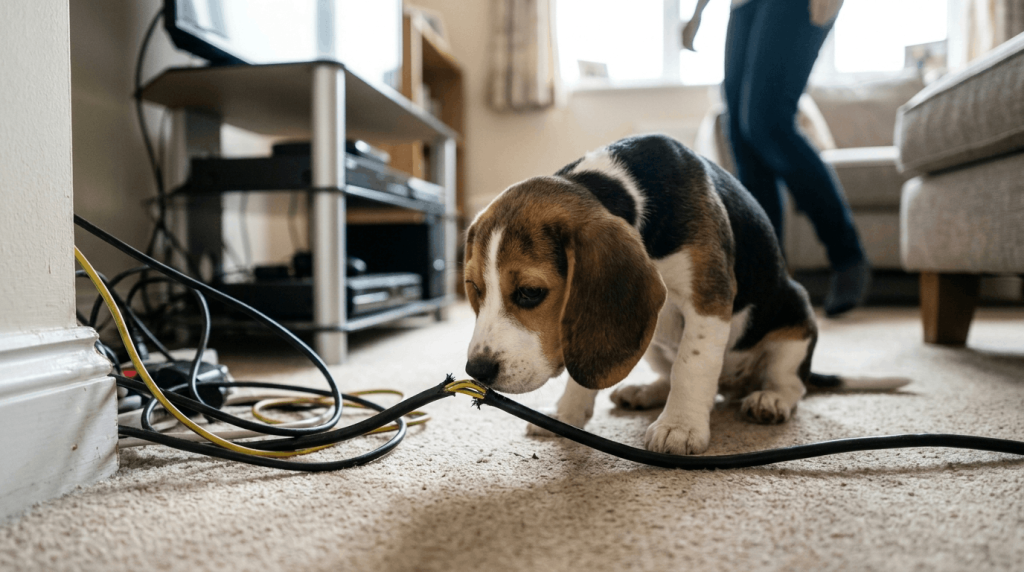

It is easy to overlook everyday household items, yet electrical cords dangerous dogs far more often than most pet owners expect. At first glance, cords seem harmless, blending into the background of daily life. However, for curious dogs, especially puppies, these wires can quickly turn into a serious hazard that leads to injury or even life-threatening emergencies.
Dogs explore the world through their mouths, which makes electrical cords particularly tempting. Whether dangling behind furniture or stretched across the floor, cords resemble chew toys. As a result, even a brief moment of unsupervised curiosity can lead to dangerous consequences. Understanding why electrical cords dangerous dogs is the first step toward creating a safer home environment.
Why Dogs Are Attracted to Electrical Cords
Dogs are naturally inquisitive, and their behavior often revolves around exploration. Puppies, in particular, are teething and actively looking for objects to chew. Electrical cords, unfortunately, provide both texture and accessibility, making them highly appealing.
In many cases, cords are left within easy reach. They may trail from appliances, televisions, or charging stations, creating an irresistible temptation. Moreover, some cords emit warmth when devices are in use, which can further attract a dog’s attention. As a result, what seems like a minor household detail becomes a potential danger.
Additionally, boredom plays a significant role. Dogs that lack mental stimulation or physical activity may seek entertainment by chewing whatever they can find. Therefore, electrical cords dangerous dogs not only because of their physical structure but also because of the behavioral tendencies of pets.
The Real Dangers Behind Electrical Cords
When discussing why electrical cords dangerous dogs, it is essential to understand the actual risks involved. These hazards go far beyond simple chewing damage.
First, electric shock is the most immediate and serious threat. When a dog bites into a live cord, electricity can pass through the body, causing burns, heart irregularities, or even sudden death. Even low-voltage cords can deliver a dangerous shock, especially for smaller dogs.
Second, oral injuries are common. Chewing through insulation can lead to severe burns in the mouth, tongue, and gums. These injuries may not always be visible immediately, yet they can worsen over time and require veterinary care.
Third, there is a risk of internal damage. If a dog swallows pieces of a cord, it can lead to choking or intestinal blockage. These conditions often require emergency surgery, making them both dangerous and costly.
Finally, secondary injuries can occur. A shocked dog may panic and run, leading to falls or collisions. Therefore, electrical cords dangerous dogs in more ways than one, affecting both immediate and long-term health.
Signs Your Dog Has Been Affected
Recognizing the signs of electrical injury is crucial. Early detection can make a significant difference in recovery outcomes.
Some dogs may show obvious symptoms, such as whining, drooling excessively, or pawing at their mouth. Others may develop burns or swelling around the lips and tongue. In more severe cases, breathing difficulties or irregular heartbeats may occur.
Additionally, behavioral changes can signal a problem. A normally active dog may become lethargic or withdrawn. If your dog suddenly avoids food or water, it may be experiencing pain from oral injuries.
Because electrical cords dangerous dogs in subtle ways as well, it is important to monitor your pet closely after any suspected exposure. Even if symptoms appear mild, a veterinary check is always recommended.
Preventing Access to Electrical Cords
Prevention is the most effective way to address why electrical cords dangerous dogs. By making simple adjustments, you can significantly reduce the risk.
Start by organizing cords and keeping them out of reach. Use cable management systems, cord covers, or tubing to hide exposed wires. These solutions not only improve safety but also create a cleaner living space.
Next, rearrange furniture strategically. Placing large items like sofas or shelves in front of outlets can block access to cords. This approach works especially well in high-risk areas where dogs frequently roam.
Moreover, unplug devices when they are not in use. Doing so eliminates the electrical current, reducing the severity of potential accidents. Although this does not remove all risk, it adds an extra layer of protection.
Since electrical cords dangerous dogs primarily due to accessibility, limiting exposure is key. Small changes in your home setup can make a big difference.
Training Your Dog to Avoid Cords
Training plays a vital role in preventing accidents. While physical barriers help, teaching your dog appropriate behavior ensures long-term safety.
Begin with basic commands such as “leave it” and “drop it.” These commands can stop a dog from chewing on cords before damage occurs. Consistent practice is essential, especially for younger dogs.
Positive reinforcement also works well. Reward your dog for choosing safe toys instead of household items. Over time, this encourages better decision-making and reduces risky behavior.
Additionally, supervision is critical. When introducing your dog to a new environment, keep an eye on their actions. If they show interest in cords, redirect their attention immediately.
Because electrical cords dangerous dogs partly due to curiosity, proper training helps manage that curiosity in a safe way.
Providing Safe Alternatives
Dogs often chew because they need stimulation. Therefore, offering appropriate alternatives can reduce the temptation to target electrical cords.
Durable chew toys are an excellent option. Look for toys designed specifically for your dog’s size and chewing strength. These products provide both mental engagement and physical satisfaction.
Interactive toys can also help. Puzzle feeders or treat-dispensing toys keep dogs occupied, reducing boredom-related chewing. When a dog is mentally stimulated, they are less likely to seek out dangerous objects.
Rotating toys regularly keeps them interesting. Dogs may lose interest in the same toy over time, so introducing new options helps maintain engagement.
Since electrical cords dangerous dogs when they lack alternatives, providing safe outlets for chewing is a practical solution.
Using Deterrents for Extra Protection
In some cases, additional measures are necessary. Deterrents can discourage dogs from approaching electrical cords.
Bitter sprays are commonly used for this purpose. These products have an unpleasant taste that discourages chewing. Applying them to cords can reduce interest, especially for persistent chewers.
Cord protectors made of tough materials can also prevent damage. These coverings make it harder for dogs to bite through wires, adding another layer of safety.
Furthermore, keeping areas clean and organized reduces temptation. A clutter-free environment minimizes the chances of cords becoming a target.
Because electrical cords dangerous dogs in multiple ways, combining deterrents with other strategies creates a more effective safety plan.
When to Seek Veterinary Help
Even with precautions, accidents can happen. Knowing when to seek professional help is essential.
If your dog has chewed an electrical cord, immediate evaluation is recommended. Even if there are no visible injuries, internal damage may still be present. A veterinarian can assess the situation and provide appropriate treatment.
Emergency signs include difficulty breathing, seizures, or collapse. These symptoms require urgent care and should never be ignored.
Additionally, follow-up visits may be necessary. Burns and internal injuries can develop over time, so monitoring your dog’s recovery is important.
Understanding that electrical cords dangerous dogs beyond initial symptoms helps ensure proper care and prevention of complications.
Creating a Dog-Safe Home Environment
Building a safe home involves more than addressing one hazard. It requires a comprehensive approach that considers all potential risks.
Start by conducting a home inspection. Identify areas where cords are exposed and take steps to secure them. This proactive approach helps prevent accidents before they occur.
Next, establish routines that promote safety. Regularly check for damaged cords and replace them immediately. Worn wires are more likely to cause injuries, making maintenance essential.
In addition, educate everyone in the household. Ensuring that family members understand why electrical cords dangerous dogs encourages consistent safety practices.
Finally, consider your dog’s individual behavior. Some dogs are more prone to chewing than others. Tailoring your approach to your pet’s needs improves effectiveness and long-term success.
Conclusion
Electrical cords may seem like a minor concern, yet they pose a serious threat to dogs in everyday environments. From electric shock to internal injuries, the risks are real and often underestimated. By understanding why electrical cords dangerous dogs, pet owners can take meaningful steps to reduce these hazards.
Prevention, training, and proper supervision work together to create a safer home. Small adjustments, such as organizing cords and providing safe alternatives, can make a significant difference. While no environment is completely risk-free, proactive measures greatly reduce the chances of accidents.
Ultimately, keeping your dog safe requires awareness and action. When you recognize the hidden dangers in your home, you are better equipped to protect your pet and ensure their well-being for years to come.
FAQ
- Why do dogs like chewing on wires?
Dogs chew on wires due to curiosity, teething, and boredom. The texture and accessibility make cords appealing targets. - What should I do if my dog bites a power cord?
Immediately unplug the cord if safe and take your dog to a veterinarian. Even minor exposure can cause hidden injuries. - Are puppies at higher risk from household hazards?
Yes, puppies are more likely to chew on objects as they explore and teethe, making them more vulnerable to injuries. - Can cord covers completely prevent accidents?
Cord covers reduce risk but do not eliminate it. Combining them with training and supervision provides better protection. - How can I stop my dog from chewing household items?
Provide safe chew toys, use positive reinforcement, and keep harmful objects out of reach to encourage better habits.