
Learning how to earn your cat’s trust can feel like trying to befriend a mysterious roommate. They watch quietly. They judge silently. Sometimes, they disappear when you least expect it. Yet, when trust is earned, the relationship becomes incredibly rewarding.
Cats do not give trust freely. Instead, they offer it slowly, piece by piece. Every interaction matters. Every reaction leaves an impression. Unlike dogs, cats value autonomy above affection. When that autonomy is respected, trust begins to grow.
Many owners unintentionally sabotage trust by trying too hard. Reaching. Grabbing. Forcing closeness. Although well-intended, these actions often push cats further away. Fortunately, there is a better path.
Let’s explore how to earn your cat’s trust in a way that feels natural, calm, and lasting.
Understanding What Trust Means to a Cat
To earn your cat’s trust, you must first understand how cats define safety. Trust is not cuddles.
Cats are both predators and prey. Because of this, their instincts prioritize control. Sudden movements or loud sounds feel threatening.
When a cat trusts you, they relax in your presence. They choose to stay nearby. They expose vulnerable areas like the belly or neck. These are silent compliments.
Trust is shown through behavior, not affection. Recognizing these signs prevents unrealistic expectations.
Why Forcing Affection Breaks Trust
Many cats retreat because boundaries are ignored. Picking up a cat who does not want it creates anxiety. Holding them too long reinforces fear.
From a cat’s perspective, restraint equals danger. Even gentle restraint can be stressful.
Instead of forcing affection, allow choice. Let your cat approach you. Let them leave freely.
When choice exists, confidence grows. Confidence fuels trust.
Creating a Safe Environment to Earn Your Cat’s Trust
Environment shapes emotional responses. A chaotic home feels unpredictable. Predictability builds safety.
Provide hiding spots. Boxes, tunnels, and covered beds give cats control over exposure.
Vertical space matters as well. Shelves and cat trees allow observation without interaction.
Keep litter boxes clean. Place food and water away from noise.
A calm environment sends a powerful message. This place is safe.
Using Body Language That Builds Trust
Cats read body language fluently. Humans often forget this.
Direct staring feels confrontational. Instead, soften your gaze. Blink slowly.
Approach sideways rather than head-on. Lower your body when possible.
Extend a finger instead of reaching over the head. Let the cat initiate contact.
These subtle adjustments communicate respect.
The Power of Routine in Building Trust
Routine creates predictability. Predictability reduces anxiety.
Feed at consistent times. Play regularly. Clean litter boxes on schedule.
Avoid sudden changes when possible. When changes occur, introduce them gradually.
Routine tells your cat what to expect. Expectation builds comfort.
Comfort opens the door to trust.
How to Earn Your Cat’s Trust Through Play
Play is a universal language for cats. It releases stress and builds confidence.
Use interactive toys. Wand toys work best because they maintain distance.
Move toys like prey. Slow. Erratic. Purposeful.
Avoid using hands as toys. Hands should always mean safety.
After play, offer food. This completes the hunt cycle and reinforces positive association.
Reading and Respecting Stress Signals
To earn your cat’s trust, you must listen without words.
Watch the tail. Fast flicking signals irritation. Puffed tails indicate fear.
Ears speak volumes. Flattened ears mean discomfort.
Pauses during interaction matter. If your cat walks away, respect it.
Ignoring signals damages trust. Honoring them strengthens it.
Using Food as a Trust-Building Tool
Food builds positive associations quickly. However, timing matters.
Sit nearby during meals without touching. Let your presence feel neutral.
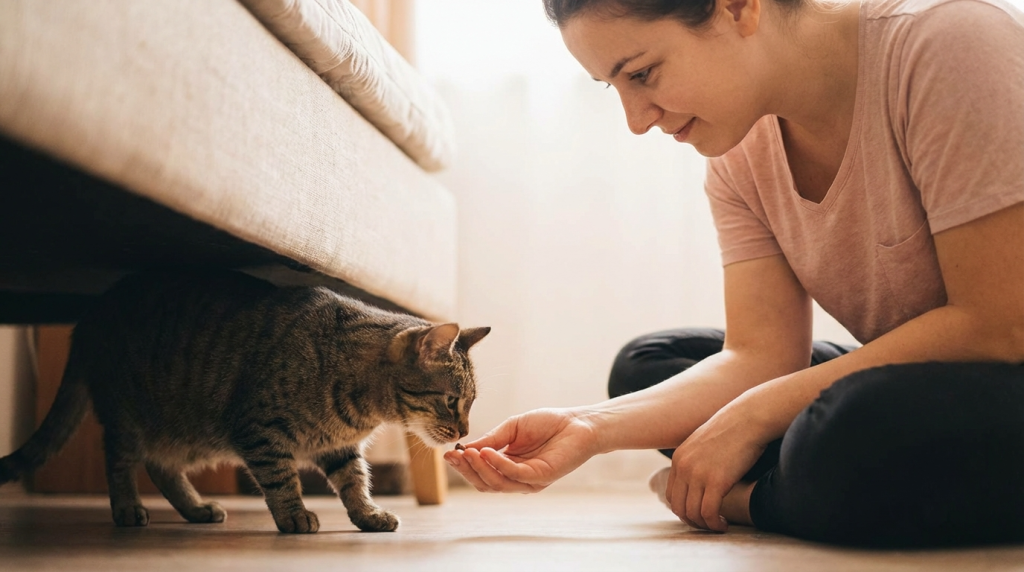
Hand-feeding treats can help once comfort increases. Toss treats at first.
Avoid hovering. Calm proximity works better.
Over time, your presence becomes part of the reward.
Helping Shy or Fearful Cats Feel Secure
Some cats carry emotional scars. Past trauma shapes present behavior.
Progress may feel slow. That is normal.
Begin with distance. Sit quietly in the same room. Read. Scroll. Ignore.
Let curiosity work. Cats approach when ready.
Celebrate small wins. A glance. A step closer. A relaxed posture.
Trust grows in inches, not leaps.
Why Punishment Destroys Trust
Punishment teaches fear, not understanding. Yelling. Spraying water. Chasing.
These actions link you with danger.
Instead, redirect behavior. Remove temptations. Offer alternatives.
Calm correction preserves trust. Fear-based correction erodes it.
Earning Trust With Multiple Cats in the Home
Group dynamics affect trust. Competition creates tension.
Provide multiple resources.
Spend individual time with each cat.
Avoid comparisons. Each relationship develops uniquely.
Harmony encourages confidence.
How Long It Takes to Earn Your Cat’s Trust
There is no timeline. Some cats bond quickly. Others need months.
Set realistic expectations. Measure progress emotionally, not physically.
Trust deepens over time. Once broken, it takes longer to rebuild.
Patience always pays dividends.
When Trust Suddenly Regresses
Regression happens. Illness. Changes. Stressful events.
Do not take it personally.
Return to basics. Space. Routine. Calm presence.
Trust often returns faster the second time.
Signs Your Cat Truly Trusts You
Sleeping nearby signals safety. Grooming in your presence shows comfort.
Slow blinking indicates affection.
Exposing the belly shows vulnerability, not always an invitation.
Trust feels quiet. It does not demand attention.
When Professional Help Is Needed
Severe fear or aggression deserves expert guidance.
Veterinary behaviorists identify underlying causes.
Early intervention prevents chronic stress.
Asking for help protects your bond.
Conclusion
Learning how to earn your cat’s trust without forcing it transforms your relationship. When you respect boundaries, create safety, and communicate calmly, trust grows naturally. Over time, your cat chooses connection because it feels safe, not because it is demanded. That choice is the truest form of trust.
FAQ
1. How long does it take to earn your cat’s trust?
It varies widely. Some cats bond quickly, while others need months of consistency.
2. Should I pick up my cat to show affection?
Only if your cat clearly enjoys it. Forced handling often damages trust.
3. Can older cats learn to trust new owners?
Yes. With patience, routine, and respect, trust can develop at any age.
4. Does ignoring my cat help build trust?
Calm, non-intrusive presence often helps shy cats feel safer initially.
5. What is the biggest mistake people make with cats?
Forcing interaction instead of allowing the cat to choose connection.