
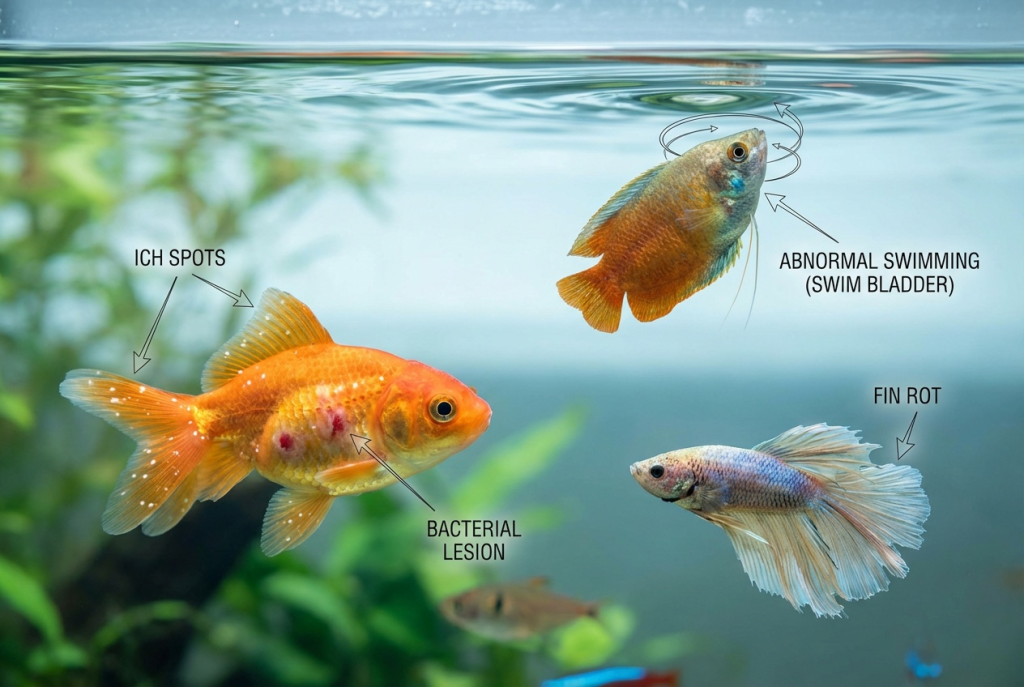

When you keep fish, you quickly discover how delicate aquatic life can be. A small shift in water quality, a new tank mate, or an unnoticed injury may trigger health problems. While fish often hide discomfort, they still show subtle changes when something is wrong. Because illness progresses quietly, learning how to spot early signs of fish disease becomes essential. Early detection saves lives, reduces stress, and prevents entire tank outbreaks.
Many fish keepers assume disease appears suddenly. However, most conditions begin with small, nearly invisible symptoms. When you pay close attention to behavior, body condition, and tank environment, you can catch these early signs before they escalate. The process becomes easier with practice, especially when you know what to look for and how to respond.
This article teaches you how to identify early signs of fish disease, why they matter, and what steps help you intervene quickly. With consistent observation and calm responses, you can keep your aquarium stable and your fish healthy.
Why Identifying Early Signs of Fish Disease Matters
Recognizing early signs fish disease makes a huge difference in your tank’s overall health. Because fish rely on stable water, consistent routines, and proper nutrition, even small problems may turn into serious threats. Disease spreads quickly in enclosed environments. One sick fish can expose the entire group.
When you catch issues early:
- Treatment becomes easier
- Stress levels drop
- Survival rates improve
- Outbreaks remain contained
- Recovery time shortens
Ignoring early signs often leads to late-stage symptoms, which are harder to treat and more dangerous. Disease rarely disappears without action, so early intervention protects both your fish and your tank ecosystem.
Watch for Behavioral Changes First
Behavior is often the earliest clue. Since fish can’t vocalize discomfort, they express stress through movement, posture, and interaction. Many aquarists overlook these subtle changes because they seem harmless at first.
Key behavioral early signs fish disease include:
- Lethargy or hiding more than usual
- Gasping at the surface
- Restless pacing or erratic movement
- Rubbing against decorations (“flashing”)
- Isolating from the group
- Rapid or heavy breathing
These behaviors rarely happen without a cause. Although stress can trigger them, disease often sits at the root. When behavior shifts suddenly, investigate water quality immediately and observe your fish more closely.
Why Behavior Changes First
Behavior changes first because it reflects internal discomfort. Even before external symptoms appear, fish feel stressed as their immune system struggles. Because fish hide illness to avoid predation, these early signs may be subtle. Consistent observation helps you catch them early.
Check the Fins for Early Damage
Fins often reveal early signs fish disease before other body parts. Since fins are delicate, they react quickly to stress, infection, and poor water quality.
Common fin-related early indicators include:
- Frayed edges
- Small tears
- Dark or pale discoloration
- Clamped fins held close to the body
- Red streaks
- White edging or cloudiness
Clamped fins, in particular, show immediate distress. Fish pull their fins inward when they feel weak or irritated. Because this symptom develops early, you should take it seriously.
What Fin Damage Suggests
Fin damage may point to:
- Bacterial infections
- Fungal infections
- Aggressive tank mates
- Poor water conditions
- Parasites like ich or velvet
Checking fins often helps you detect problems before they spread to the body.
Observe Breathing and Gill Health
Healthy fish breathe steadily. When breathing changes, something has shifted internally or environmentally. Gill issues remain one of the most common early signs fish disease.
Watch for:
- Rapid breathing
- Heavy gill movement
- Gills that appear swollen
- Gills that look pale or discolored
- A fish breathing only on one side
When gills struggle, oxygen levels may be low, parasites may be present, or toxins may be building in the water. Early detection helps you avoid life-threatening outcomes.
Why Gill Changes Matter
Gills control oxygen intake and waste release. When they become irritated, your fish loses energy quickly. Gill diseases progress fast, so monitoring early signs protects your entire aquarium.
Look Closely at the Skin and Scales
Fish skin often displays early signs fish disease long before severe lesions appear. Because scales react to irritation, they offer clear visual clues.
Common early skin indicators include:
- Faded color
- Patchiness
- Small white spots
- Red or pink irritation
- Excess mucus
- Raised scales
- A dull appearance
A change in color can signal stress, infection, or parasitic activity. Even mild shifts deserve attention.
Why Skin and Scale Changes Appear Early
The skin is a protective barrier. When something irritates your fish—poor water quality, rising ammonia, parasites, or fungus—the skin reacts immediately. Observing your fish under good lighting helps you catch early changes faster.
Monitor Appetite for Subtle Early Signs
Healthy fish eat eagerly. When appetite changes, the cause usually relates to stress or illness. Loss of appetite is one of the most reliable early signs fish disease.
Look for:
- Mild hesitation when eating
- Complete refusal of food
- Spitting out food
- Eating slower than usual
- Avoiding specific foods
Because appetite reflects internal health, even a small change should prompt observation and testing.
Why Appetite Drops as Disease Begins
Illness affects energy, digestion, and oxygen levels. When your fish feels unwell, eating becomes difficult. Since fish have fast metabolisms, extended fasting weakens them quickly.
Check for Early Signs of Parasites
Parasites spread quickly, so spotting early signs prevents outbreaks. Many parasite-related symptoms appear subtle at first.
Watch for:
- Rubbing against objects
- Tiny white dots (ich)
- Dust-like yellow coating (velvet)
- Stringy white feces
- Twitching or shaking
Parasites weaken fish quickly, but early treatment can stop them from spreading to other tank mates.
Why Parasites Show Subtle Symptoms First
Parasites begin by irritating the skin or gills, and irritation appears as mild discomfort. Knowing these early signs helps you respond before full infestations begin.
Observe Swimming Patterns for Stability Issues
Swimming patterns reveal important early signs fish disease. When something disrupts a fish’s balance or buoyancy, subtle changes emerge.
Look for:
- Tilting
- Wobbling
- Floating upward
- Sinking uncontrollably
- Difficulty swimming straight
These early symptoms may indicate swim bladder issues, digestive problems, or internal infection.
Why Swimming Changes Matter Early
Swimming reflects internal organ function. When something affects digestion, buoyancy, or muscle control, your fish struggles to maintain normal posture.
Inspect the Mouth and Eyes
Though often overlooked, the mouth and eyes show early signs fish disease as well. You may spot issues that develop long before they become severe.
Signs include:
- Cloudy eyes
- Swollen eyelids
- Small mouth lesions
- Difficulty closing the mouth
- Redness or irritation
These symptoms often appear early in bacterial or fungal infections.
Why Mouth and Eye Changes Appear Early
These areas react quickly to irritation, toxins, and injury. Developing infections often begin here before spreading elsewhere.
Evaluate Tank Conditions to Prevent Disease Progression
Many early signs fish disease arise because of environmental stress. Poor water conditions compromise the immune system and allow pathogens to grow.
Check:
- Ammonia levels
- Nitrite and nitrate levels
- Temperature consistency
- Filtration performance
- Water clarity
- Tank overcrowding
Because tank issues develop gradually, early corrections protect your fish from disease.
Why Water Quality Affects Disease Risk
Stable water supports strong immunity. When quality drops, your fish becomes vulnerable. Testing regularly helps you correct problems early.
Test the Water When You Notice Early Symptoms
Once you spot early signs fish disease, test the water immediately. Many symptoms stem from ammonia spikes or temperature shifts. Correcting the environment often stops disease progression.
Always test:
- Ammonia
- Nitrite
- Nitrate
- pH
- Temperature
- Hardness (GH/KH)
Quick corrections protect your fish while you observe for further signs.
Respond Quickly to Early Signs Fish Disease
Early intervention prevents small issues from turning into tank-wide outbreaks. When you act quickly, treatment becomes easier and recovery begins sooner.
Respond by:
- Separating the sick fish
- Improving water quality
- Reducing stress
- Adjusting feeding routines
- Using appropriate medication when needed
The earlier you respond, the higher the recovery rate.
Keep a Daily Observation Routine
Routine observation helps you catch early signs fish disease consistently. Spend a few minutes each day watching your fish under good lighting.
Focus on:
- Behavior
- Breathing
- Fins
- Color
- Swimming
- Appetite
Daily care allows you to spot subtle changes long before problems escalate.
Conclusion
Learning how to spot early signs fish disease is one of the most important skills for any aquarist. When you observe behavior, body condition, and water quality regularly, you catch problems early and protect your entire tank. Early detection makes treatment easier, reduces stress, and prevents outbreaks that can devastate your aquarium. With calm, consistent attention, your fish remain healthy, active, and vibrant for years.
FAQ
1. What is the most common early sign of fish disease?
Lethargy and appetite changes are often the first indicators.
2. How often should I observe my fish for disease signs?
Daily observation helps you spot problems early.
3. Can poor water quality cause early disease symptoms?
Yes. Ammonia spikes or unstable temperature often trigger early signs.
4. Should I isolate a fish showing early symptoms?
Isolation is recommended if symptoms worsen or spread.
5. Do all early signs mean disease?
Not always, but they signal stress or discomfort that needs attention.