
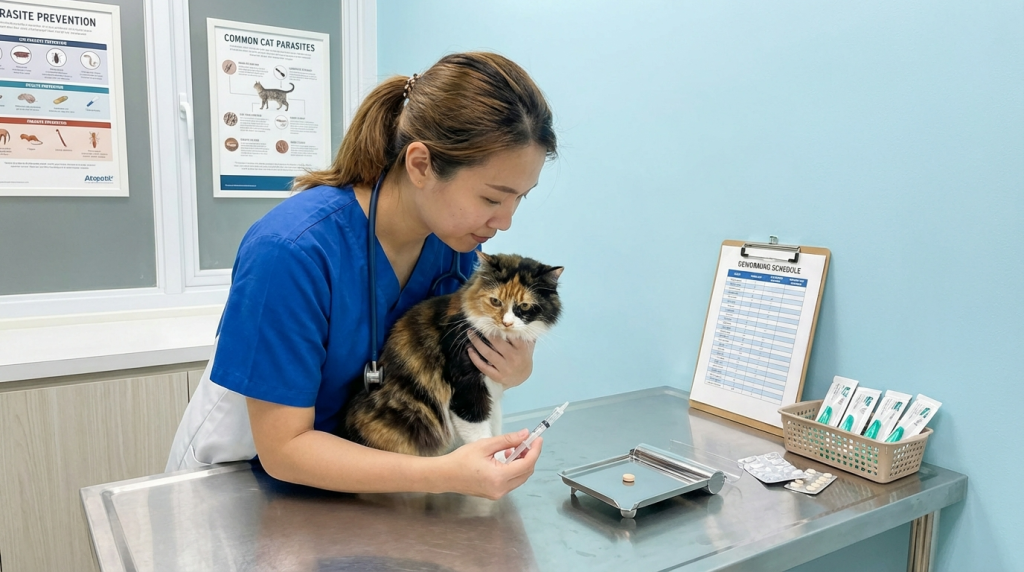

Many cat owners assume indoor life equals parasite-free life. After all, if your cat never touches grass or hunts prey, what risk could there be? However, the need to deworm an indoor cat is more nuanced than most people think.
Parasites are opportunistic. They do not always require outdoor exposure to find a host. While indoor cats face lower risk than outdoor roamers, they are not immune. Therefore, knowing how often to deworm an indoor cat depends on several important factors.
Let’s explore the science, the risks, and the practical schedule that keeps your feline healthy without unnecessary treatments.
Why You May Still Need to Deworm an Indoor Cat
It feels logical to assume indoor cats are safe from worms. However, parasites are persistent.
Worm eggs can be tracked inside on shoes. Fleas can hitch a ride on clothing or other pets. Even insects that enter through open doors can carry parasites.
Additionally, kittens often contract worms from their mothers before adoption. If a kitten was not properly treated, dormant parasites may still be present.
Therefore, while the need to deworm an indoor cat is less frequent than for outdoor cats, it should not be ignored entirely.
Prevention begins with awareness.
Common Parasites That Affect Indoor Cats
Understanding which parasites may affect your cat helps determine how often to deworm an indoor cat.
Common intestinal worms include:
- Roundworms
- Tapeworms
- Hookworms
- Whipworms (less common in cats)
Roundworms are especially common in kittens. Tapeworms are usually linked to flea ingestion. Hookworms, although rarer indoors, can still occur.
Because symptoms can be subtle, routine screening is important.
Signs Your Indoor Cat May Need Deworming
Sometimes parasites announce themselves clearly. Other times, they stay hidden.
Watch for:
- Vomiting
- Diarrhea
- Weight loss
- Bloated abdomen in kittens
- Visible worms in stool
- Excessive scooting
However, many cats show no obvious signs at first. That is why routine veterinary checks matter.
If symptoms appear, consult a veterinarian immediately before choosing treatment.
How Often Should You Deworm an Indoor Cat?
The short answer depends on age and risk.
For kittens, deworming is typically done every two to three weeks until about three months of age. This schedule ensures early parasite removal.
For healthy adult indoor cats, routine deworming may not be required every month. Instead, annual fecal exams are often recommended.
If a fecal test shows parasites, targeted treatment is prescribed.
Therefore, instead of automatically deworming an indoor cat on a strict monthly schedule, many veterinarians prefer diagnostic testing first.
The Role of Fecal Testing Before You Deworm an Indoor Cat
Modern veterinary care emphasizes precision.
Rather than treating blindly, fecal exams identify specific parasites. This approach prevents overuse of medications.
When you deworm an indoor cat unnecessarily, you may expose them to medications they do not need.
Annual fecal testing, sometimes twice yearly for higher-risk households, provides reassurance.
Testing allows targeted treatment rather than routine dosing.
Indoor Cats With Higher Risk Factors
Not all indoor cats share the same risk level.
You may need to deworm an indoor cat more frequently if:
- You have multiple pets
- Other pets go outdoors
- Flea exposure has occurred
- Your cat previously had parasites
- You foster animals regularly
In multi-pet homes, parasites can spread quickly. Therefore, your veterinarian may suggest periodic preventative deworming.
Context matters.
Can Fleas Lead to Parasites Indoors?
Yes, fleas are a common trigger.
Tapeworms are transmitted when cats ingest infected fleas during grooming. Even indoor cats can encounter fleas brought inside on clothing or other pets.
Therefore, flea prevention plays a critical role when deciding how often to deworm an indoor cat.
If flea infestations occur, deworming may be recommended immediately.
Is Routine Preventative Deworming Necessary?
In some regions, routine deworming is practiced every three to six months. However, in low-risk indoor environments, annual screening is often sufficient.
Veterinary guidance should be followed based on geographic parasite prevalence.
Because climate influences parasite survival, local advice matters greatly.
A cat in a warm, humid area may face higher parasite pressure than one in colder regions.
Natural Remedies vs Veterinary Dewormers
Some owners explore herbal or natural treatments.
However, natural remedies are rarely proven effective against established parasites. When you need to deworm an indoor cat, prescription medication offers reliable results.
Veterinary dewormers target specific parasites precisely. Dosing is calculated based on weight.
Avoid over-the-counter products without professional guidance. Incorrect medication can be ineffective or harmful.
Deworming Safety and Side Effects
Most modern dewormers are safe when used properly.
Occasionally, mild side effects may occur. These can include temporary vomiting or lethargy.
Severe reactions are rare but possible.
Always follow dosing instructions carefully. Never use dog dewormers on cats.
If unusual symptoms appear after treatment, contact your veterinarian promptly.
Kittens vs Adult Cats: Different Deworming Needs
Kittens require more frequent attention.
Because roundworms are common in young cats, early and repeated treatments are standard practice.
Adult indoor cats with no exposure risks may only require treatment when testing confirms parasites.
The decision to deworm an indoor cat changes as they age.
Preventing Parasites Without Overmedicating
Prevention focuses on hygiene and flea control.
Clean litter boxes daily. Vacuum regularly. Wash bedding frequently.
Maintain year-round flea prevention if recommended by your veterinarian.
Limit exposure to stray animals.
By reducing risk factors, you may reduce how often you need to deworm an indoor cat.
Human Health and Zoonotic Concerns
Some intestinal worms can infect humans, especially children.
Although rare in strictly indoor environments, roundworm eggs can pose risks.
Regular veterinary checkups protect both pets and people.
Therefore, proactive screening supports household health overall.
When to Seek Immediate Veterinary Care
If your indoor cat shows persistent vomiting, diarrhea, or weight loss, do not delay.
Even if parasites are suspected, proper diagnosis is critical.
Self-treatment without testing may mask underlying issues.
Timely veterinary evaluation ensures accurate treatment.
Conclusion: Balanced Prevention for Indoor Cats
To deworm an indoor cat appropriately, balance caution with practicality.
Indoor cats face lower risk than outdoor adventurers. However, parasites can still appear through fleas, contaminated objects, or early-life exposure.
Kittens require scheduled deworming. Adult indoor cats benefit from annual fecal testing and targeted treatment.
Instead of guessing, rely on veterinary guidance.
With proper screening, flea prevention, and hygiene, you protect your cat’s digestion, immunity, and overall vitality without unnecessary medication.
Thoughtful care, not routine over-treatment, keeps your indoor companion thriving.
FAQs
- Do all indoor cats need regular deworming?
Not necessarily. Many healthy indoor cats only need annual fecal testing unless risk factors are present. - How often should kittens be dewormed?
Kittens are typically dewormed every two to three weeks until about three months of age. - Can indoor cats get worms without going outside?
Yes, parasites can enter through fleas, contaminated shoes, or infected mother cats. - Is it safe to deworm an indoor cat without testing first?
While possible, veterinary testing ensures targeted treatment and avoids unnecessary medication. - What is the best way to prevent worms in indoor cats?
Maintain flea prevention, practice good hygiene, and schedule regular veterinary checkups.