

Parrots and cockatiels are not decorative pets. They are intelligent, emotional, and deeply routine-driven animals. When care feels inconsistent, stress appears quickly. When structure is present, confidence grows just as fast. That is why a daily care routine parrots and cockatiels can depend on is not optional. It is essential.
In the wild, these birds wake, forage, socialize, and rest on predictable cycles. Captivity removes danger but should never remove rhythm. Without routine, parrots and cockatiels may scream, pluck feathers, withdraw, or become aggressive. These behaviors are often misunderstood. In reality, they are signals.
Think of a daily routine like a steady heartbeat. When it stays consistent, everything works smoothly. When it becomes erratic, the entire system struggles.
With the right daily care routine, parrots and cockatiels feel safe, stimulated, and emotionally balanced. Let’s explore what that routine should actually look like.
Why a Daily Care Routine for Parrots Matters
Routine creates predictability. Predictability creates safety. Safety allows learning and bonding.
Parrots and cockatiels rely heavily on environmental cues. Light, sound, food timing, and interaction all shape their emotional state. When these cues change randomly, anxiety increases.
A daily care routine parrots respond to reduces stress hormones. As a result, immunity improves, digestion stabilizes, and behavior becomes calmer.
Routine also helps humans. When care follows a rhythm, important tasks are less likely to be forgotten. Everyone benefits from structure.
Morning Care Routine Parrots and Cockatiels Need
Mornings set the emotional tone for the day. Birds wake early, often with the sun. Meeting that rhythm matters.
Start with a calm greeting. Soft voices reassure birds as the day begins. Sudden noise can startle sensitive species.
Next, uncover the cage gradually if a cover is used. Light exposure helps regulate circadian rhythms.
A fresh water change should happen every morning. Clean water supports hydration and prevents bacteria growth.
The daily care routine parrots thrive on begins with calm, predictable mornings.
Morning Feeding in a Daily Care Routine Parrots Prefer
Breakfast is not just nutrition. It is enrichment.
Offer fresh foods in the morning. Vegetables, leafy greens, and limited fruit work well. Chop sizes should match species preferences.
Pellets can be offered alongside fresh food. Seeds should remain limited unless advised otherwise.
Remove uneaten fresh food after a few hours. Clean bowls prevent spoilage.
A consistent feeding schedule helps birds feel secure. Food arriving on time builds trust.
Daily Cage Maintenance for Parrots and Cockatiels
Cleanliness supports health. However, over-cleaning can disrupt scent familiarity.
Spot-clean daily. Remove droppings, food debris, and feathers from cage floors and perches.
Wipe visibly soiled areas with bird-safe cleaners. Avoid harsh chemicals.
Weekly deep cleaning can handle everything else.
The daily care routine parrots benefit from balances hygiene with environmental stability.
Social Interaction in a Daily Care Routine Parrots Need
Parrots and cockatiels are social by nature. Interaction is not optional.
Daily conversation matters. Talk, sing, or read aloud. Birds learn voice patterns and respond emotionally.
Out-of-cage time should happen every day. Supervised freedom supports mental health and muscle strength.
Training sessions provide structure. Short, positive sessions improve communication and confidence.
The daily care routine parrots require includes social nourishment just like food.
Mental Stimulation Throughout the Day
Intelligence demands engagement. Bored birds create their own stimulation, often destructively.
Rotate toys regularly. Foraging toys encourage natural behaviors.
Puzzle feeders stimulate problem-solving. Shreddable toys satisfy chewing instincts.
Mental stimulation should feel challenging but not frustrating.
A strong daily care routine parrots enjoy includes variety without chaos.
Physical Activity in a Daily Care Routine Parrots Depend On
Movement keeps joints healthy and prevents obesity.
Encourage flight if safe and appropriate. Cockatiels especially benefit from short flights.
For clipped birds, climbing structures and play gyms support exercise.
Avoid forcing movement. Encourage activity through play instead.
Physical health supports emotional stability.
Midday Rest and Downtime
Rest matters as much as stimulation.
Birds naturally rest during midday hours. Respect this rhythm.
Avoid constant interaction. Overstimulation causes irritability.
Quiet time allows nervous systems to reset.
The daily care routine parrots thrive on includes balanced activity and rest.
Afternoon Engagement and Observation
Afternoons offer opportunities for gentle interaction.
Observe behavior changes. Appetite, posture, and vocal patterns provide health clues.
Light training or interaction fits well here.
This is also a good time for grooming assistance if needed.
Daily observation prevents small issues from becoming serious.
Grooming as Part of a Daily Care Routine Parrots Need
Most grooming is self-managed. However, support helps.
Provide clean bathing water several times per week. Some birds prefer misting.
Check feathers and skin casually during interaction.
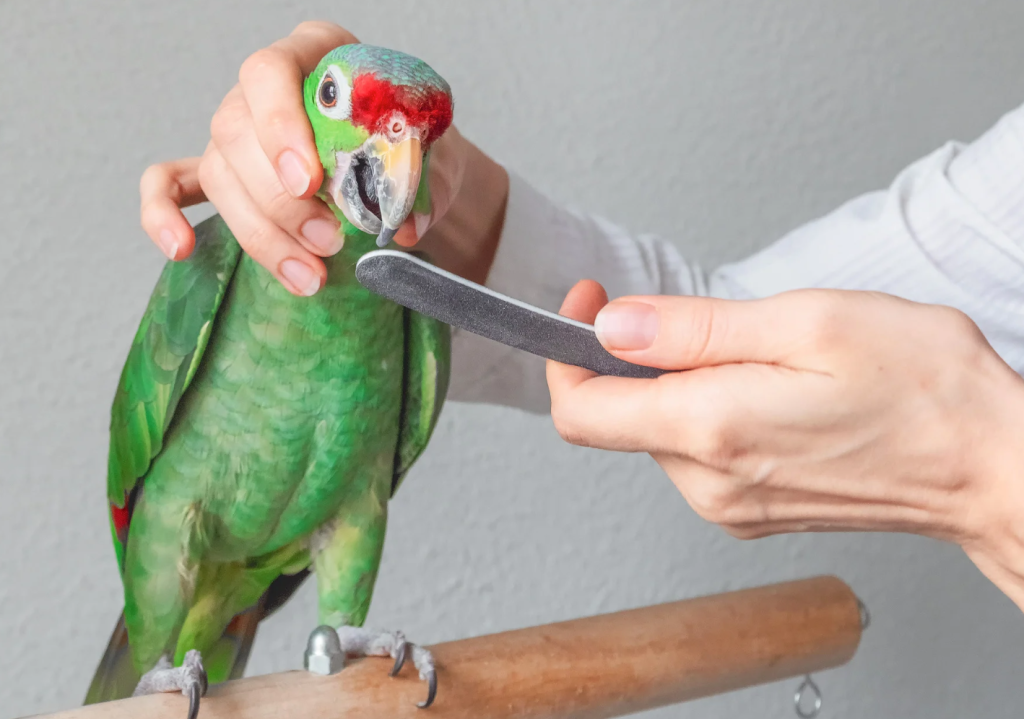
Trim nails and beaks only when necessary and safely.
Grooming should never feel forced.
Evening Feeding and Wind-Down Routine
Evenings signal rest approaching.
Offer remaining pellets or a small portion of food if needed.
Reduce stimulation gradually. Lower lights. Quieter voices help prepare for sleep.
Predictable evenings prevent night anxiety.
A consistent daily care routine parrots rely on includes clear day-to-night transitions.
Sleep and Darkness in a Daily Care Routine Parrots Require
Sleep is critical. Most parrots and cockatiels need 10–12 hours of uninterrupted darkness.
Use cage covers if the environment is noisy or bright.
Avoid late-night disturbances.
Sleep deprivation causes aggression, screaming, and health decline.
Protecting sleep protects everything else.
Weekly Adjustments Within a Daily Routine
Routine does not mean rigidity.
Weekly adjustments keep enrichment fresh.
Rotate toys weekly. Introduce new foods gradually.
Review cage setup monthly.
A stable daily care routine parrots depend on still allows thoughtful variation.
Signs the Daily Care Routine Is Working
Relaxed posture. Bright eyes. Consistent appetite.
Engaged interaction without clinginess.
Quiet contentment between activities.
These signs confirm emotional balance.
Common Mistakes in Parrot and Cockatiel Care
Skipping interaction leads to loneliness.
Inconsistent feeding times cause stress.
Overstimulation creates irritability.
Ignoring sleep damages behavior.
Awareness prevents these mistakes.
Adapting the Routine for Cockatiels Specifically
Cockatiels are sensitive and flock-oriented.
They thrive on gentle voices and predictable schedules.
Whistling and soft music often comfort them.
A daily care routine parrots and cockatiels share should respect these sensitivities.
Adapting the Routine for Larger Parrots
Larger parrots need more mental challenge.
Training becomes essential.
Destructive behaviors often signal boredom.
Adjust enrichment intensity accordingly.
Long-Term Benefits of a Consistent Daily Care Routine
Consistency builds trust.
Trust improves cooperation.
Cooperation strengthens bonds.
A stable daily care routine parrots experience leads to longer, healthier lives.
Conclusion
A daily care routine parrots and cockatiels can rely on is the foundation of their wellbeing. Structure provides safety. Safety encourages confidence. Confidence leads to harmony.
These birds do not need perfection. They need predictability, respect, and engagement.
When daily care becomes a rhythm rather than a chore, parrots and cockatiels flourish. The reward is a calm, connected companion who feels secure in your care.
FAQ
1. How long should parrots and cockatiels be out of their cage daily?
Most benefit from several hours of supervised out-of-cage time each day.
2. Do parrots need interaction every day?
Yes, daily social interaction is essential for emotional health.
3. How important is sleep for parrots and cockatiels?
Extremely important. Lack of sleep leads to stress and behavior problems.
4. Can routines be adjusted for work schedules?
Yes, as long as timing stays consistent and interaction is meaningful.
5. What happens if a daily routine is inconsistent?
Inconsistency often causes anxiety, screaming, or withdrawal over time.