
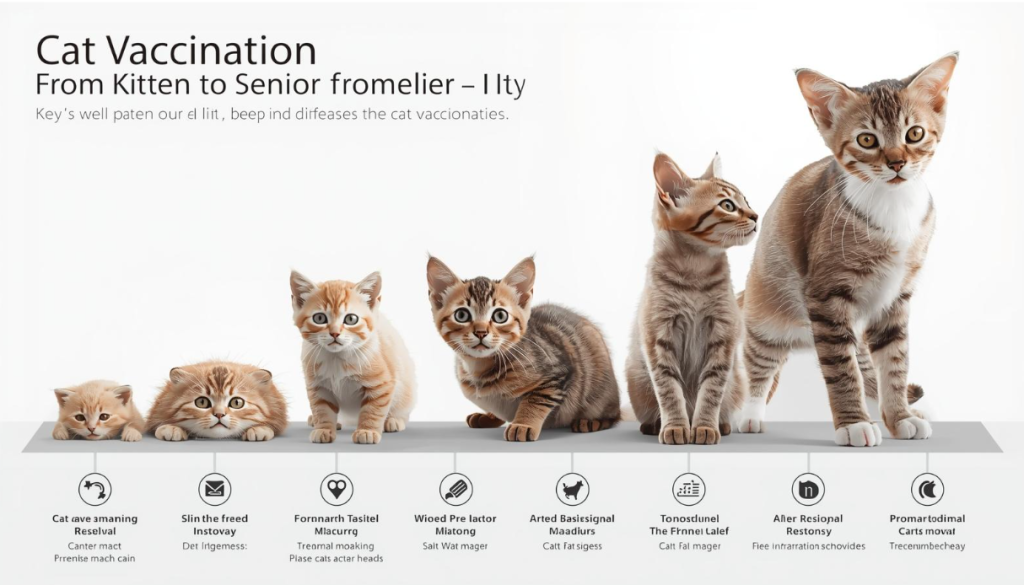

Vaccines are one of the simplest ways to protect your cat, yet they often cause confusion. How many shots does a kitten need? Do adult cats really need boosters? What about senior cats who never leave the house?
A clear cat vaccination schedule answers all of these questions. It provides protection when your cat’s immune system needs it most and avoids unnecessary gaps in coverage. More importantly, it helps prevent serious diseases that are far harder to treat than they are to prevent.
Cats are excellent at hiding illness. By the time symptoms appear, disease may already be advanced. Vaccinations act as quiet bodyguards, working in the background long before trouble shows up.
This guide walks you through the full cat vaccination schedule, from the first weeks of life through the senior years. You’ll learn what vaccines matter, when they’re given, and how your cat’s lifestyle affects timing.
Why a Cat Vaccination Schedule Matters
Vaccines do more than prevent illness. They shape long-term health.
Kittens are born with immature immune systems. Adult cats face exposure risks. Senior cats experience immune decline. At every stage, the right vaccine at the right time makes a difference.
A proper cat vaccination schedule creates layers of protection. Early vaccines teach the immune system how to respond. Boosters reinforce memory. Senior care maintains defense as immunity weakens.
Skipping vaccines leaves gaps. Those gaps allow viruses to take hold quickly.
Prevention is always easier than treatment.
Core vs Non-Core Vaccines Explained
Understanding vaccine categories simplifies decisions.
Core vaccines are recommended for all cats, regardless of lifestyle. These protect against widespread, severe diseases.
Non-core vaccines depend on risk factors like outdoor access, multi-cat households, or regional disease prevalence.
Your veterinarian helps tailor the cat vaccination schedule to your cat’s life, not just their age.
Personalized care provides the best protection.
Core Vaccines Every Cat Needs
Core vaccines form the foundation.
They protect against feline panleukopenia, feline herpesvirus, and feline calicivirus. These are often combined into a single vaccine called FVRCP.
Rabies vaccination is also considered core in many regions due to public health laws.
These diseases spread easily and can be fatal.
Core vaccines save lives.
Non-Core Vaccines Based on Lifestyle
Non-core vaccines address specific risks.
Feline leukemia virus is common in outdoor or social cats. Bordetella may matter in shelter or boarding environments.
Not every cat needs every vaccine. However, risk changes over time.
Lifestyle review ensures relevance.
The Kitten Vaccination Schedule: Birth to 16 Weeks
Kittenhood is the most vaccine-intensive stage.
Maternal antibodies protect kittens initially, but that protection fades. Vaccines fill the gap.
Kittens usually receive their first FVRCP vaccine around 6 to 8 weeks of age. Boosters follow every 3 to 4 weeks until about 16 weeks old.
Rabies vaccination is typically given around 12 to 16 weeks, depending on local regulations.
This early cat vaccination schedule builds immunity step by step.
Why Kitten Boosters Are So Important
One vaccine is not enough.
Maternal antibodies can block early vaccines. Boosters ensure immunity develops once those antibodies decline.
Skipping boosters leaves kittens vulnerable.
Consistency matters during early development.
FeLV Vaccination for Kittens
Many vets recommend feline leukemia vaccination for all kittens.
Young cats are especially susceptible. Even indoor kittens benefit initially, since future exposure risk is unknown.
FeLV vaccines usually begin around 8 weeks, followed by a booster 3 to 4 weeks later.
Protection early prevents heartbreak later.
Transitioning to the Adult Cat Vaccination Schedule
After the first year, things slow down.
At around one year old, cats receive booster vaccines to reinforce immunity built during kittenhood.
This visit often includes FVRCP and rabies boosters. FeLV boosters may continue if risk remains.
This one-year milestone solidifies long-term protection.
Adult Cat Vaccination Schedule: 1 to 7 Years
Adult cats typically need fewer vaccines.
Many core vaccines are given every one to three years, depending on formulation and risk.
Annual wellness exams still matter. Even when vaccines aren’t due, health monitoring continues.
The adult cat vaccination schedule balances protection with restraint.
Less frequent does not mean less important.
Indoor Cats and Vaccination Needs
Indoor cats still need vaccines.
Viruses travel on shoes, clothing, and other pets. Rabies exposure can occur through unexpected encounters with bats.
Indoor-only cats still follow a modified cat vaccination schedule.
Safety doesn’t stop at the door.
Outdoor Cats and Higher Risk
Outdoor cats face greater exposure.
Contact with other animals increases risk of FeLV, rabies, and respiratory diseases.
Outdoor cats often require more frequent vaccination and monitoring.
Risk assessment guides scheduling.
The Senior Cat Vaccination Schedule: 7 Years and Beyond
Senior cats require thoughtful care.
As cats age, immune response weakens. At the same time, chronic conditions become more common.
Vaccination decisions balance protection with health status. Some vaccines may be spaced further apart.
Senior cats still benefit from core vaccines, especially rabies and FVRCP.
Age adjusts timing, not importance.
Health Conditions That Affect Vaccination Timing
Medical history matters.
Cats with immune disorders, kidney disease, or cancer may need adjusted schedules.
Your vet evaluates risks and benefits carefully.
Individual health always comes first.
Why Annual Vet Visits Still Matter
Vaccines are part of wellness, not the whole picture.
Annual exams catch weight changes, dental disease, and early illness.
Your vet reviews the cat vaccination schedule during each visit.
Prevention works best when combined.
Vaccine Reactions: What to Expect
Most cats tolerate vaccines well.
Mild lethargy or soreness may occur for a day or two. Serious reactions are rare.
Monitor injection sites and behavior.
Report concerns promptly.
How Lifestyle Changes Affect the Cat Vaccination Schedule
Life changes shift risk.
Moving homes, adding pets, or allowing outdoor access alters exposure.
Review vaccination needs whenever lifestyle changes occur.
Adaptation keeps protection current.
Shelters, Boarding, and Travel Considerations
Temporary environments increase exposure.
Boarding facilities often require proof of vaccination.
Travel exposes cats to unfamiliar pathogens.
Planning ahead prevents last-minute stress.
Titer Testing and Vaccine Decisions
Titer tests measure immunity.
Some owners use titers to guide booster decisions. However, titers don’t replace all vaccines, especially rabies.
Discuss options with your vet.
Science guides choices.
Myths About Overvaccination
Fear causes hesitation.
Modern vaccines are safer and longer-lasting than older formulations.
Vets tailor schedules to minimize risk.
Balanced care avoids extremes.
Building a Lifelong Vaccination Plan
Consistency builds confidence.
A clear cat vaccination schedule simplifies decision-making.
Working with one veterinarian improves continuity.
Long-term planning supports lifelong health.
Common Mistakes Cat Owners Make
Mistakes happen.
Skipping boosters. Assuming indoor cats need nothing. Missing senior care.
Awareness prevents regret.
Education empowers owners.
Why Prevention Always Wins
Vaccines prevent suffering.
Treatment costs more. Illness causes pain. Prevention avoids both.
Vaccines protect not just your cat, but other animals and people.
Protection ripples outward.
Conclusion
A proper cat vaccination schedule protects your cat from kittenhood through the senior years. It evolves as your cat grows, adapts to lifestyle changes, and accounts for health needs. Core vaccines provide essential defense, while non-core vaccines address specific risks.
By following a thoughtful vaccination plan and maintaining regular veterinary visits, you give your cat the best chance at a long, healthy life. Vaccines work quietly, but their impact lasts a lifetime.
FAQ
1. How many vaccines do kittens need?
Kittens usually receive a series of FVRCP vaccines plus rabies and often FeLV during their first year.
2. Do indoor cats really need vaccines?
Yes, indoor cats still face exposure risks and should follow a modified vaccination schedule.
3. How often do adult cats need boosters?
Most adult cats receive core vaccines every one to three years, depending on risk and vaccine type.
4. Are vaccines safe for senior cats?
Yes, although schedules may be adjusted based on health status and veterinary guidance.
5. What happens if my cat misses a vaccine?
Missed vaccines may require restarting or boosting the schedule, depending on timing and risk.