
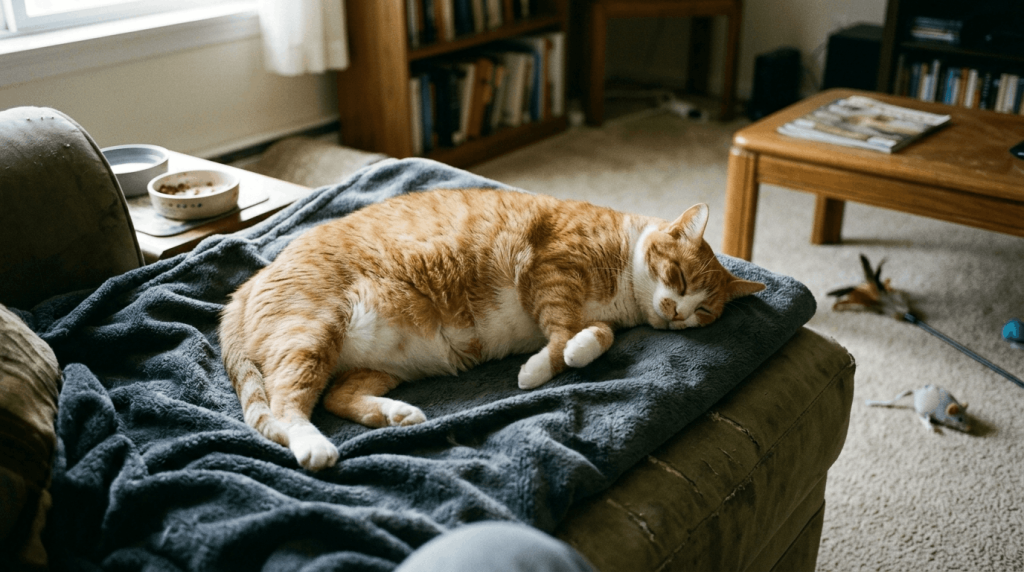

Many cat owners assume that a relaxed, low-energy lifestyle is normal for their pets, especially for indoor cats. However, cat inactivity obesity is becoming an increasingly common problem that often goes unnoticed until it starts affecting a cat’s health. While cats naturally enjoy resting, too little movement can lead to gradual weight gain and serious long-term issues. Because of this, understanding how inactivity contributes to obesity is essential for keeping your cat healthy and active.
Although cats are independent animals, they still rely on their environment and owners for stimulation. When their daily routine lacks activity, they burn fewer calories, which leads to weight gain over time. This is why cat inactivity obesity often develops slowly, making it harder to detect early. By recognizing the connection between movement and health, you can take steps to prevent this issue before it becomes a serious concern.
Why Indoor Cats Are More at Risk
Indoor living provides safety, yet it also limits natural behaviors such as hunting, climbing, and exploring. As a result, cat inactivity obesity is more common among indoor cats than those that spend time outdoors. Without opportunities to move freely, cats may become sedentary, which reduces their overall energy expenditure.
In addition, indoor cats often have constant access to food. While this may seem convenient, it can encourage overeating when combined with inactivity. Because of this combination, cat inactivity obesity becomes more likely, especially when feeding routines are not carefully managed.
Environmental factors also play a role. Small living spaces and lack of enrichment can discourage movement. Therefore, creating an engaging indoor environment is essential to reduce the risk of cat inactivity obesity and support natural activity levels.
How Inactivity Affects a Cat’s Body
When a cat becomes inactive, its body begins to store excess energy as fat. Over time, this leads to weight gain and changes in overall health. Cat inactivity obesity does not just affect appearance; it impacts internal systems as well.
For example, excess weight puts strain on joints, making movement more difficult. This creates a cycle where the cat becomes even less active. In addition, obesity can increase the risk of conditions such as diabetes and heart disease. Because of this, cat inactivity obesity should be addressed as early as possible.
Metabolism also slows down when activity levels decrease. This means that even normal portions of food can contribute to weight gain. By understanding these effects, you can see why maintaining activity is crucial for preventing cat inactivity obesity.
Behavioral Changes Linked to Inactivity
Inactivity does not only affect physical health; it also influences behavior. Cats that lack stimulation may become bored, which can lead to overeating or reduced interest in play. As a result, cat inactivity obesity becomes both a physical and behavioral issue.
Some cats may sleep excessively, while others may show signs of frustration or restlessness. Because these behaviors are often subtle, they can be overlooked. However, they are important indicators that your cat needs more engagement.
Encouraging regular play can help break this cycle. By introducing interactive toys and activities, you can stimulate both the body and mind. This approach reduces the risk of cat inactivity obesity while improving your cat’s overall quality of life.
The Role of Diet in Weight Management
While inactivity is a major factor, diet also plays a critical role in managing weight. Even a healthy diet can lead to problems if activity levels are too low. Therefore, balancing food intake with movement is essential to prevent cat inactivity obesity.
Portion control is one of the most effective strategies. Feeding measured amounts rather than free-feeding helps regulate calorie intake. In addition, choosing high-quality food that meets your cat’s nutritional needs supports overall health.
Combining proper nutrition with regular activity creates a balanced approach. This ensures that your cat receives enough energy without excess calories. By addressing both diet and exercise, you can reduce the risk of cat inactivity obesity effectively.
Simple Ways to Increase Daily Activity
Increasing your cat’s activity does not require drastic changes. Small adjustments can make a significant difference over time. Interactive play is one of the easiest ways to encourage movement and reduce cat inactivity obesity.
Toys that mimic prey, such as feather wands or laser pointers, can stimulate natural hunting instincts. These activities not only burn calories but also provide mental stimulation. As a result, your cat becomes more engaged and active.
In addition, creating vertical spaces encourages climbing and exploration. Cat trees, shelves, and window perches provide opportunities for movement throughout the day. By incorporating these elements, you create an environment that naturally reduces cat inactivity obesity.
Building a Consistent Routine
Consistency is key when addressing inactivity. Cats thrive on routine, so incorporating regular play sessions into their daily schedule helps maintain activity levels. Even short sessions can be effective when done consistently.
Scheduling playtime before meals can also encourage movement. This approach mimics natural hunting behavior, where cats expend energy before eating. As a result, cat inactivity obesity becomes less likely when activity is part of the routine.
In addition, monitoring your cat’s weight regularly helps track progress. Small changes can indicate whether adjustments are needed. By staying consistent, you create a stable routine that supports long-term health.
Long-Term Health Benefits of Staying Active
Maintaining an active lifestyle offers numerous benefits beyond weight control. Cats that stay active tend to have better muscle tone, improved flexibility, and stronger joints. These advantages help prevent injuries and support mobility as your cat ages.
In addition, regular activity supports mental health. Engaged cats are less likely to develop behavioral issues related to boredom. Because of this, reducing cat inactivity obesity also improves overall well-being.
Active cats often show more curiosity and playfulness, which enhances their quality of life. By encouraging movement, you create a more fulfilling environment for your pet.
Conclusion
Cat inactivity obesity is a growing concern, especially for indoor cats with limited opportunities to move. While rest is a natural part of a cat’s routine, too much inactivity can lead to serious health problems over time. By understanding the connection between movement and weight, you can take proactive steps to protect your cat’s health.
Simple changes, such as increasing playtime, managing diet, and creating an engaging environment, can make a significant difference. Over time, these efforts help prevent weight gain and support a more active lifestyle. Ultimately, addressing cat inactivity obesity is about creating balance and ensuring your cat enjoys a healthy, happy life.
FAQ
- Why do indoor cats gain weight more easily?
Indoor cats have fewer opportunities to move, which reduces calorie burn and increases the risk of weight gain. - How much exercise does a cat need daily?
Most cats benefit from at least 15–30 minutes of interactive play each day. - Can diet alone prevent weight gain in cats?
Diet helps, but activity is equally important for maintaining a healthy weight. - What are signs that my cat is overweight?
Common signs include difficulty moving, a round body shape, and reduced activity levels. - How can I motivate my cat to be more active?
Use interactive toys, vary play routines, and create an environment that encourages movement.