

Bringing someone new into your home can feel exciting. However, for your cat, it can feel like an invasion. Cats love routine. They value familiar scents, quiet corners, and predictable patterns. When those patterns change, stress often follows.
If you want your cat to adjust to new people and pets smoothly, you must think like a cat. Imagine your home as their territory. Now imagine strangers walking in. That shift can feel threatening.
Fortunately, adjustment does not have to be dramatic. With calm steps and consistent behavior, your cat can feel secure again. Let’s explore how to help your cat adjust to new people and pets without fear or chaos.
Why It’s Hard for a Cat to Adjust to New People
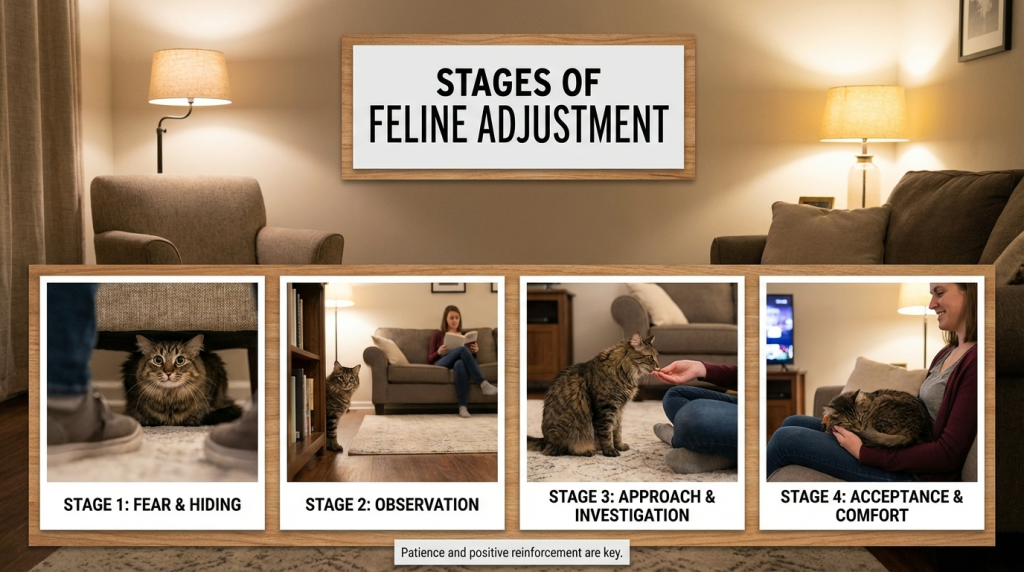
Cats are territorial by nature. Unlike dogs, they do not instantly welcome newcomers. Instead, they observe. They analyze. They retreat if necessary.
When a cat must adjust to new people, stress hormones rise. Cortisol increases. As a result, hiding, hissing, or avoidance may occur. These reactions are normal.
Moreover, cats rely heavily on scent. Every person carries a unique smell. That unfamiliar scent can trigger caution.
In addition, loud voices or sudden movements intensify anxiety. Therefore, even well-meaning guests may accidentally overwhelm your pet.
Understanding this emotional landscape helps you respond wisely. Rather than forcing interaction, you create a sense of safety.
Creating a Safe Space Before Your Cat Adjusts to New People
Before introductions happen, preparation matters. If your cat has a safe retreat, adjustment becomes easier.
Choose a quiet room. Include familiar bedding, toys, litter box, food, and water. This area acts as a sanctuary.
When new people arrive, allow your cat to remain in that space if desired. Do not carry them into a busy room.
Additionally, ask visitors to ignore your cat at first. No direct eye contact. No reaching out. Let curiosity work naturally.
Cats feel safer when they control the interaction. Over time, they may approach on their own terms.
Because of this strategy, your cat can adjust to new people gradually rather than abruptly.
Using Scent to Help Your Cat Adjust to New People and Pets
Scent exchange is powerful. Since cats identify safety through smell, you can use this to your advantage.
Ask new people to leave a worn shirt in your cat’s safe space. This allows scent exposure without pressure.
Similarly, if a new pet is coming, exchange bedding before meeting face-to-face. This process is called scent swapping.
As your cat becomes familiar with the new scent, anxiety decreases. The unknown slowly becomes known.
Furthermore, you can use pheromone diffusers. Synthetic calming pheromones mimic natural signals of safety.
While not magical, they support the adjustment process.
Gradual Introductions Help a Cat Adjust to New People
Patience builds trust. Quick exposure often backfires.
Start with short visits. Keep voices soft. Movements should be slow.
If your cat approaches, encourage visitors to extend a relaxed hand at nose level. Allow sniffing without petting immediately.
After sniffing, gentle chin scratches may be offered. However, watch body language closely.
If ears flatten or the tail flicks rapidly, pause interaction.
Positive reinforcement works well. Offer treats when your cat remains calm around newcomers. This builds positive associations.
Over time, your cat adjusts to new people with less tension.
Helping Your Cat Adjust to New Pets
Introducing another animal adds complexity. Unlike people, pets move unpredictably. Therefore, careful staging is required.
First, separate living spaces. Each animal should have its own food, water, and litter area.
Next, begin scent swapping. Rub a soft cloth on one pet, then place it near the other’s resting area.
After several days, allow visual contact through a baby gate or cracked door.
If both animals remain calm, supervised meetings can follow. Keep sessions short.
Importantly, never force physical contact. Let them set the pace.
This step-by-step process allows your cat to adjust to new pets with reduced fear.
Body Language: Reading Signs as Your Cat Adjusts to New People
Cats communicate quietly. However, their signals are clear once you know them.
A relaxed cat holds ears upright. Eyes blink slowly. Tail rests loosely.
Conversely, a stressed cat may crouch low. Pupils dilate. Fur may puff.
When helping your cat adjust to new people, watch for subtle shifts. Even small signs matter.
If stress escalates, create distance. Return to the safe space. Try again later.
Adjustment is not linear. Some days will be smoother than others.
Routine Stability While Your Cat Adjusts to New People and Pets
Routine anchors your cat during change. Therefore, keep feeding times consistent.
Play sessions should remain regular. Bedtime rituals should not shift dramatically.
When everything else feels uncertain, predictable structure restores balance.
Moreover, avoid introducing multiple changes at once. If a new pet arrives, postpone home renovations or furniture rearrangement.
Too much change overwhelms coping capacity.
Consistency supports emotional stability. Stability supports confidence.
Reducing Stress During the Adjustment Period
Stress reduction strategies accelerate progress.
Provide vertical spaces like cat trees. Height offers security.
Interactive toys release nervous energy. Wand toys simulate hunting behavior, which boosts confidence.
Additionally, soft background music can reduce environmental noise. Calm environments promote relaxation.
Hydration and diet should also remain stable. Sudden food changes may increase digestive upset during stressful periods.
While minor setbacks may occur, patience produces steady improvement.
Common Mistakes When Helping a Cat Adjust to New People
Many owners unintentionally rush the process. They want harmony quickly. However, forcing contact damages trust.
Another mistake involves punishment. If a cat hisses, never scold. Hissing communicates discomfort.
Instead, reduce exposure. Increase positive experiences.
Ignoring early stress signals is also risky. Small signs, when dismissed, grow into larger behavioral problems.
Remember, adjustment requires empathy. Think from your cat’s perspective.
Children and Your Cat Adjusting to New People
Children move unpredictably. They may shout or run.
Before interaction, teach children calm behavior. Demonstrate gentle petting. Explain why space matters.
Supervision is essential. Always monitor early encounters.
If your cat retreats, respect that choice.
Positive, slow exposure creates long-term trust.
When Professional Help May Be Needed
Most cats adjust within weeks. However, severe aggression or prolonged hiding may require veterinary advice.
Sometimes anxiety disorders are present. In such cases, medication may be recommended temporarily.
A professional behaviorist can design a customized plan.
While most situations resolve naturally, support is available if needed.
Building Long-Term Harmony After Adjustment
Once your cat adjusts to new people and pets, reinforce positive dynamics.
Continue structured play sessions.
Provide individual attention. Avoid favoritism between pets.
Celebrate small milestones. A peaceful nap in the same room signals success.
Trust grows slowly but lasts long when nurtured.
Emotional Patience as Your Cat Adjusts to New People
Adjustment mirrors a ripple in water. The disturbance fades with time.
Although progress may feel slow, consistency wins.
You are your cat’s anchor. Your calm behavior influences theirs.
Speak softly. Move gently. Offer reassurance through routine.
Eventually, curiosity replaces caution. Comfort replaces fear.
Conclusion
Helping your cat adjust to new people and pets requires patience, preparation, and empathy. By creating safe spaces, using scent familiarity, introducing gradually, and maintaining routine, you reduce stress and build confidence. Every cat moves at its own pace. However, with calm guidance and consistent care, your home can become a peaceful shared space where both old and new companions feel secure.
FAQ
- How long does it take for a cat to adjust to new people?
Most cats begin to relax within a few days to weeks, depending on personality and environment. - What if my cat hides when guests visit?
Hiding is normal. Allow your cat space and avoid forcing interaction. - Can treats help a cat adjust to new people?
Yes. Offering treats during calm moments creates positive associations. - How should I introduce a new pet to my cat?
Start with scent swapping, then visual contact, and finally short supervised meetings. - Should I punish my cat for hissing at new people?
No. Hissing signals discomfort. Instead, reduce stress and slow the introduction process.


