
Cats may look independent and carefree, yet many struggle quietly with stress, hyperactivity, or anxiety. Some pace around the house. Others hide under the bed for hours. A few vocalize constantly or become restless at night. When your cat is overwhelmed, their behavior becomes a window into their emotional world. Learning how to calm an anxious cat helps them feel safer, more grounded, and more confident.
Cats develop anxiety for many reasons. Sudden noises, visitors, changes in routine, boredom, loneliness, health issues, or overstimulation can all contribute. Because each cat expresses stress differently, identifying the cause may take patience. However, with the right strategies, you can soothe your cat gently and prevent anxiety from escalating.
In this article, you’ll explore practical ways to calm an anxious cat, reduce hyperactivity, and create a peaceful home where your feline companion feels truly secure.
Why Cats Become Hyperactive or Anxious
If your cat seems constantly restless, you’re not alone. Many cats display anxiety without their owners realizing it. Understanding the triggers helps you support them effectively and calmly.
Common causes of hyperactivity and anxiety include:
- Sudden changes in the home
- Lack of routine
- Poor sleep cycles
- Loud environments
- Outdoor animals near the home
- Conflict with other pets
- Boredom or lack of stimulation
- Illness or pain
- New scents or unfamiliar visitors
Cats prefer predictability. When a cat feels confused or overstimulated, their natural response is to become hyperalert. Because they lack control over the environment, stress builds quickly. Fortunately, small changes often produce big improvements.
Create a Calm Routine to Reduce Anxiety
Structure is one of the most effective tools to calm an anxious cat. Because cats feel safest when they know what to expect, routine stabilizes their emotions and reduces hyperactivity.
Try keeping consistent times for:
- Meals
- Play sessions
- Rest periods
- Litter box cleaning
- Quiet hours
Even a simple schedule lowers stress dramatically. Cats relax when their world feels predictable. While life may not be perfectly structured every day, consistency serves as emotional reassurance.
Offer Safe Spaces to Calm an Anxious Cat
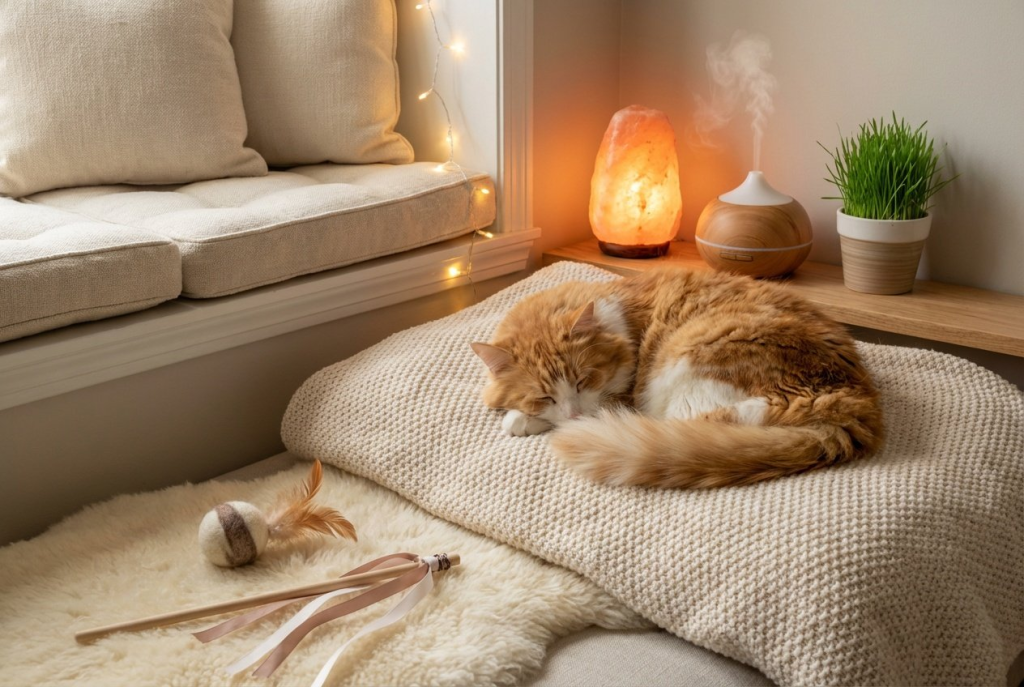
An anxious cat craves security. Safe spaces allow them to rest, observe, and decompress without feeling threatened. These areas should feel cozy, quiet, and hidden from busy household paths.
Ideal safe spaces include:
- Cat trees with covered perches
- Boxes with blankets
- High shelves
- A quiet bedroom corner
- Tunnels or hideaways
Because cats regulate stress through solitude, giving them an escape helps control hyperactivity. They will often approach you for comfort once they feel safe again.
Use Play to Release Excess Energy
Hyperactivity is often a sign of unused energy rather than misbehavior. Because indoor cats have fewer outlets, they rely on you for stimulation. Play mimics hunting, which is essential for mental and physical balance.
Effective ways to play include:
- Wand toys
- Laser pointers
- Treat-hunting games
- Puzzle feeders
- Feather toys
- Rolling balls
Play not only relieves tension but strengthens your bond. Cats feel calmer when they have a healthy outlet for instinctive behaviors. A 10–15 minute session twice a day supports a peaceful temperament.
Try Calming Products to Support Anxiety Relief
Many calming tools help regulate stress naturally. Although they’re not a cure-all, they often make a noticeable difference in your cat’s behavior.
Helpful options include:
- Pheromone diffusers
- Calming sprays
- Weighted or warm blankets
- Herbal supplements (veterinary-approved)
- Soft background music or white noise
These products create an environment that feels safe and familiar. Although results vary, many anxious cats respond positively.
Use Slow, Gentle Interactions to Build Trust
When a cat is anxious, fast movements, loud voices, or forced interactions worsen fear. Instead, your goal is to show that you are a source of comfort, not pressure.
Try:
- Speaking softly
- Blinking slowly (a feline “I trust you” sign)
- Sitting at their level
- Letting them initiate contact
- Offering a hand for scent marking
Slow interactions calm an anxious cat by reducing perceived threats. Eventually, your presence becomes a stabilizing force for them.
Provide Vertical Space for Emotional Security
Vertical territory dramatically increases confidence. Because height gives cats both safety and control, anxious cats often rely on elevated spaces to feel secure.
Great vertical options include:
- Tall cat trees
- Window shelves
- Multi-level climbing towers
- Long wall-mounted shelves
- Cabinet tops cleared for perching
These spaces help your cat regulate tension. They also allow a peaceful escape from overstimulation or other pets.
Address Environmental Triggers to Calm an Anxious Cat
Sometimes anxiety comes from factors in the environment rather than the cat’s personality. When you remove or soften triggers, stress decreases quickly.
Common environmental adjustments include:
- Keeping blinds closed if outdoor animals cause stress
- Switching to quieter appliances
- Providing hiding areas during events or visitors
- Reducing clutter around cat pathways
- Softening noise with rugs, curtains, and sound-absorbing decor
Small adjustments can create dramatic behavioral shifts. Because anxiety often stems from overstimulation, even subtle improvements matter.
Support Calm Behavior with Positive Reinforcement
When your cat chooses calm behavior—even for a moment—reward it. Cats learn best through positive experiences. Because they associate rewards with emotional states, they eventually choose calm behavior more often.
Reward calmness with:
- Soft praise
- Gentle petting (if welcomed)
- Treats
- Slow blinking
- Playtime after relaxation
Avoid punishing anxious cats. Punishment increases fear and reinforces unwanted behavior. Instead, create positive emotional associations with calmness.
Check for Medical Causes Behind Hyperactivity and Anxiety
Sometimes an anxious cat isn’t stressed—they’re in pain or discomfort. Illness, hormonal imbalances, allergies, dental issues, or neurological problems can present as anxiety. Because cats hide pain well, subtle behavior changes matter.
Watch for signs such as:
- Sudden restlessness
- Nighttime pacing
- Unusual vocalization
- Hyperactivity after eating
- Loss of appetite
- Overgrooming
When behavior changes appear suddenly, schedule a checkup. Treating the medical source often restores calm naturally.
Use Enrichment to Prevent Anxiety from Building
Mental stimulation reduces boredom, frustration, and anxiety. Enrichment fulfills natural instincts, which helps hyperactive or nervous cats regulate themselves emotionally.
Effective enrichment includes:
- Puzzle feeders
- Treat mazes
- Cat grass or catnip
- Scavenger hunts
- Sensory toys
- Bird-watching stations
Because enrichment gives your cat something meaningful to do, their body relaxes and their mind feels satisfied.
Socialize Slowly and Respect Personality Differences
Some cats thrive on attention. Others prefer a quiet, solitary life. When anxiety stems from social pressure, offering control is the key to calm.
Always let your cat:
- Approach you first
- Decide when to leave
- Choose their preferred resting spaces
- Control the pace of interaction
Respecting boundaries reduces fear and builds long-term trust.
Create a Calm Home Atmosphere for Emotional Balance
Cats absorb the emotional tone of your household. When your home feels hectic, their bodies stay in alert mode. To calm an anxious cat, strive for a peaceful environment.
Helpful ways to create calm include:
- Lowering TV and music volume
- Speaking softly
- Keeping pathways clear
- Maintaining dim lighting in resting areas
- Cleaning litter boxes frequently
- Using soft textures around the home
A peaceful home encourages a peaceful cat.
Use Gentle Handling Techniques to Reduce Fear
Lifting or restraining a nervous cat must be done gently and with patience. Force increases fear. Instead, you want them to associate handling with positive experiences.
Try:
- Approaching from the side, not above
- Supporting their body fully
- Keeping movements slow
- Rewarding them afterward
- Using a towel wrap when appropriate
Over time, gentle handling builds confidence.
Introduce New Stimuli Gradually
Cats dislike sudden changes, whether they involve new pets, new furniture, or new routines. Because they rely on scent and familiarity, slow introductions reduce stress.
Introduce new things by:
- Allowing scent investigation first
- Offering distance and choice
- Using treats to create positive associations
- Keeping early interactions short
Gradual exposure supports emotional safety.
Offer Comfort Through Predictable Quiet Time
Your cat needs downtime to process stimulation. Quiet time signals safety and teaches your cat to relax naturally.
Set aside:
- Calm afternoons
- Soft lighting moments
- Periods of no activity
- Dedicated rest zones
Quiet time teaches anxious cats that rest is safe and comforting.
Conclusion
Learning to calm an anxious cat requires patience, empathy, and consistency. Cats thrive when their environment feels predictable and supportive. By offering structure, enrichment, safe spaces, and calm interactions, you create a home where anxiety fades and confidence grows. Your cat begins to relax, explore, and trust. With time, even the most hyperactive or anxious cat can feel secure and content. Peace often begins with one small change—and your cat will thank you for every gentle step forward.
FAQ
1. Why is my cat suddenly anxious?
Sudden anxiety may result from illness, pain, environmental changes, or new stressors.
2. How long does it take to calm an anxious cat?
Some cats relax within days, while others need weeks or months for noticeable improvement.
3. Do pheromone diffusers help anxious cats?
Many cats respond well to pheromone diffusers, especially when combined with routine and enrichment.
4. Should I ignore hyperactive behavior?
No. Redirect it with play or enrichment, because ignoring can increase frustration and anxiety.
5. When should I seek professional help?
If anxiety worsens, becomes aggressive, or affects daily functioning, consult a veterinarian or behaviorist.