
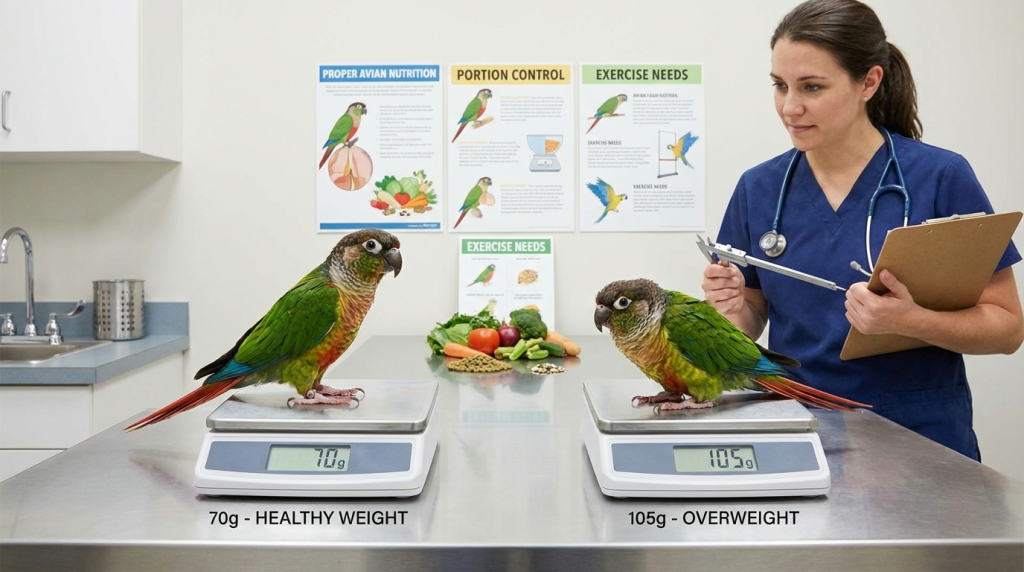

Bird obesity causes are often misunderstood. Many owners assume a little extra weight makes their bird look cute or well cared for. However, excess fat in birds is not harmless. It strains the heart, burdens the liver, and shortens lifespan.
In captivity, birds rely entirely on what we provide. Therefore, when poor nutrition becomes routine, weight gain follows quietly. Unlike wild birds that burn energy flying long distances, companion birds often live in limited spaces.
So why does poor diet trigger obesity so easily in birds? And how can you prevent it? Let’s explore the nutritional mistakes that contribute to weight gain and the practical steps that restore balance.
Understanding Bird Obesity Causes in Captivity
In the wild, birds expend energy constantly. They fly to find food, escape predators, and explore territory. However, in homes, activity levels often drop.
One of the leading bird obesity causes is calorie imbalance. Birds consume more energy than they burn.
Additionally, captive diets frequently lack variety. Seeds, while appealing, are high in fat. If seeds dominate daily intake, fat accumulates steadily.
Because birds are small, even minor caloric excess leads to visible weight gain quickly.
Moreover, birds cannot choose healthier alternatives unless offered.
Seed-Heavy Diets as Primary Bird Obesity Causes
Seeds are natural, yet they are not complete nutrition.
Many common seed mixes contain sunflower seeds and other high-fat ingredients. Birds often select their favorite seeds first. As a result, nutrient imbalance develops.
When examining bird obesity causes, excessive seed intake stands out clearly. Seeds deliver concentrated fat without sufficient fiber or micronutrients.
Over time, fat deposits form around organs. The liver becomes especially vulnerable.
While seeds can remain part of a balanced diet, they should not dominate it.
Pellets and Portion Control
Pelleted diets are often recommended to reduce bird obesity causes linked to selective eating.
Unlike seed mixes, pellets contain balanced nutrients in each piece. However, portion size still matters.
Even balanced food leads to weight gain if offered excessively.
Because birds do not always self-regulate intake in captivity, measured feeding is essential.
Observe how much your bird consumes daily. Remove uneaten food before refilling.
Consistency prevents accidental overfeeding.
High-Calorie Treats and Hidden Sugars
Treats may be offered with affection. Yet frequent indulgence contributes significantly to bird obesity causes.
Honey sticks, sweetened fruits, and processed bird snacks contain added sugars and fats.
Even natural fruit, while healthy in moderation, contains sugar. Therefore, fruit should complement the diet, not replace staples.
Limit treats to occasional rewards rather than daily habits.
Healthy bonding does not require excessive feeding.
Lack of Dietary Variety
Birds thrive on diversity.
A diet lacking fresh vegetables and leafy greens limits fiber intake. Without fiber, digestion slows and satiety decreases.
One overlooked bird obesity cause is monotony. Birds fed only dry food miss the volume and hydration that vegetables provide.
Dark leafy greens, carrots, and peppers add nutrients without excessive calories.
Introducing variety reduces overeating and improves overall health.
Low Activity Levels and Calorie Imbalance
Diet alone does not explain every case.
Reduced flight opportunity increases obesity risk. In the wild, flight burns significant calories.
When birds remain confined without enrichment, energy expenditure decreases.
Bird obesity causes often involve both poor diet and limited exercise.
Encourage safe out-of-cage time daily. Install perches that promote movement. Rotate toys regularly.
Activity complements nutritional balance.
Fatty Liver Disease and Poor Nutrition
One of the most serious consequences linked to bird obesity causes is fatty liver disease.
Excess dietary fat accumulates in liver tissue. Over time, liver function declines.
Symptoms may include lethargy, overgrown beak or nails, and feather discoloration.
Because early signs are subtle, routine veterinary checkups are critical.
Addressing poor diet early prevents irreversible damage.
Species-Specific Risk Factors
Some species are more prone to obesity.
Amazon parrots, cockatiels, and budgies frequently gain weight on seed-heavy diets.
When examining bird obesity causes, species predisposition matters.
For example, budgies evolved to eat grass seeds in sparse environments. In captivity, unlimited access to rich food creates imbalance.
Tailor feeding plans to species metabolism.
Emotional Feeding and Human Habits
Owners sometimes project human habits onto birds.
Offering table scraps or frequent snacks may feel nurturing. However, these habits contribute directly to bird obesity causes.
Birds quickly learn to beg. Responding with high-calorie treats reinforces unhealthy cycles.
Instead, reward with interaction, praise, or toys.
Healthy relationships extend beyond food.
How to Identify Obesity in Birds
Birds conceal fat under feathers.
Gently feel the keel bone along the chest. In healthy birds, it should be slightly prominent but not sharp or buried.
Excess fat may appear around the abdomen or chest.
If unsure, consult a veterinarian for body condition assessment.
Early detection allows prompt dietary adjustments.
Creating a Balanced Feeding Plan
To address bird obesity causes, construct a structured feeding routine.
Begin with high-quality pellets forming the majority of intake. Add fresh vegetables daily. Offer seeds sparingly.
Measure portions rather than free-feeding.
Additionally, remove empty hulls from bowls to avoid confusion about actual intake.
Balanced feeding reduces gradual weight gain.
Encouraging Healthy Eating Behavior
Foraging encourages movement.
Hide small portions of food inside toys. Scatter vegetables in safe areas for exploration.
Foraging reduces boredom and increases calorie expenditure.
Because mental stimulation improves well-being, it indirectly supports weight control.
Replace static bowls with interactive feeding strategies when possible.
Hydration and Metabolic Health
Water supports digestion and nutrient transport.
Birds eating dry seeds exclusively may consume less water. However, fresh produce increases hydration naturally.
Proper hydration assists metabolism and waste elimination.
Therefore, always provide clean water daily.
Hydration complements dietary correction.
Preventing Bird Obesity Causes Long Term
Prevention relies on awareness and routine.
Monitor weight monthly using a gram scale. Sudden increases signal imbalance.
Adjust portions gradually rather than drastically.
Because birds are sensitive to stress, sudden dietary changes may cause refusal.
Consistency and observation ensure lasting success.
Conclusion: Balanced Nutrition Protects Lifespan
Bird obesity causes are largely preventable. Poor diet, excessive seeds, sugary treats, and limited activity combine to create weight gain.
However, with balanced pellets, fresh vegetables, portion control, and enrichment, obesity risk decreases dramatically.
Weight management is not cosmetic. It protects organs, improves energy, and extends lifespan.
By understanding how poor nutrition leads to obesity, you empower your bird to live a longer, healthier life.
Feed thoughtfully. Encourage movement. Monitor regularly.
Healthy choices today protect tomorrow.
FAQs
- What are the main bird obesity causes?
High-fat seed diets, excessive treats, and low activity levels are primary contributors. - Can seed-only diets cause obesity?
Yes, seed-heavy diets are high in fat and often lack balanced nutrients. - How can I tell if my bird is overweight?
Feeling the keel bone and consulting a veterinarian helps assess body condition accurately. - Are pellets better than seeds for weight control?
Pellets provide balanced nutrition and reduce selective eating, helping manage weight. - How often should I weigh my bird?
Monthly weight checks using a gram scale help detect gradual changes early.