
If you’ve ever watched your cat hack, gag, or cough up a hairball, you know how uncomfortable—and alarming—it can be. Hairballs are a natural result of grooming, yet frequent ones aren’t normal. They usually signal a digestive imbalance, poor coat quality, or the need for dietary support. Choosing the best cat foods for hairball prevention can make a dramatic difference in both your cat’s comfort and digestive well-being.
Even though hairballs happen occasionally, persistent episodes can lead to vomiting, constipation, or intestinal blockages. Because of this, the right food becomes a powerful tool. When a diet supports digestion, improves coat health, and keeps the gut moving smoothly, your cat can pass swallowed fur naturally—without choking or discomfort.
In this detailed guide, you’ll learn which ingredients reduce hairballs naturally, how to choose the best formulas, and what habits support long-term digestive balance. By the end, you’ll know exactly how to help your cat stay comfortable, confident, and hairball-free.
Why Cats Get Hairballs and How Food Helps
Hairballs form when swallowed fur clumps inside the stomach or intestines. While a small amount of hair usually passes through the digestive system, excessive shedding or slow digestion can cause buildup. That’s where the best cat foods for hairball prevention come in. They’re designed to support coat health while improving gut motility.
Cats may develop frequent hairballs due to:
- Dry or brittle coats
- Excessive grooming
- Stress
- Low-fiber diets
- Poor hydration
- Digestive slowdowns
- Allergies or skin irritation
- Seasonal shedding
Because many of these triggers relate to diet, feeding your cat foods formulated for hairball prevention can significantly reduce symptoms. These formulas work by improving coat quality, boosting hydration, and enhancing digestion so fur moves through the intestines smoothly.
What Makes the Best Cat Foods for Hairball Prevention?
Hairball-control formulas use a strategic combination of fiber, healthy fats, and digestive-support ingredients. Together, these components help move hair through the digestive tract while reducing shedding.
Balanced Fiber Sources
Fiber is one of the most important features in the best cat foods for hairball prevention. It gently increases stool bulk, helping hair move naturally through the intestines.
Look for fibers such as:
- Beet pulp
- Psyllium husk
- Oat fiber
- Pumpkin
- Cellulose
These fibers work together to support both gut movement and healthy stool consistency.
Omega Fatty Acids for Coat Health
Omega-3 and omega-6 fatty acids strengthen your cat’s coat, reducing shedding and preventing dry skin. When the coat sheds less, your cat swallows less hair.
Great sources include:
- Fish oil
- Flaxseed
- Salmon
- Chicken fat
Cats on diets rich in omega fatty acids experience fewer tangles, flakes, and broken hairs.
High-Quality Protein
High-quality animal protein builds strong skin and coat health. When your cat eats clean, digestible protein, their fur becomes more resilient, which reduces the amount swallowed during grooming.
Look for proteins like:
- Chicken
- Turkey
- Salmon
- Rabbit
- Duck
Novel proteins help sensitive cats avoid skin irritation that triggers overgrooming.
Natural Digestive Support
Many of the best cat foods for hairball prevention include digestive aids such as:
- Probiotics
- Prebiotics
- Enzymes
- Pumpkin
These additions strengthen the gut microbiome and help break down food efficiently. A healthy gut moves swallowed fur much more effectively.
Moisture Content
Cats are naturally low-water drinkers. Moisture-rich foods support smoother digestion and reduce the likelihood of hair clumping in the digestive tract.
Wet, fresh-cooked, or raw foods often provide superior hydration compared to kibble.
Types of Cat Foods That Prevent Hairballs
Every cat has unique preferences and digestive needs. Fortunately, hairball-prevention foods come in several styles.
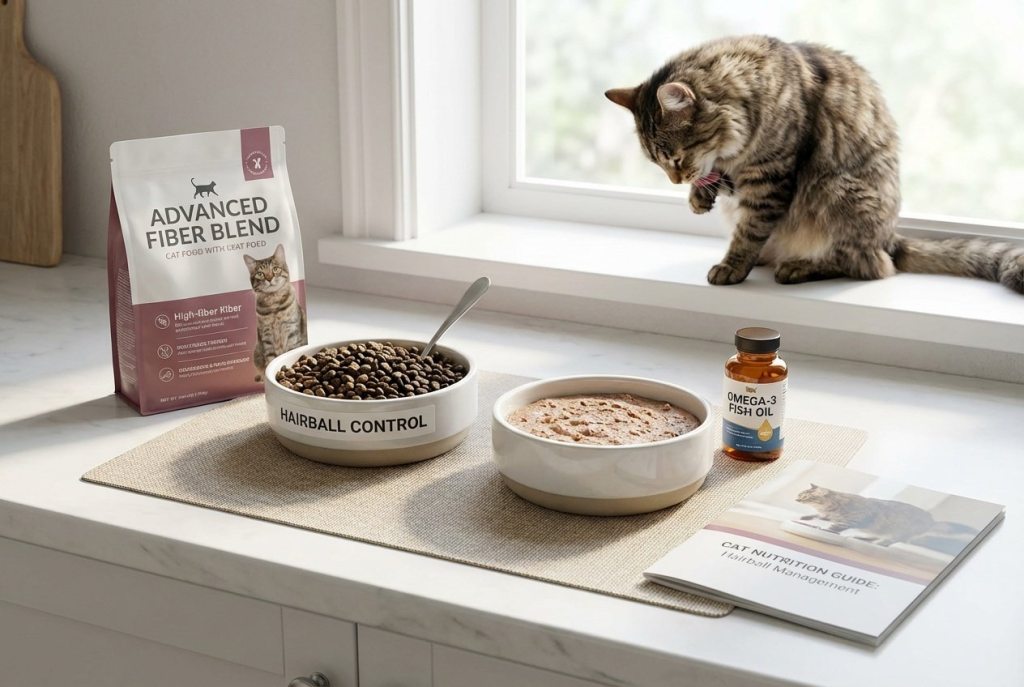
Hairball Control Dry Kibble
Dry kibble designed for hairball reduction contains added fiber and nutrients for coat health. It’s convenient and long-lasting, making it a favorite among busy households.
When choosing a kibble, look for:
- High-quality proteins
- Moderate fat levels
- Natural fiber blends
- No artificial additives
Because kibble has low moisture, pairing it with wet food boosts results.
Hairball Control Wet Food
Wet food supports hydration and smoother digestion. Many formulas include natural fibers like pumpkin or beet pulp, which enhance stool movement.
Cats who struggle with constipation or dry stools often benefit from wet options.
Fresh or Lightly Cooked Meals
Fresh-cooked diets provide whole ingredients and excellent digestibility. Their high moisture levels and clean ingredient lists make them ideal for cats with sensitive digestion.
Raw Food Diets
Some owners choose raw diets to support natural digestion and coat health. These diets may improve stool quality and skin hydration. However, raw feeding requires careful handling and veterinary guidance.
Supplement-Enhanced Foods
Some cat foods incorporate natural hairball supplements such as pumpkin, psyllium, or coconut oil. These formulas can be especially helpful during shedding seasons.
Ingredients to Avoid in Hairball-Prone Cats
Not all cat foods support hairball prevention. Some ingredients make the problem worse by causing dehydration, stomach irritation, or increased shedding.
Avoid foods containing:
- Artificial dyes
- Harsh preservatives
- Low-quality by-products
- Unidentified “meat meals”
- Excessive fillers
- High-carb formulas
- Cheap fats
These ingredients often lead to poor coat condition, digestive slowdowns, and increased hairball frequency.
How to Transition to the Best Cat Foods for Hairball Prevention
Even beneficial foods may cause temporary stomach upset if introduced too quickly. Gradual transitions help your cat adapt smoothly.
Use this schedule:
- Days 1–2: 75% old food, 25% new
- Days 3–4: 50% old, 50% new
- Days 5–6: 25% old, 75% new
- Day 7: 100% new
Because cats are creatures of habit, gradual shifts reduce stress and encourage acceptance.
Natural Ways to Reduce Hairballs Alongside Diet
While feeding the best cat foods for hairball prevention is essential, daily habits strengthen results.
Regular Brushing
Brushing removes loose fur before your cat swallows it. Shorthaired cats may need brushing twice a week, while longhaired breeds like Persians need daily attention.
Hydration Support
Encourage hydration through:
- Water fountains
- Wet food
- Broth toppers
Cats with adequate hydration pass hair more efficiently.
Stress Management
Stress increases grooming. Provide:
- Stable routines
- Safe hiding spots
- Interactive play
- Vertical climbing spaces
These additions reduce overgrooming and lower hairball formation.
Environmental Enrichment
Boredom can trigger compulsive licking. Toys, foraging puzzles, and climbing areas keep your cat mentally stimulated.
Digestive Supplements
Pumpkin, probiotics, and fish oil work well with hairball-control diets to maintain balanced digestion.
How the Best Cat Foods for Hairball Prevention Support Long-Term Health
Reducing hairballs isn’t just about preventing the mess on your carpet. Healthy digestion influences your cat’s overall well-being.
Hairball-prevention diets help with:
- Shinier coats
- Reduced shedding
- Improved stool consistency
- Better nutrient absorption
- Stable weight
- Stronger immunity
- More comfortable grooming
As your cat’s gut health improves, you may notice more energy, fewer digestive episodes, and improved behavior.
Special Considerations for Senior Cats
Senior cats often struggle with slow digestion and reduced hydration, which increases hairball risk. They especially benefit from:
- High-moisture foods
- Added digestive enzymes
- Omega-rich ingredients
- Soft textures
- Moderate fiber levels
Because seniors groom less efficiently, nutrition plays an even larger role in maintaining coat and digestive health.
Special Considerations for Kittens
Kittens usually experience fewer hairballs, but longhaired breeds may start early. For young cats, choose foods:
- Rich in protein
- High in moisture
- Formulated for growth
- Balanced with gentle fiber
Avoid heavy fiber formulas unless recommended by a vet.
Conclusion
Choosing the best cat foods for hairball prevention is one of the easiest and most effective ways to keep your cat healthy and comfortable. With the right blend of fiber, hydration, protein, and coat-supporting nutrients, you can dramatically reduce hairballs naturally. When digestion runs smoothly, your cat feels more relaxed, sheds less, and enjoys grooming without discomfort.
By combining smart food choices with regular brushing, hydration support, and enrichment, you provide your cat with a happier, healthier life—free from stressful hairball episodes.
FAQ
1. How often should I feed hairball-control food?
Daily feeding offers the best results. Consistent nutrition prevents hair buildup over time.
2. Do all cats need hairball-control food?
No. Only cats with frequent hairballs benefit from specialized formulas.
3. Can wet food alone prevent hairballs?
Wet food supports hydration and digestion, but fiber-rich formulas work even better.
4. How long does it take to see improvement?
Most cats show fewer hairballs within two to four weeks, depending on diet and grooming habits.
5. Are hairball treats effective?
Some work well when combined with a balanced diet. They’re best used as a supplement, not a replacement.