
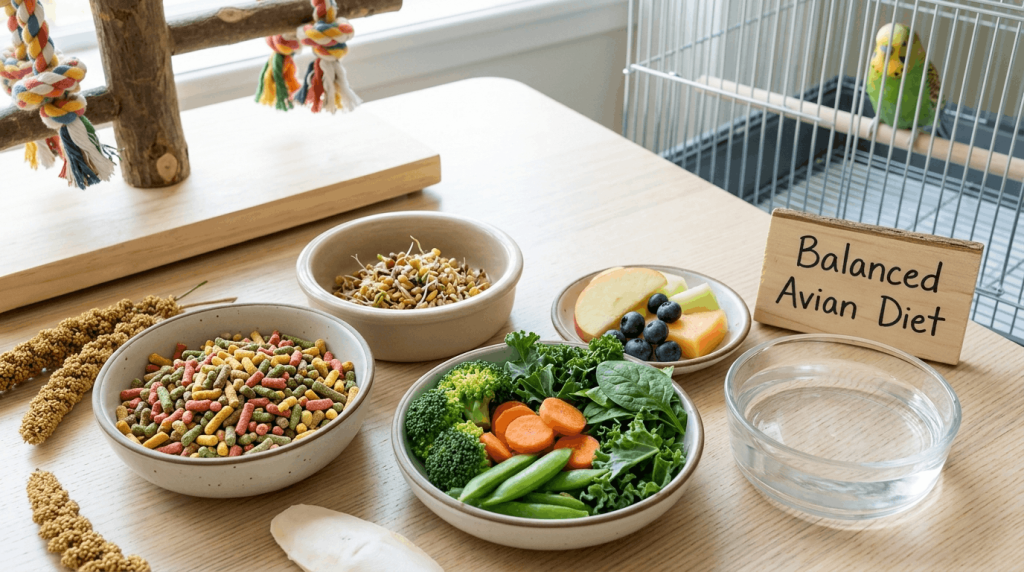

Creating a balanced diet for pet birds is one of the most important responsibilities you have as a bird owner, yet it is often misunderstood or oversimplified. Many birds are still fed seed-only diets, which may seem convenient but can lead to serious health problems over time. Instead, a balanced diet for pet birds should include a mix of nutrients that support energy, feather health, immune function, and overall longevity.
When you begin to understand how birds eat in the wild, everything becomes clearer. Most species consume a wide variety of foods, including seeds, fruits, vegetation, and even small insects. Therefore, replicating this diversity at home is key. While it may take some effort at first, the payoff is a healthier, happier bird that thrives in your care.
Why Nutrition Matters for Pet Birds
Proper nutrition plays a critical role in a bird’s overall health, and it directly affects everything from feather condition to behavior. A balanced diet for pet birds helps prevent common issues like obesity, vitamin deficiencies, and weakened immune systems. Without the right nutrients, birds may develop dull feathers, low energy, or even serious illnesses that require veterinary care.
In addition, birds with poor diets often show behavioral problems. They may become irritable, lethargic, or overly vocal. On the other hand, when a bird receives proper nutrition, it tends to be more active, responsive, and mentally engaged. This is why investing time in building a balanced diet for pet birds is not just about feeding, but also about improving quality of life.
Moreover, nutrition impacts lifespan significantly. Birds that receive a well-rounded diet often live longer and enjoy better health throughout their lives. Therefore, making the right dietary choices early on can have lasting benefits.
Core Components of a Healthy Bird Diet
To create a balanced diet for pet birds, you need to focus on variety and proper proportions. While different species have unique needs, most pet birds benefit from a combination of pellets, fresh foods, and limited seeds.
Pellets should form the foundation of the diet because they are formulated to provide complete nutrition. Unlike seeds, pellets contain essential vitamins and minerals in every bite. However, pellets alone are not enough. Birds also need fresh fruits and vegetables to supply antioxidants, fiber, and hydration.
Vegetables should make up a large portion of the fresh food component. Leafy greens like spinach and kale are excellent choices, while carrots and bell peppers add color and nutrients. Fruits can be included as well, but they should be offered in moderation due to their natural sugar content.
Seeds, while popular, should be treated more like treats than staples. Although they contain fats and energy, they lack essential nutrients when fed alone. Therefore, limiting seeds helps maintain a balanced diet for pet birds without compromising health.
Understanding Nutritional Balance
A balanced diet for pet birds is not just about offering different foods; it is also about maintaining the right nutritional balance. Birds require proteins, fats, carbohydrates, vitamins, and minerals in proper amounts to function well.
Protein supports muscle development and feather growth, so including sources like legumes or specialized bird pellets is important. Healthy fats provide energy but should be controlled to prevent weight gain. Carbohydrates supply quick energy and are commonly found in grains and vegetables.
Vitamins and minerals play a vital role in maintaining bodily functions. For example, calcium is essential for bone strength and egg production in breeding birds. Meanwhile, vitamin A supports vision and immune health. Without these nutrients, birds can quickly develop deficiencies.
Because of these factors, rotating foods regularly ensures your bird receives a wide range of nutrients. This approach makes it easier to maintain a balanced diet for pet birds without relying too heavily on one food source.
Common Feeding Mistakes to Avoid
Even well-meaning bird owners sometimes make mistakes that disrupt a balanced diet for pet birds. One of the most common errors is relying too heavily on seeds. While birds often prefer seeds, feeding them exclusively leads to nutritional imbalances.
Another mistake is offering too many sugary fruits. Although fruits are healthy, excessive sugar can contribute to weight gain and other issues. Therefore, balance is essential when adding fruits to your bird’s diet.
Additionally, some owners avoid introducing new foods because their birds resist change. However, patience is key. Birds may need repeated exposure before accepting new items. Gradually mixing new foods with familiar ones can help ease the transition.
It is also important to avoid toxic foods such as chocolate, avocado, caffeine, and alcohol. These items can be harmful or even fatal to birds. Being aware of safe and unsafe foods is crucial when maintaining a balanced diet for pet birds.
How to Transition Your Bird to a Better Diet
If your bird is currently on a seed-based diet, transitioning to a balanced diet for pet birds should be done gradually. Sudden changes can cause stress or lead to refusal to eat, so patience is essential.
Start by introducing pellets alongside the existing diet. Mix them with seeds to encourage curiosity and acceptance. Over time, reduce the amount of seeds while increasing pellets. This slow approach helps your bird adjust without feeling deprived.
At the same time, begin offering fresh fruits and vegetables daily. Even if your bird ignores them at first, keep trying. Birds often need multiple exposures before they accept new foods. Consistency is key during this process.
Positive reinforcement can also help. Praise your bird or offer small rewards when it tries new foods. This encourages exploration and builds a healthy relationship with food.
Portion Control and Feeding Routine
Establishing a consistent feeding routine supports a balanced diet for pet birds and helps prevent overeating. Birds thrive on structure, so feeding them at the same times each day creates stability.
Portion control is equally important. Overfeeding can lead to obesity, while underfeeding may cause nutritional deficiencies. Monitoring your bird’s weight and behavior helps you adjust portions as needed.
Fresh foods should be removed after a few hours to prevent spoilage. Meanwhile, clean water must always be available. Hydration is often overlooked, but it is essential for digestion and overall health.
Providing variety within a structured routine ensures that your bird receives all the nutrients it needs while maintaining a balanced diet for pet birds.
Adapting Diet to Different Bird Species
While the principles remain the same, a balanced diet for pet birds should be adjusted based on species. Parrots, for example, require more variety and enrichment, while smaller birds like finches may have different dietary preferences.
Larger birds often benefit from a broader range of fresh foods and interactive feeding methods. They enjoy foraging, which stimulates both physical and mental activity. On the other hand, smaller birds may prefer finely chopped foods that are easier to eat.
Researching your bird’s specific needs ensures that you provide the right balance. Consulting an avian veterinarian can also offer valuable guidance tailored to your pet.
By understanding these differences, you can refine your approach and maintain a balanced diet for pet birds that suits your bird’s unique requirements.
Long-Term Benefits of Proper Nutrition
The benefits of maintaining a balanced diet for pet birds extend far beyond daily feeding. Birds that receive proper nutrition tend to have brighter feathers, stronger immune systems, and better overall vitality.
In addition, well-fed birds are often more active and engaged. They interact more with their environment and show fewer signs of stress or boredom. This leads to a more rewarding experience for both the bird and the owner.
Over time, consistent nutrition reduces the risk of chronic health issues. It also minimizes the need for costly veterinary treatments. Therefore, investing in a balanced diet for pet birds is both a health and financial advantage.
Ultimately, good nutrition lays the foundation for a long, healthy life. It strengthens the bond between you and your bird while ensuring that your pet thrives in every aspect.
Conclusion
Building a balanced diet for pet birds requires attention, patience, and a willingness to learn, but the results are well worth the effort. By focusing on variety, proper nutrition, and consistent feeding habits, you can create a diet that supports your bird’s health and happiness.
Although it may take time to adjust your bird’s eating habits, persistence pays off. Every small improvement contributes to better well-being and a stronger bond between you and your pet. As you continue to refine your approach, you will gain confidence in providing the best possible care.
In the end, a balanced diet for pet birds is not just about food choices. It is about creating a lifestyle that promotes longevity, vitality, and joy for your feathered companion.
FAQ
1. What foods should I prioritize for my bird’s daily meals?
You should focus on high-quality pellets, fresh vegetables, and limited fruits to ensure proper nutrition and variety.
2. How often should I introduce new foods to my bird?
Introducing new foods regularly is beneficial, but do it gradually so your bird can adapt without stress.
3. Are seeds completely bad for pet birds?
Seeds are not harmful in small amounts, but they should not be the main part of a bird’s diet.
4. Can birds eat human food safely?
Some human foods like vegetables are safe, but avoid processed items, salt, and toxic ingredients.
5. How do I know if my bird is eating properly?
Watch for steady weight, bright feathers, and active behavior, which are signs of a healthy feeding routine.