Birds naturally spend time cleaning and maintaining their feathers every day. In the wild, many birds bathe in rainwater, puddles, wet leaves, or shallow streams to keep their feathers healthy and their skin comfortable. Pet birds also need regular bathing opportunities to support feather condition, reduce dust, and encourage natural grooming behavior indoors. However, many owners feel nervous about introducing water because birds appear delicate and sensitive. Fortunately, owners can bathe pet birds safely by understanding proper techniques, reading body language, and creating calm experiences that support comfort rather than stress.
Bathing does far more than improve appearance.
Clean feathers help birds regulate temperature, maintain flight balance, and protect skin health naturally.
Regular moisture also reduces feather dust and encourages healthier preening behavior.
Importantly, bathing should feel enjoyable rather than forced or frightening.
Each bird develops different preferences regarding water temperature, spray methods, and bathing frequency.
Patience therefore becomes extremely important during the learning process.
As owners create positive bathing experiences gradually, birds often become more relaxed and cooperative naturally.
Why Birds Need Regular Baths
Healthy feathers require ongoing care and maintenance.
Owners who bathe pet birds regularly help support cleaner plumage, healthier skin, and improved emotional comfort.
Dust, dry air, loose feather particles, and environmental debris can accumulate over time indoors.
Bathing helps loosen dirt while supporting natural feather conditioning behaviors.
Importantly, moisture encourages birds to preen properly afterward.
Preening distributes natural oils evenly across feathers, which improves insulation and overall feather health.
Regular bathing may also reduce itching and dryness in birds living inside climate-controlled homes.
Understanding Natural Bird Behavior
Birds usually communicate comfort or discomfort clearly through body language.
Owners who bathe pet birds successfully learn how to recognize emotional signals before stress increases.
Relaxed birds often fluff feathers, chirp softly, stretch wings, or approach water curiously.
Nervous birds may retreat, freeze, breathe rapidly, or attempt escaping immediately.
Importantly, every bird responds differently to water exposure.
Some birds enthusiastically splash in shallow dishes immediately, while others require gradual introductions over time.
Patience and observation therefore help create safer and calmer experiences naturally.
Choosing the Right Time for Bathing
Timing strongly influences how birds respond during baths.
Owners who bathe pet birds often achieve better results during calm daytime hours when birds feel alert and relaxed.
Bathing too late in the evening may prevent feathers from drying properly before bedtime.
Morning or early afternoon usually works best for most species.
Importantly, birds should bathe in warm and draft-free environments to prevent chilling afterward.
Comfortable room temperatures help birds dry naturally and safely.
Shallow Water Works Best
Birds rarely need deep water for bathing safely.
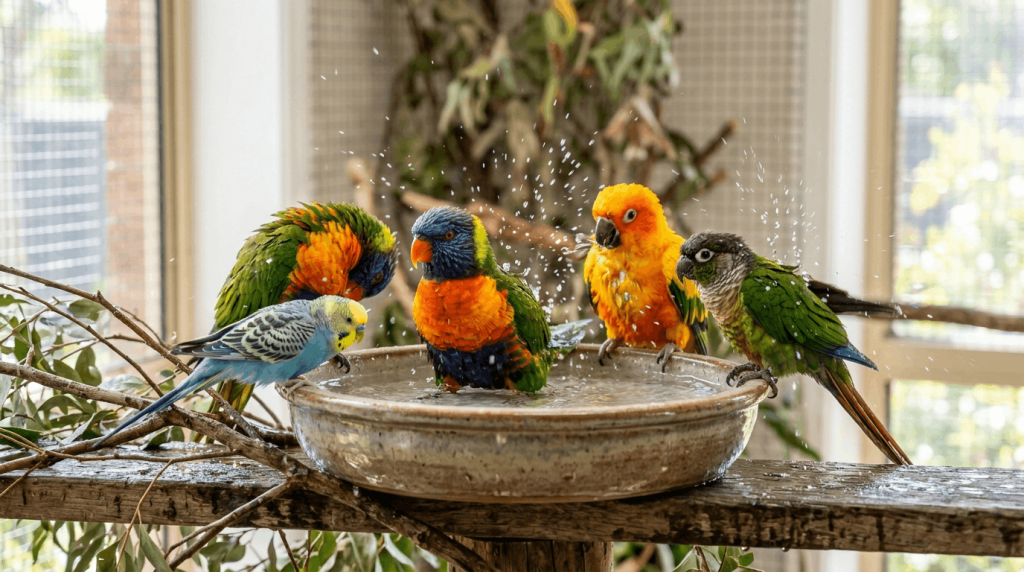
Owners who bathe pet birds should usually provide shallow dishes that allow birds to control water exposure independently.
Many birds prefer stepping into water gradually while splashing wings and feathers gently.
Shallow dishes reduce fear while supporting natural bathing instincts safely.
Importantly, water should always remain clean and fresh during the bathing process.
Dirty standing water may irritate feathers or encourage bacterial growth over time.
Use Lukewarm Water Only
Water temperature plays a major role in comfort and safety.
Owners who bathe pet birds should avoid extremely hot or cold water completely.
Lukewarm water generally feels safest and most comfortable for most pet bird species.
Cold water may shock sensitive birds, especially smaller species.
Hot water can damage delicate skin and feathers quickly.
Testing water temperature carefully beforehand helps prevent unnecessary stress or discomfort.
Importantly, gentle warmth usually encourages birds to relax more naturally during baths.
Spray Bottles Can Work Well
Some birds prefer misting instead of standing water.
Owners who bathe pet birds sometimes use fine mist spray bottles to imitate natural rainfall gently.
Soft misting often works especially well for parrots and larger bird species.
Importantly, spray pressure should remain gentle and non-threatening.
Birds should never feel forced or cornered during misting sessions.
Allowing birds freedom to move away helps maintain emotional trust and comfort naturally.
Never Force a Bird Into Water
Forced bathing experiences may create long-lasting fear and stress.
Owners who bathe pet birds successfully focus on encouragement rather than restraint or pressure.
Grabbing birds and placing them directly into water often damages trust significantly.
Instead, owners should allow curiosity and positive experiences to guide the process gradually.
Birds usually become more confident around water when introductions remain calm and voluntary.
Patience therefore creates far healthier long-term results than rushing the process.
Bathing Supports Emotional Wellness
Bathing offers emotional benefits beyond physical cleanliness alone.
Owners who bathe pet birds regularly often notice increased relaxation, playful behavior, and healthier preening afterward.
Water stimulation encourages natural instincts that many indoor birds rarely experience otherwise.
Bathing may therefore reduce boredom while supporting healthier emotional balance naturally.
Importantly, mentally stimulated birds often display fewer stress-related behaviors overall.
Drying Birds Safely Matters
Proper drying remains just as important as bathing itself.
Owners who bathe pet birds should allow feathers to air dry naturally in warm and draft-free spaces whenever possible.
Hair dryers generally create unnecessary risks because heat levels may fluctuate unpredictably.
Additionally, some dryers release harmful fumes from heated materials or coatings.
Birds usually dry comfortably on their own when environments remain warm and calm.
Importantly, birds should never remain wet in cold rooms or near strong airflow afterward.
Different Species Have Different Preferences
Not all birds enjoy identical bathing methods.
Owners who bathe pet birds should adjust techniques according to species, personality, age, and comfort level.
Some birds love soaking completely in shallow dishes.
Others prefer light misting or rubbing against wet leaves and greens.
Cockatiels, budgies, parrots, finches, and canaries often display unique bathing habits naturally.
Observing preferences carefully helps owners create more enjoyable experiences over time.
Clean Bathing Areas Reduce Health Risks
Birds remain sensitive to bacteria, chemicals, and environmental toxins.
Owners who bathe pet birds should always use clean bowls, fresh water, and safe bathing areas.
Soap, shampoos, and cleaning chemicals should generally never contact bird feathers unless specifically prescribed by avian veterinarians.
Birds maintain feather health naturally through water and preening alone in most situations.
Importantly, even mild household products may irritate delicate skin or damage feather quality.
Signs Your Bird Enjoys Bathing
Comfortable birds often display positive body language during baths.
Owners who bathe pet birds regularly may notice wing flapping, chirping, splashing, feather fluffing, and playful movements during water exposure.
Some birds repeatedly return to water dishes because they enjoy the sensation greatly.
Relaxed preening afterward also signals positive emotional experiences.
Importantly, enthusiasm varies between individual birds naturally.
Calm acceptance still represents healthy progress for more cautious birds.
Helping Nervous Birds Feel Safer
Some birds initially fear water because of limited exposure or past negative experiences.
Owners who bathe pet birds gently should introduce water slowly without overwhelming hesitant birds emotionally.
Placing shallow dishes nearby or lightly misting surrounding areas may help reduce fear gradually.
Positive reinforcement also encourages confidence naturally.
Treats, praise, and calm interaction often help birds associate water with safe experiences over time.
Importantly, progress should happen at the bird’s pace rather than according to strict expectations.
Humidity Supports Feather Health
Indoor air often becomes dry because of heating and air conditioning systems.
Owners who bathe pet birds regularly help maintain healthier humidity levels around feathers and skin naturally.
Dry conditions may contribute to itching, feather irritation, or excess dust production over time.
Bathing therefore supports comfort while encouraging healthier feather maintenance habits.
Importantly, birds originating from tropical climates often benefit greatly from regular moisture exposure indoors.
Creating a Comfortable Bathing Routine
Consistency helps birds feel safer and more relaxed over time.
Owners who bathe pet birds often establish gentle routines that make bathing feel predictable and stress-free.
Regular opportunities encourage confidence while supporting healthier grooming behavior naturally.
Importantly, routines should remain flexible enough to respect each bird’s preferences and mood.
Some birds enjoy daily misting, while others prefer bathing several times weekly instead.
Observation helps determine what works best for individual pets.
Bathing Strengthens the Human-Bird Bond
Positive care experiences strengthen trust between birds and owners naturally.
Owners who bathe pet birds gently often build stronger emotional relationships through patient and respectful handling.
Birds that feel emotionally safe usually become more cooperative during grooming and daily interaction overall.
Importantly, trust develops through consistency and calm experiences rather than force or control.
Bathing sessions therefore create opportunities for connection as well as hygiene support.
Healthy Feathers Start With Proper Care
Feathers play an essential role in comfort, temperature regulation, movement, and overall health.
Owners who bathe pet birds safely help support healthier feather condition while encouraging natural grooming behaviors indoors.
Importantly, bathing should always prioritize emotional comfort and gradual trust-building rather than strict routines or pressure.
Each bird develops individual preferences regarding water exposure, bathing frequency, and handling style.
Patience, observation, and calm guidance therefore create the healthiest experiences over time.
As birds become more comfortable with water, many display increased confidence, improved feather condition, and more relaxed behavior naturally.
Ultimately, safe bathing involves understanding natural instincts and creating environments where birds feel secure exploring water at their own pace.
When owners focus on comfort, cleanliness, and emotional trust together, birds often thrive physically and emotionally inside the home.
FAQ
1. How often should pet birds bathe?
Bathing frequency varies by species, environment, and preference. Many birds enjoy bathing several times weekly.
2. Can I use soap on my bird?
No. Most birds should only bathe with clean water unless advised otherwise by an avian veterinarian.
3. What water temperature is safest for birds?
Lukewarm water generally feels safest and most comfortable for pet birds during baths.
4. Why is my bird afraid of water?
Limited exposure, past stress, or unfamiliar experiences may cause fear around bathing initially.
5. Is misting better than water dishes?
Some birds prefer misting, while others enjoy shallow dishes more. Preferences vary between individual birds.