
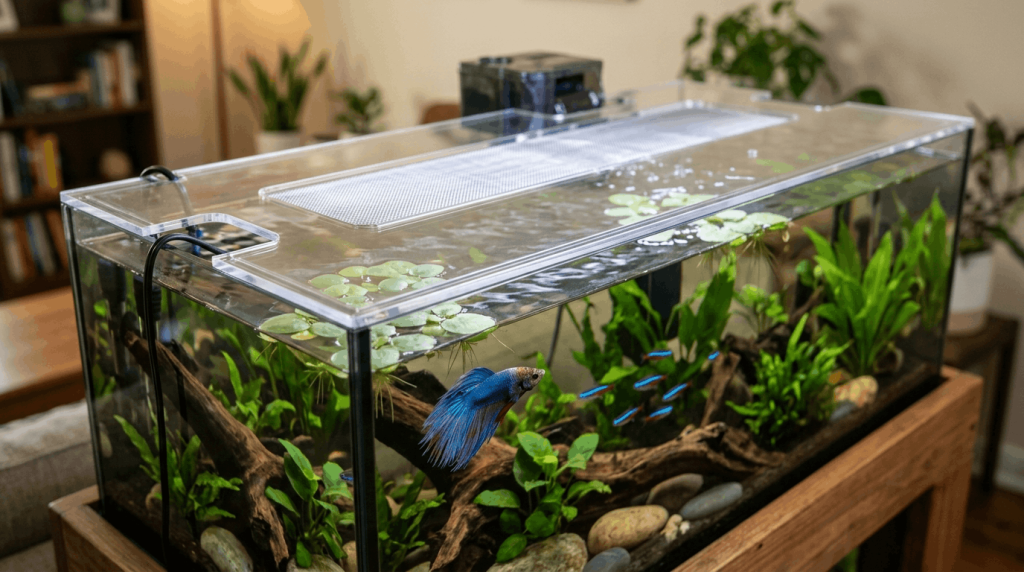

Prevent fish jumping tanks is a concern many aquarium owners overlook until it becomes a serious problem. While fish may appear calm and contained, many species are natural jumpers, especially when stressed, startled, or exploring their surroundings. As a result, even a well-maintained aquarium can pose risks if certain precautions are not in place. Understanding how to prevent fish jumping tanks is essential for keeping your aquatic pets safe and ensuring a stable, healthy environment.
Fish jumping is not random behavior. In fact, it often signals underlying issues within the tank. Poor water quality, aggressive tank mates, or sudden changes in the environment can all trigger this instinct. Therefore, preventing these incidents requires a combination of observation, proper setup, and consistent care. When you take a proactive approach, you not only protect your fish but also improve their overall well-being.
Why Fish Jump Out Of Tanks
To effectively prevent fish jumping tanks, it is important to understand why fish exhibit this behavior in the first place. Many species are naturally inclined to jump as part of their survival instincts. In the wild, jumping helps fish escape predators or move between bodies of water.
However, in a home aquarium, these instincts can become dangerous. Stress is one of the most common triggers. For example, overcrowding or incompatible tank mates can cause fish to feel threatened. When this happens, jumping becomes an escape response.
Additionally, poor water conditions can push fish to the edge. High ammonia levels, low oxygen, or improper temperature can create discomfort. As a result, fish may attempt to leap out in search of better conditions. Because of this, learning how to prevent fish jumping tanks begins with identifying and addressing these root causes.
Creating A Secure Tank Environment
A secure aquarium setup plays a major role in helping you prevent fish jumping tanks effectively. The first and most obvious step is using a proper lid or cover. A well-fitted lid acts as a physical barrier, preventing fish from escaping while still allowing airflow.
However, not all lids are equal. It is important to ensure there are no gaps or openings where fish can slip through. Even small spaces around filters or cables can become escape routes. Therefore, sealing these gaps or using mesh covers can make a significant difference.
Lighting also matters. Sudden changes in brightness can startle fish, causing them to jump. Gradual lighting transitions help reduce stress and create a more stable environment. By controlling these factors, you can greatly reduce the likelihood of jumping incidents.
Maintaining Water Quality For Safety
Water quality is one of the most critical factors when trying to prevent fish jumping tanks. Fish rely on clean, stable water conditions to thrive. When these conditions deteriorate, stress levels increase, which can lead to erratic behavior.
Regular water testing is essential. Monitoring parameters such as ammonia, nitrite, nitrate, and pH ensures that the environment remains safe. Additionally, performing routine water changes helps maintain balance and remove harmful substances.
Oxygen levels are equally important. Poor aeration can cause fish to gasp for air near the surface, increasing the risk of jumping. Using air stones or proper filtration systems improves oxygen circulation and keeps fish comfortable.
Since water conditions directly impact behavior, maintaining high quality is one of the most effective ways to prevent fish jumping tanks.
Choosing The Right Tank Mates
Compatibility among fish species plays a significant role in reducing stress. Aggressive or territorial fish can intimidate others, leading to panic and escape attempts. Therefore, selecting compatible tank mates is crucial if you want to prevent fish jumping tanks.
Researching species behavior before adding them to your aquarium is a smart step. Some fish are naturally more aggressive, while others are peaceful and social. Mixing incompatible species often results in conflict, which increases stress levels.
Additionally, providing enough space helps reduce tension. Overcrowding can lead to competition for resources, making fish more likely to act unpredictably. By maintaining proper stocking levels, you create a more harmonious environment that discourages jumping.
Reducing Stress Through Tank Design
Tank design has a direct impact on fish behavior. A well-designed aquarium provides hiding spots, open swimming areas, and visual barriers. These elements help fish feel secure and reduce anxiety.
Plants, rocks, and decorations can create natural hiding spaces. When fish have places to retreat, they are less likely to feel threatened. As a result, they are less likely to jump.
At the same time, avoid overcrowding the tank with decorations. Too many obstacles can limit swimming space and create additional stress. Balance is key when designing your aquarium.
Because stress is a major factor, thoughtful tank design is essential to prevent fish jumping tanks and promote a calm environment.
Monitoring Behavior And Early Warning Signs
Observing your fish regularly helps you identify potential problems before they escalate. Changes in behavior often indicate underlying issues that need attention.
For example, if fish begin swimming erratically or staying near the surface, it may signal stress or poor water conditions. Increased aggression or hiding can also point to discomfort within the tank.
By addressing these signs early, you can take corrective action and prevent jumping incidents. Regular observation allows you to stay proactive and maintain a healthy aquarium.
Since fish cannot communicate directly, their behavior becomes the key to understanding their needs. Paying attention to these cues is essential when working to prevent fish jumping tanks.
Using Covers And Barriers Effectively
While lids are important, additional barriers can provide extra protection. Mesh covers, for example, allow airflow while keeping fish contained. These are especially useful for tanks with equipment that creates gaps.
Floating plants can also act as a natural barrier. They cover the water surface, making it harder for fish to jump out. At the same time, they create a more natural and calming environment.
Another option is adjusting water levels. Keeping the water slightly below the tank rim reduces the chance of fish reaching the edge. This simple adjustment can significantly lower the risk.
Combining these methods creates a layered approach that helps prevent fish jumping tanks more effectively.
The Role Of Consistent Care
Consistency is one of the most overlooked aspects of aquarium maintenance. Sudden changes in feeding schedules, lighting, or water conditions can stress fish and trigger jumping behavior.
Feeding your fish at regular times helps establish a routine. Predictability reduces anxiety and keeps fish calm. Similarly, maintaining consistent lighting cycles supports their natural rhythms.
Avoid making abrupt changes to the tank environment. When adjustments are necessary, introduce them gradually. This approach allows fish to adapt without becoming stressed.
By maintaining consistency, you create a stable environment that supports long-term health and helps prevent fish jumping tanks.
Conclusion
Prevent fish jumping tanks is not just about adding a lid or barrier. It involves understanding fish behavior, maintaining proper water conditions, and creating a stress-free environment. When all these factors work together, the risk of jumping decreases significantly.
Taking a proactive approach ensures that your fish remain safe and comfortable in their home. From choosing compatible tank mates to maintaining consistent care, every detail matters. Small adjustments can make a big difference in preventing accidents and improving overall aquarium health.
Ultimately, a well-maintained tank is the best defense against jumping incidents. By focusing on prevention and observation, you create a safe space where your fish can thrive without risk.
FAQ
- Why do fish suddenly jump out of aquariums?
Fish often jump due to stress, poor water quality, or aggressive tank mates. Identifying the cause helps prevent future incidents. - Do all fish species have a tendency to jump?
Not all species jump, but many do, especially those with strong survival instincts or those that feel threatened. - Is a tank lid enough to keep fish safe?
A lid helps significantly, but sealing gaps and maintaining proper tank conditions are also important for safety. - How can I tell if my fish is stressed?
Signs include erratic swimming, hiding, reduced appetite, and staying near the surface of the water. - Can tank design really affect fish behavior?
Yes, proper design with hiding spots and open space reduces stress and helps fish feel secure in their environment.